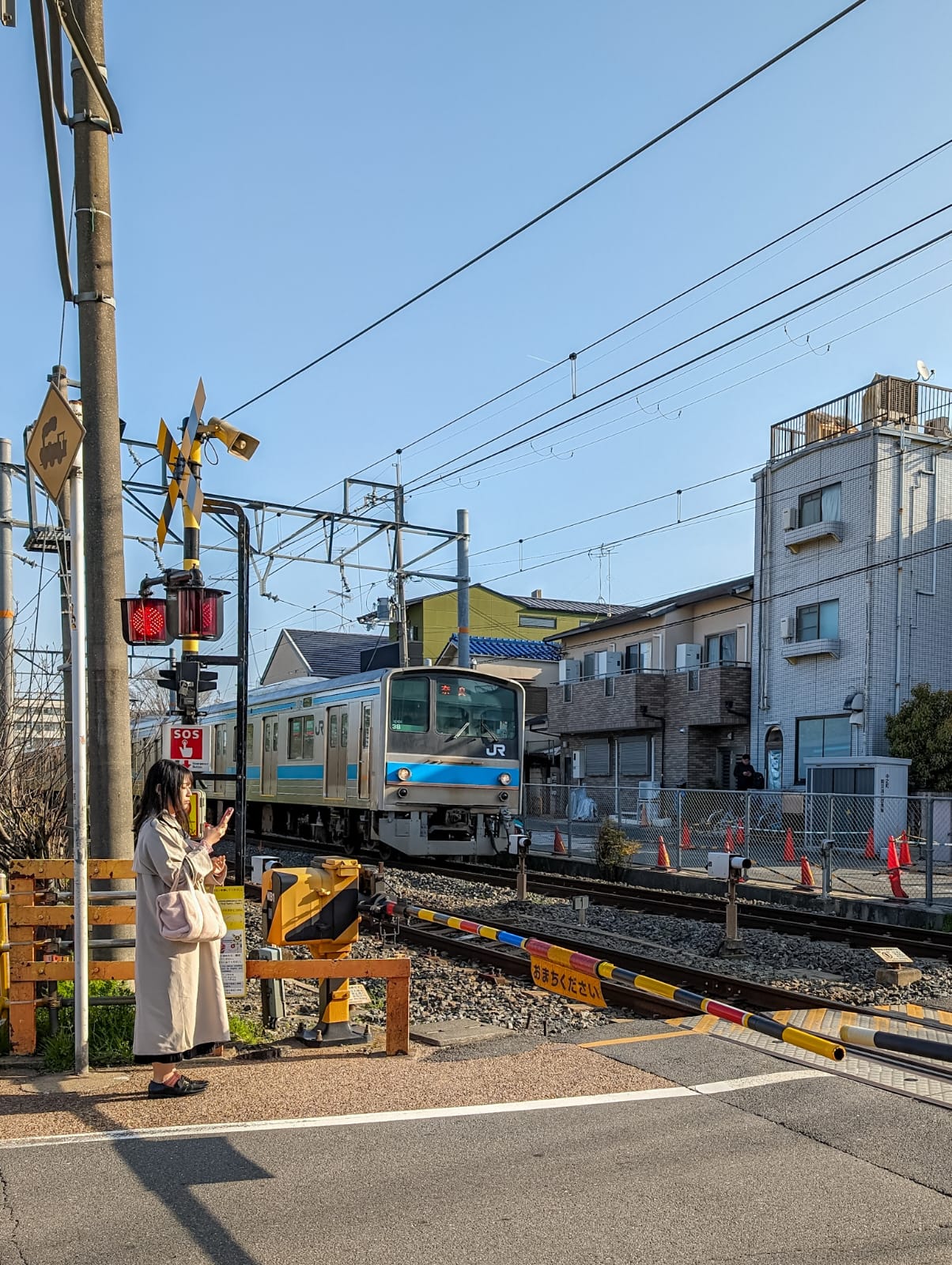
Kyoto and Osaka both come under the Kansai region and are part of the Kansai network of railway system. JR West operates the JR lines in this region and that isn’t as well connected as its Tokyo counterpart. So while in Kyoto or Osaka, you may have to rely on a lot of the private networks, buses or even Taxis to get to your destinations faster.
The Network Map
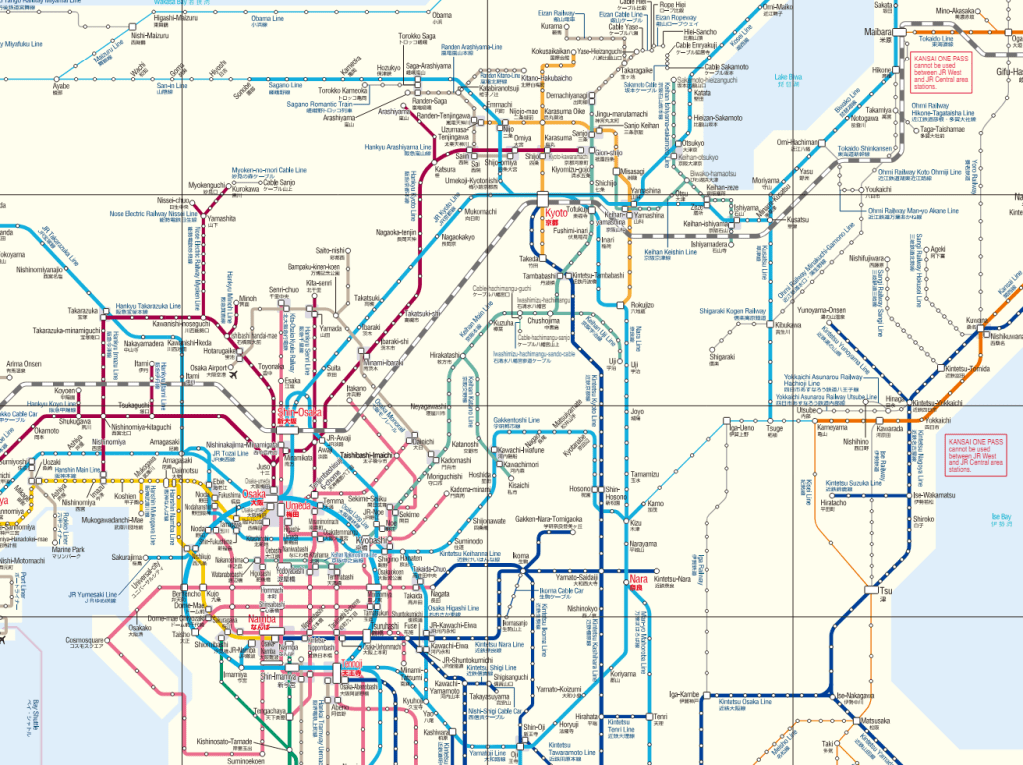
As you can see, the “blue” line of JR West isn’t well established throughout and some of the other lines are a mix of overground and underground lines. As mentioned in one of the previous posts, Google maps navigation shows the “fastest route” which is usually a mix of different operators and modes. You should check the “Japan Travel” app by Navtime if you want to restrict routing based on the pass you have (eg: JR pass).
Kyoto
The “Kyoto Station” is the central station of Kyoto and is well connected to different regions in Kyoto and Osaka including the Kansai Airport. The Shinkansen also operates from this station albeit from a different platform level to others. The commute from one place to another within the Kansai feels like taking longer each time as the frequency of the trains in the Kansai region isn’t the same as the ones in Tokyo.
Osaka
Osaka station or Umeda station is the central station of Osaka. Whereas the Shin-Osaka is for Shinkansen. The Osaka Loop line is what one has to rely on in Osaka to get through to different places on JR network. So expect lot more walking in Osaka if you are married to a JR Pass for your commute.
Day trips from Kyoto/Osaka
1. Nara
Nara is about an hour from Kyoto and Osaka and well connected through the JR network.
2. Hiroshima
Hiroshima is another great day trip from Osaka/Kyoto as it is well connected with the Shinkansen network. It takes about 1.5 hours from Kyoto (slightly lesser from Osaka) on Tokaido-Sanyo Shinkansen. One can base in Kyoto or Osaka and accommodate for Hiroshima without much hassle.
3. Kyoto/Osaka
Kyoto and Osaka are so close to each other themselves that one can think of staying in a single place (Osaka or Kyoto) and explore the other part. It only takes anywhere from 30 mins (Shinkansen) to 45 mins (Rapid line) to go from one place to the other. We stayed 6 nights in Kyoto and were able to cover Kyoto, Osaka and Hiroshima from there without much hassle.
JR passes vs IC card
The 7 or 14 day JR pass, if you have already bought, can be used on the JR lines and Shinkansen in the Kansai-Hiroshima regions. If you have avoided buying the 7 or 14 day JR Pass because of recent price hike, we would suggest getting the 5 day JR Kansai Hiroshima Area pass which costs around 17k yen. This allows unlimited commute within Osaka and Kyoto regions (excluding Shinkansen between them) and also covers the Shinkansen to Hiroshima from Shin-Osaka (including Nozomi)!! A one way Shinkansen ticket from Shin-Osaka to Hiroshima usually is around 11k Yen in itself, so that’s a great saving overall with this 5 day pass. It also covers the Haruka express line between Kansai airport to Osaka/Kyoto which is a saving of around 3k yen more each way.
IC Card in the Kansai region come in the form of ICOCA card which can be bought from any train station or Airport in Kansai region. As always, it is hassle free and can be used on any railway line. But if you are planning to go to Hiroshima, we would suggest to just take the 5 day pass instead. That said, we still used the IC card for many of the routes in Kyoto (like the Keihan line to reach Kyoto Imperial Palace, Ginkakuji, Gion etc. and also some buses to reduce our walking).
 Unending Vacations
[…] Understanding Kyoto and Osaka’s Rail Networks […]
LikeLike