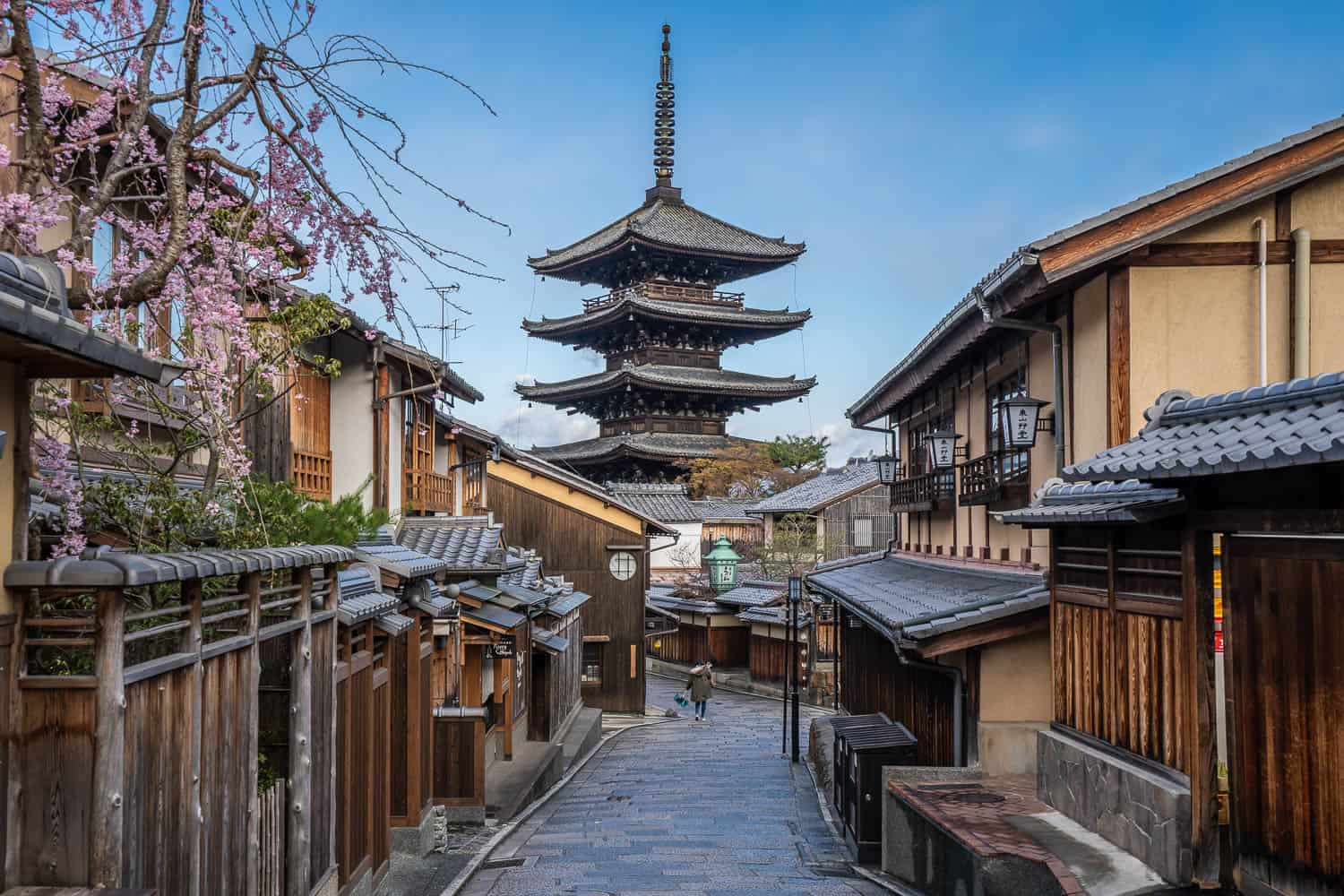
Kyoto is the cultural capital of Japan with its stunning and well preserved architecture, lots of green spaces and a charming, old-world feel to it. During our trip to Japan around cherry blossom season in 2024, we spent about 3 days in Kyoto spread across different days of the week and here is our guide to what we saw and recommend.
Because of the ever changing weather patterns due to global warming, the predictions for cherry blossoms during that year went crazy – starting off initially as very early to being late to eventually ending up at the normal time. We were almost a week early to peak blossom and had to check and adjust our itinerary a bit to give ourselves the maximum chance to encounter the bloom, atleast at the most famous sites in Kyoto.
Disclaimer: As we were chasing the cherry blossoms, some of the places we visited might be a bit off from the standard non-Sakura Kyoto itinerary.
Where we stayed
We booked this accommodation on Airbnb and would recommend for others as well. It is a 2 bedroom apartment and fairly spacious for a Kyoto accommodation. Host was very responsive and listing was accurate. It is very close to the Fushimi Inari station (for private lines like Keihan line) and fairly close to the JR Inari station.
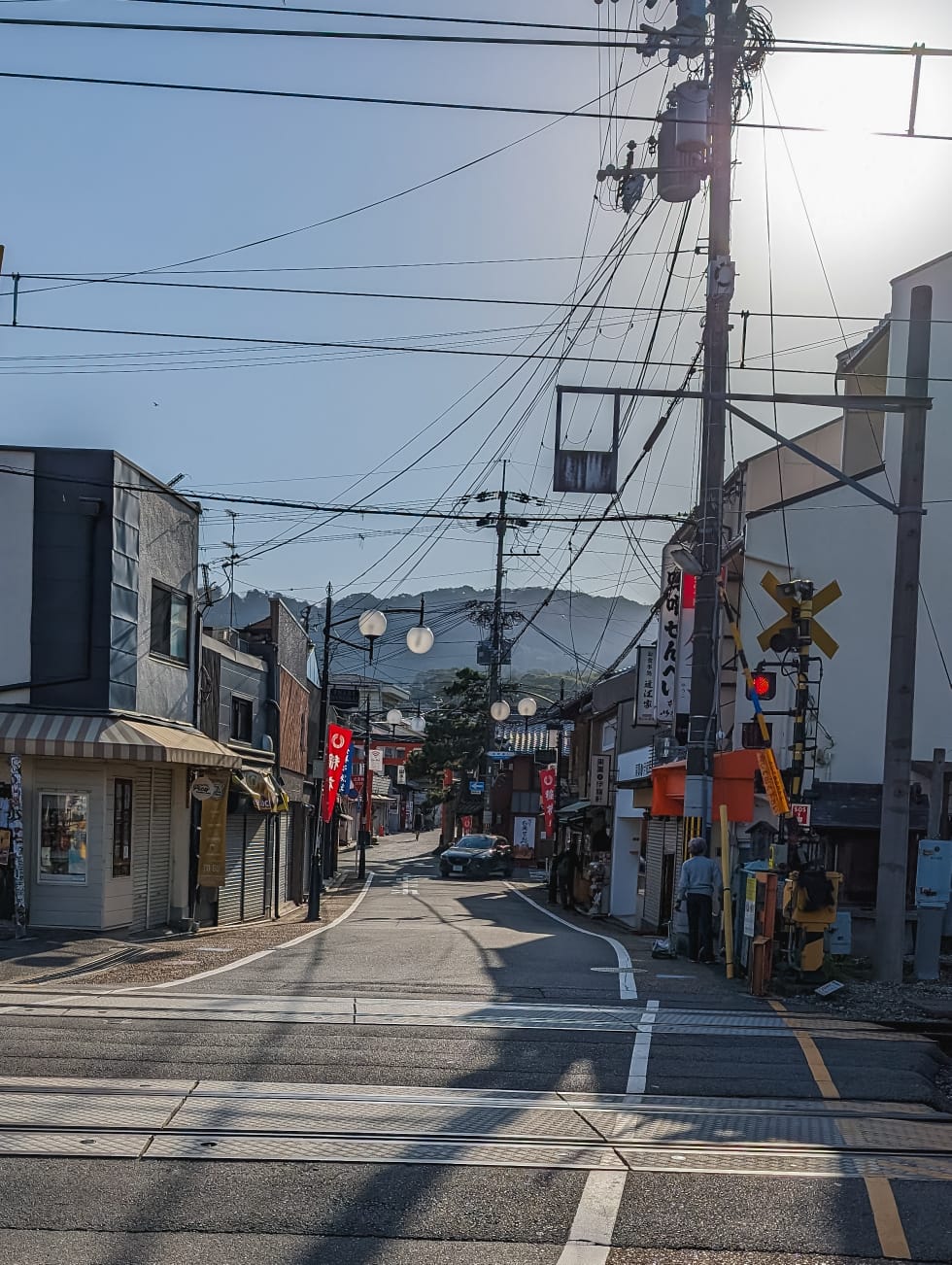
In general, if you are looking for stays in Kyoto, consider the ones close to Kyoto central station like Kyoto Mercure hotel etc.
IC vs JR Pass for Transportation
Since the public transportation isn’t robust in Kyoto, you will end up spending from your pocket quite a few times on private lines/buses that aren’t covered by JR passes. So having an IC card is a must in Kyoto for those needs. For the JR pass, there are multiple options available from the weekly JR pass (7/14/21 days) that cover the entire country to region specific ones like Kansai Area passes etc. There are passes that cover just the Kyoto region as well. Of all these passes, we would recommend getting the 5 day JR Kansai Hiroshima Area pass which covers JR trains and buses on the entire Kansai region (Kyoto/Osaka etc) and also the shinkansen lines to Hiroshima.
For more information on JR pass, please refer to this post.
For information on Kyoto’s train networks and IC card, refer to this post.

Itinerary
Since we were a bit early to the cherry blossoms full bloom, our revisited plan was to front load the places which were agnostic of cherry blossoms, even finish off some of the day trips from Kyoto and reserve the best places of Kyoto for our last day in Kyoto to give ourselves a chance to encounter the full bloom.
Day One
We spent the day 1 fairly leisurely as this was our first full day in Japan and so, it involved going back to our BNB after the first attraction to have lunch, a small nap and covered the rest in the evening. We were also early to the cherry blossoms in Kyoto and so, we decided to pack more places into our later days in Kyoto.
Morning: Visit the iconic Fushimi Inari Taisha Shrine
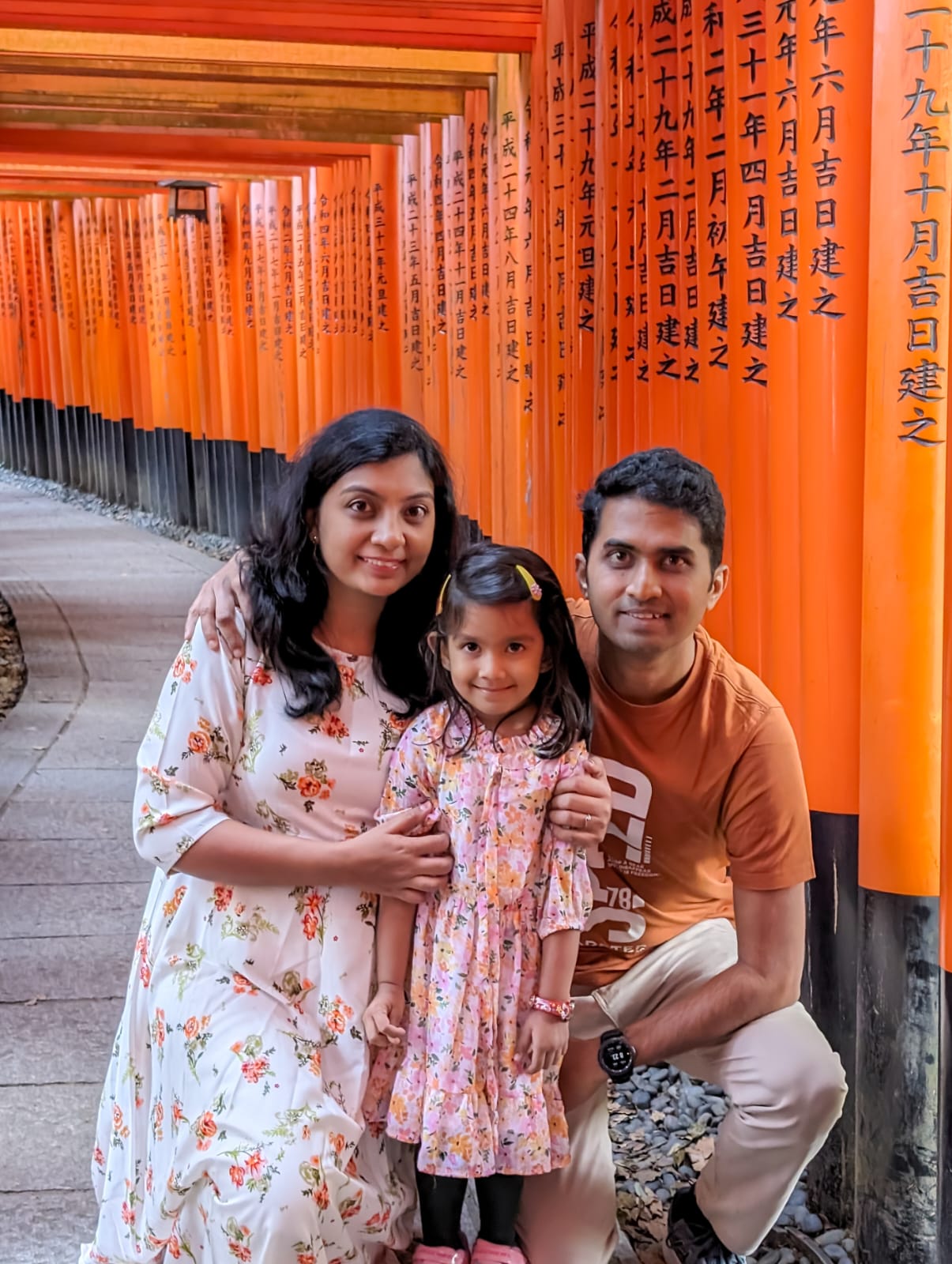
Fushimi Inari is by far the most popular attraction in Kyoto and a must visit place while you are there. It is a famous shrine dedicated to the Shinto god of rice. It is immediately recognizable from its thousands of orange torii gates that line the path heading to the summit of Mount Inari. Each torii gate marks donations received from people with their names engraved on the gate, bigger the gate, bigger the donation. The gates start off being very tall and gets shorter as you climb up. The hike to the summit and back takes about three hours in total. But considering the path wasn’t stroller friendly and we were hiking with a small kid, we decided to stop midway and get back to base.
Since we stayed very close to this place, we decided to knock it off on our first day and visited the temple early morning around 8 am. The place had just started to get busy and we were able to get some very good shots of the torii gates at many places all by ourselves.

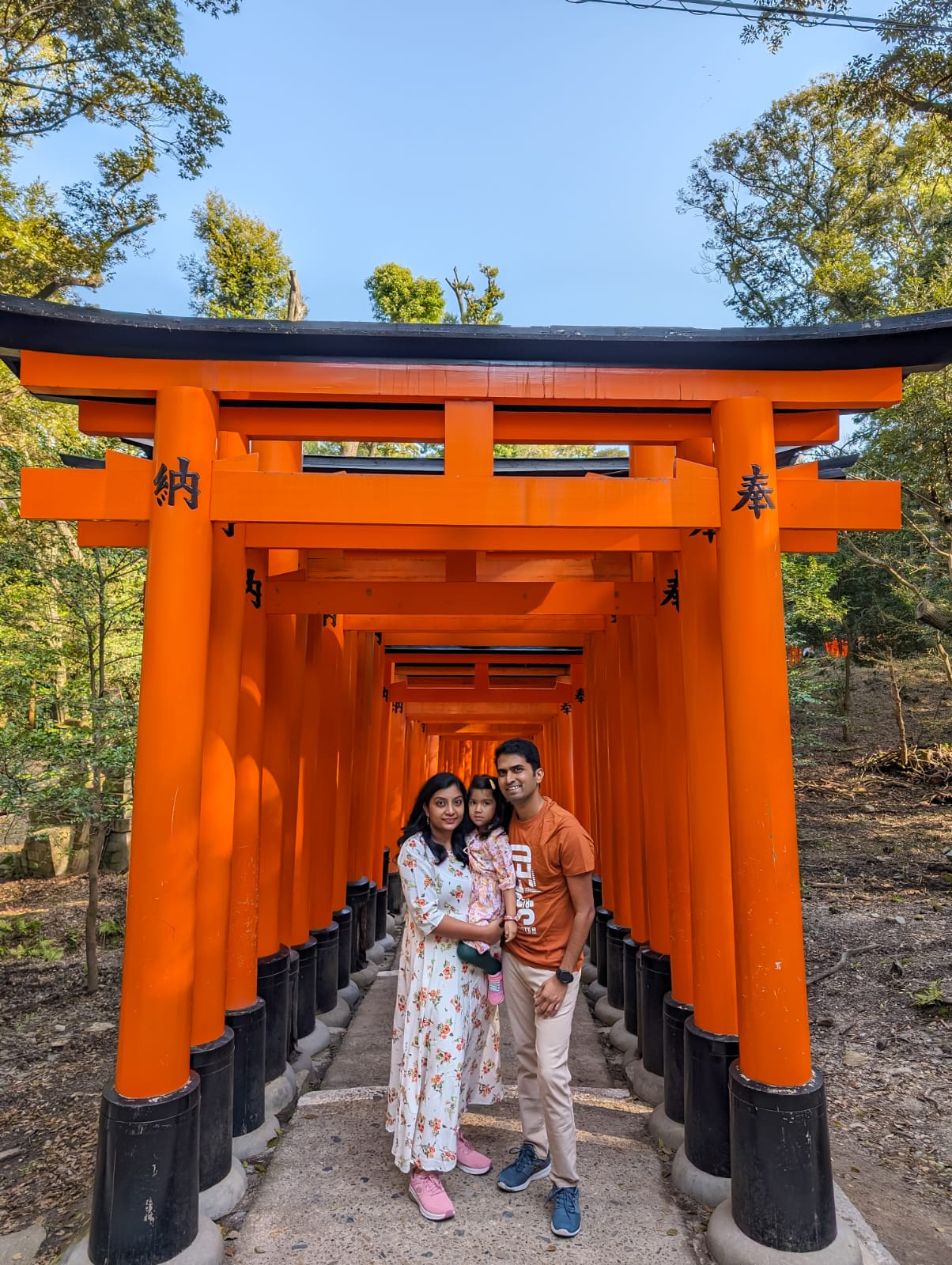
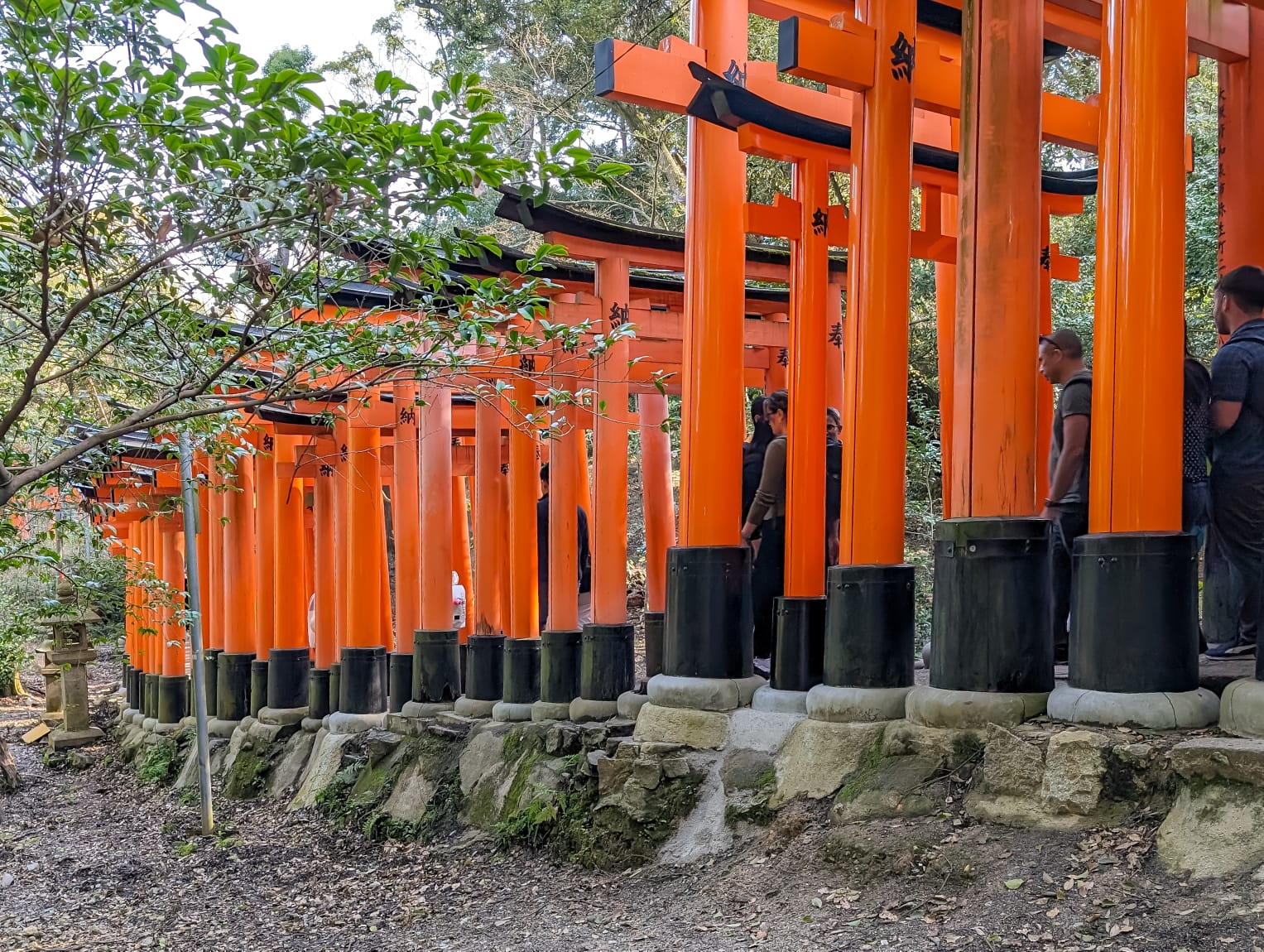
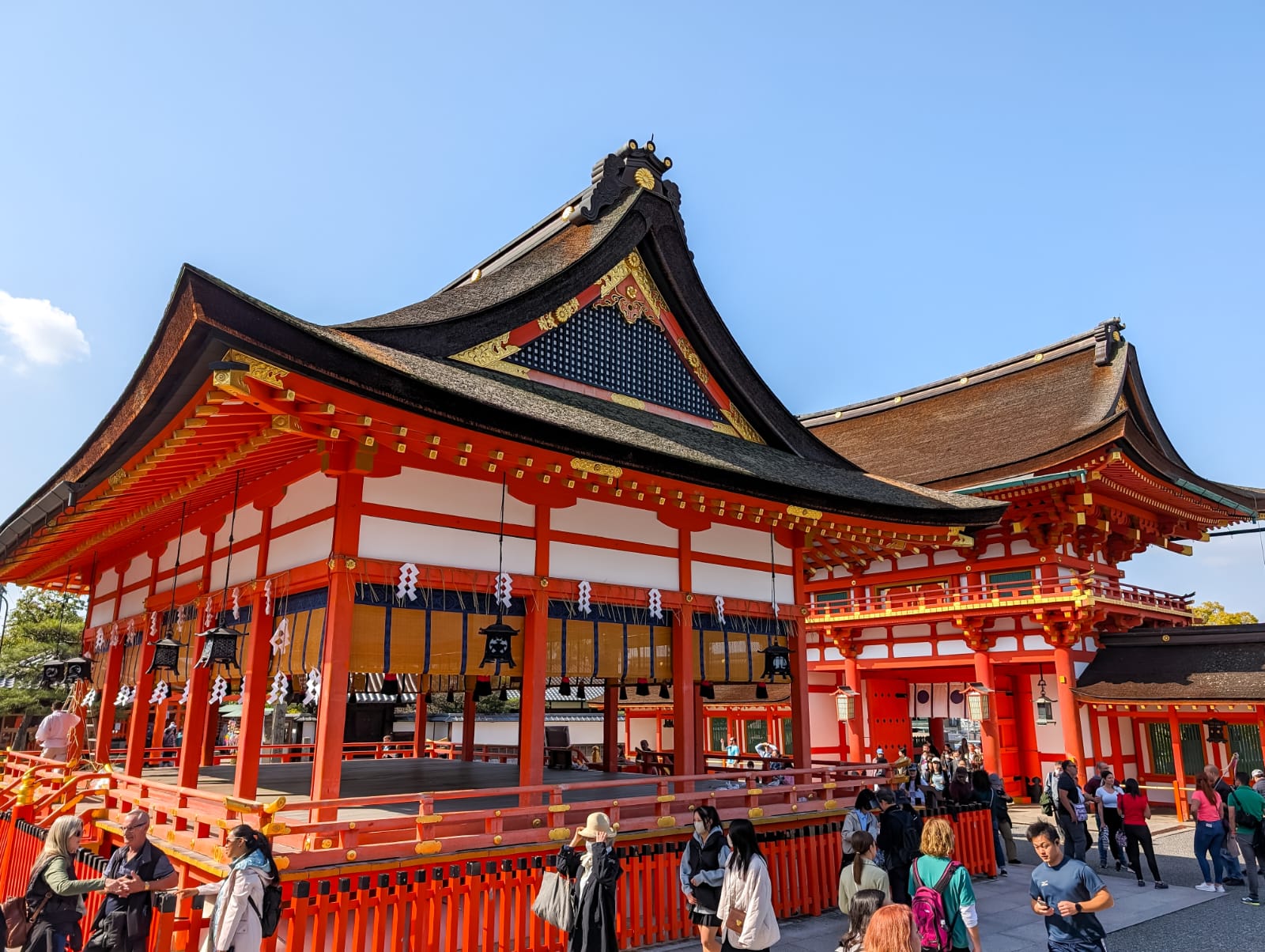
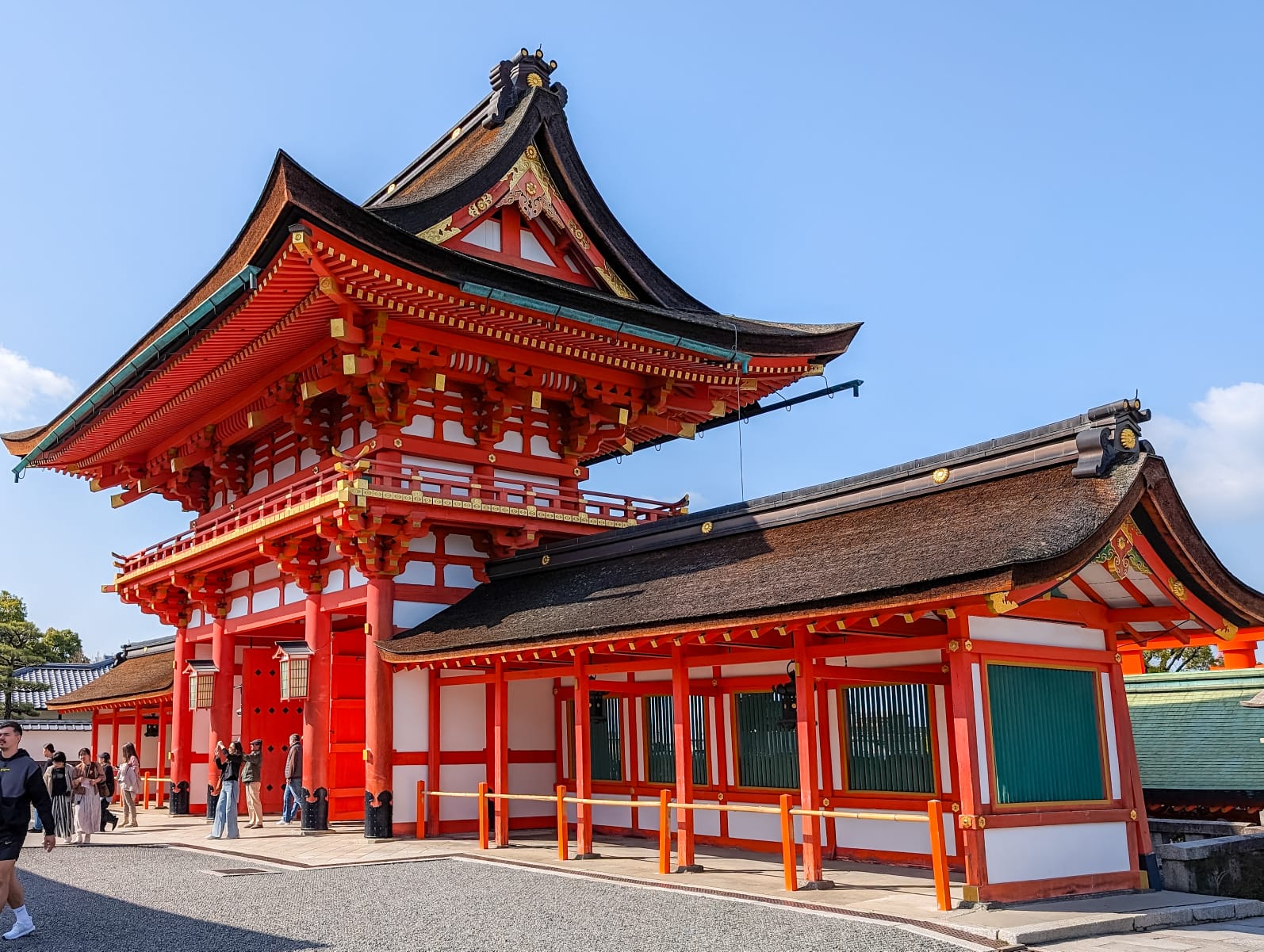
Uninterrupted shots: Here is the trick to get your frame with torii gates without others in the frame – At the start of the ascent, you will come across a point where the path splits into two – the left path is meant for people coming back and right path for people going up. The left path usually tends to be empty at this time of the day as there wouldn’t be any one coming back from the summit that early in the morning. People end up queuing up in front of the left path to take an uninterrupted shot of the gates. Instead, you should proceed on the right path towards the summit and the path merges back fairly quickly into a single one. It forms a loop at this point and you can then start walking back on the other path down where you will find yourself totally alone with excellent photo shoot opportunities. You will find yourself at the base point where paths split and you can then proceed as a normal visitor should do, taking the right path again to climb up towards the summit.


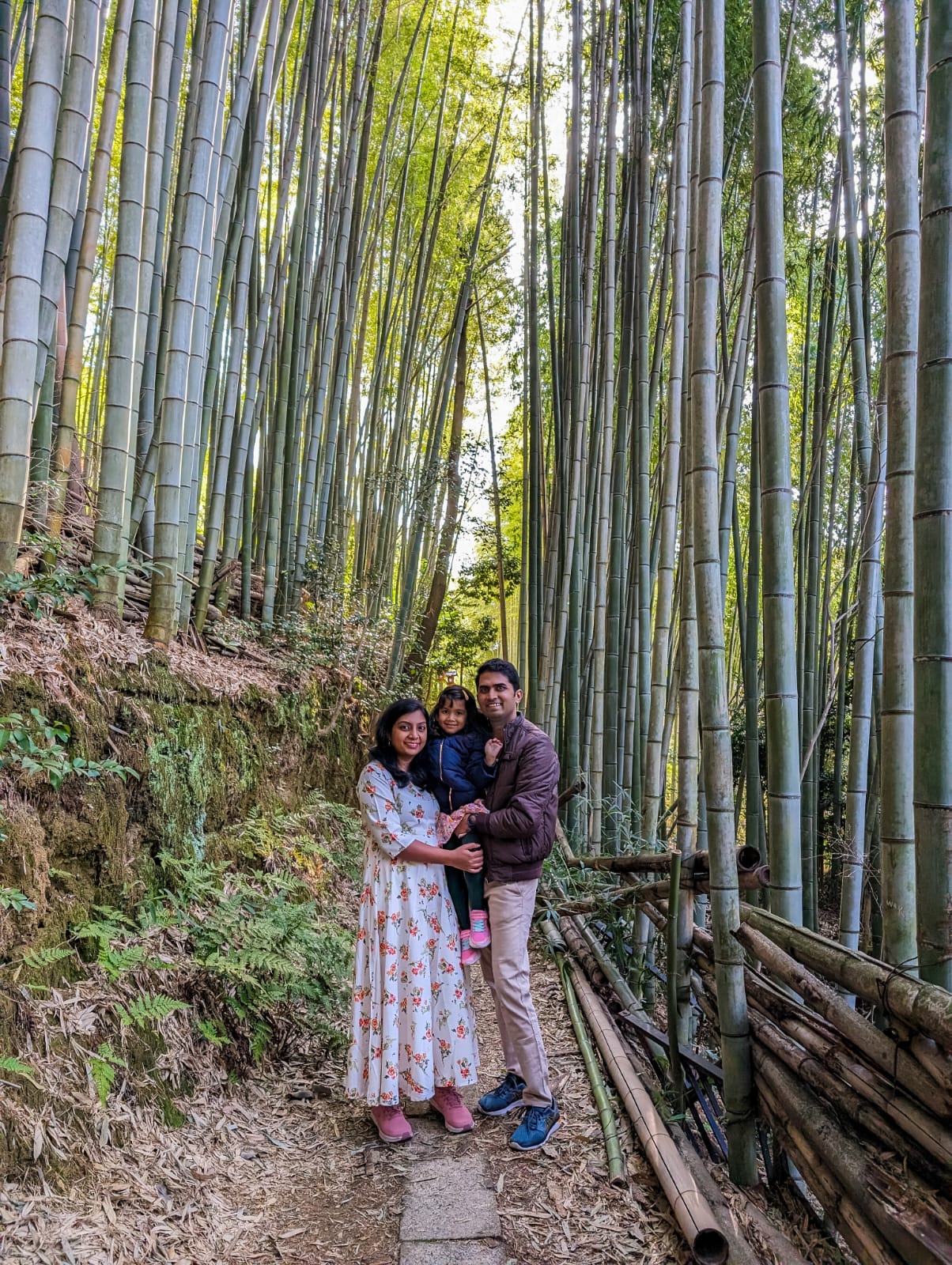
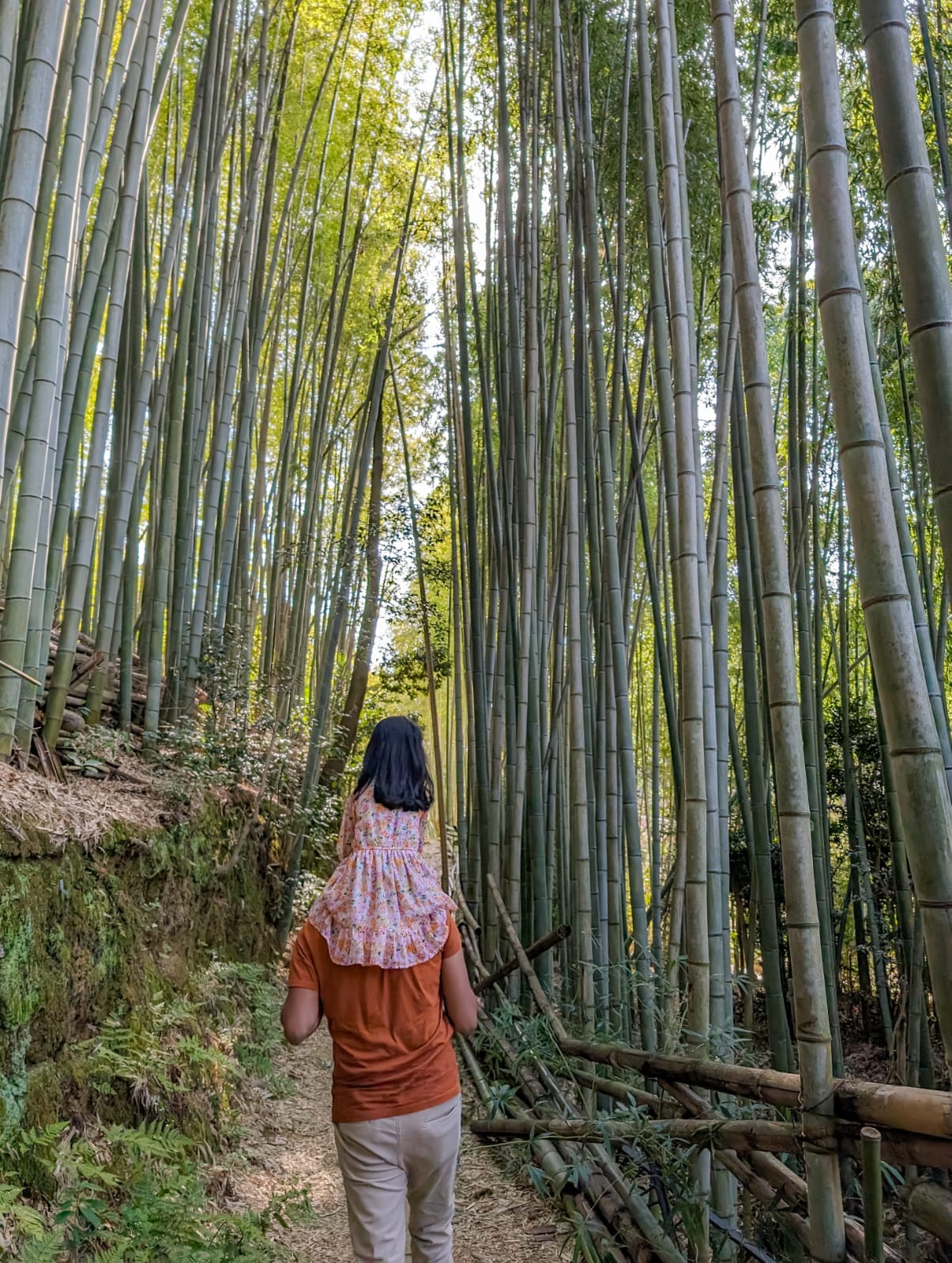
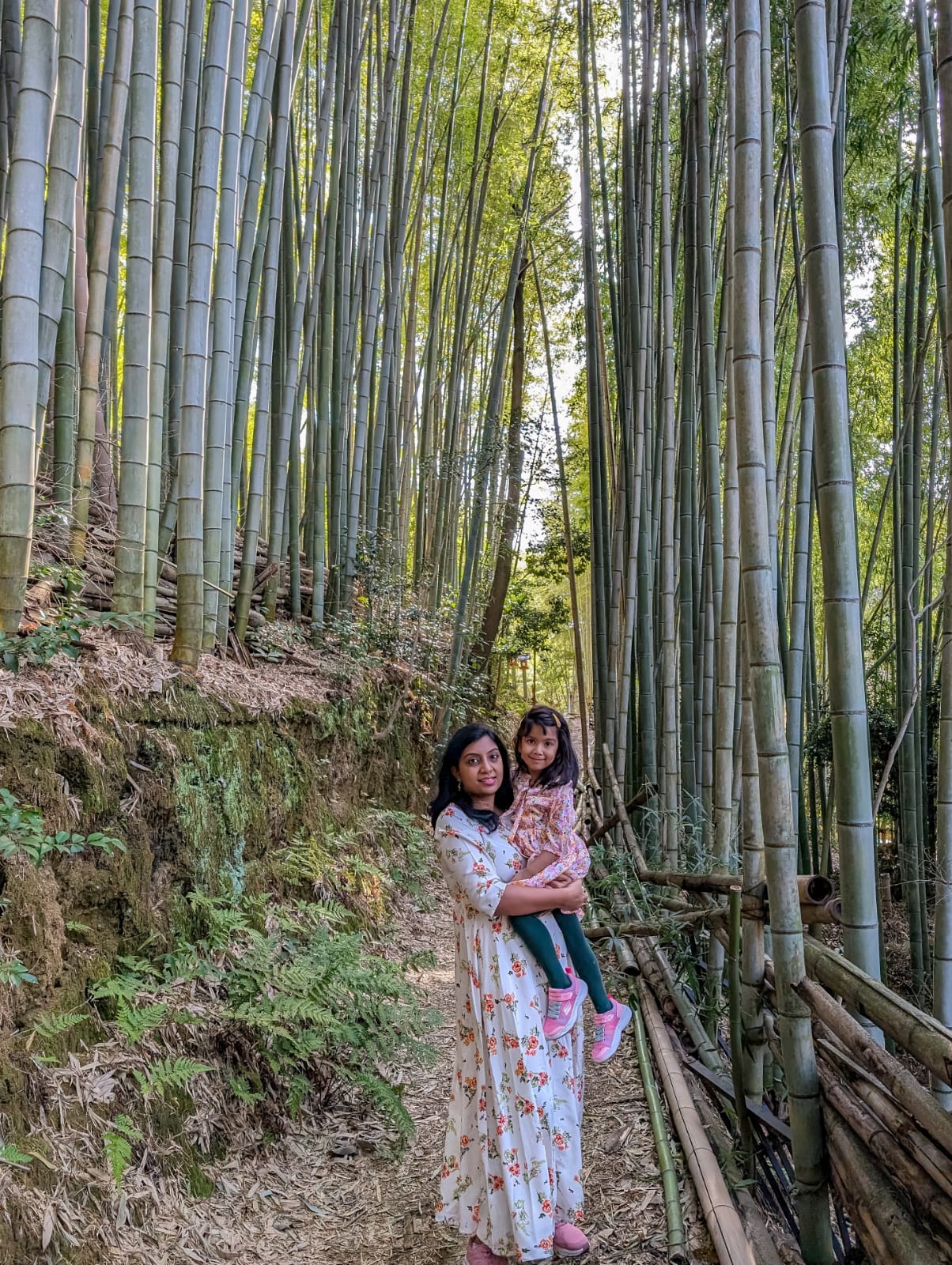
Bamboo forest – Though not as good as the Arashiyama forest, this place also has its own Bamboo forest. To get there, after an initial climb up for 15 to 20 mins, you will find a gravel path to the right which is marked as path to the washrooms. If you proceed further on this path, you will come across a mini bamboo forest area which is quite serene and filled with natural beauty. The path is not known to most people and so you will find yourself mostly on your own and the place all for yourself.
Late Afternoon/Evening: Visit the Botanical Gardens & Kyoto Imperial Palace
The Kyoto Botanical Gardens is normally not recommended on many itineraries of Kyoto. But since we were chasing cherry blossoms and the buds were far from full bloom everywhere else when we started in Kyoto, we had to improvise. Botanical gardens had some species of Sakura that were in full bloom during that time and so, we decided to take our chance with that. The entrance fee was 250 Yen and we had to take the private Keihan line to reach there from our place. In an hour we spent inside the gardens, we were able to get some good shots with fairly bloomed Sakura flowers and other varieties of flowers as well.

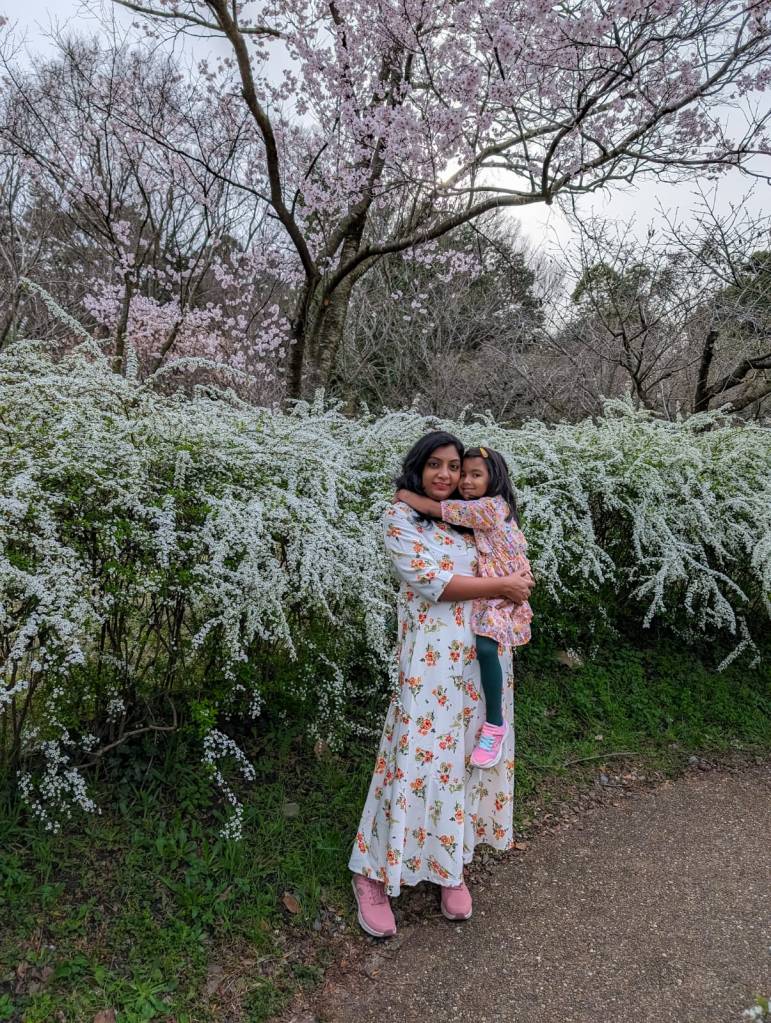
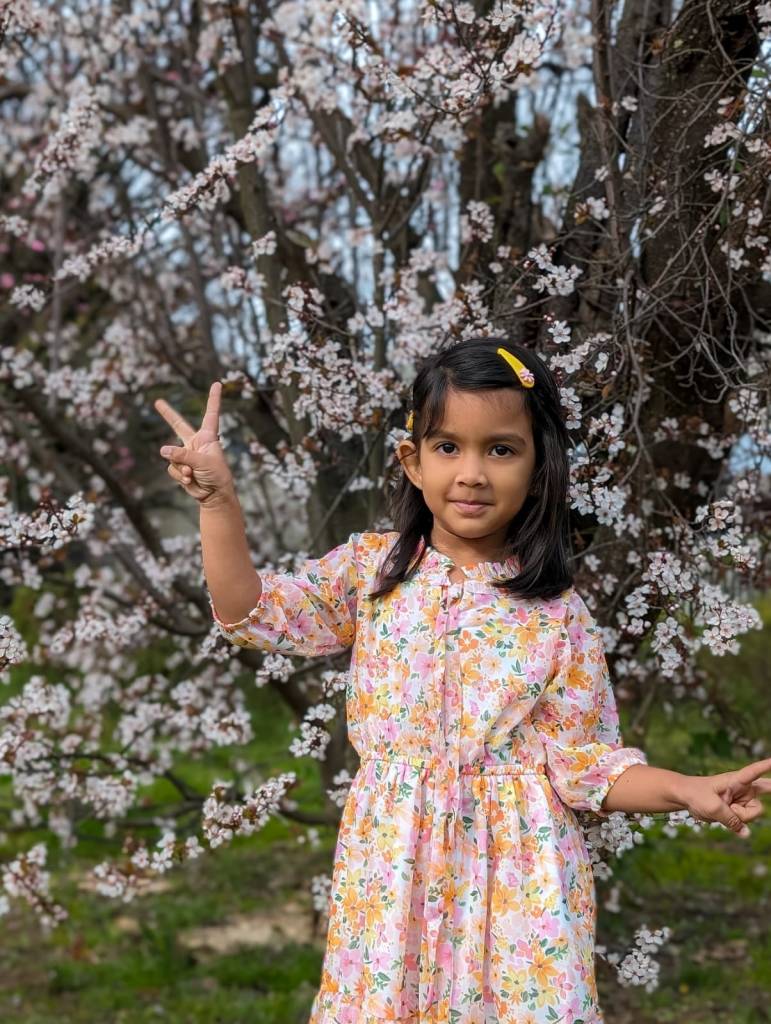

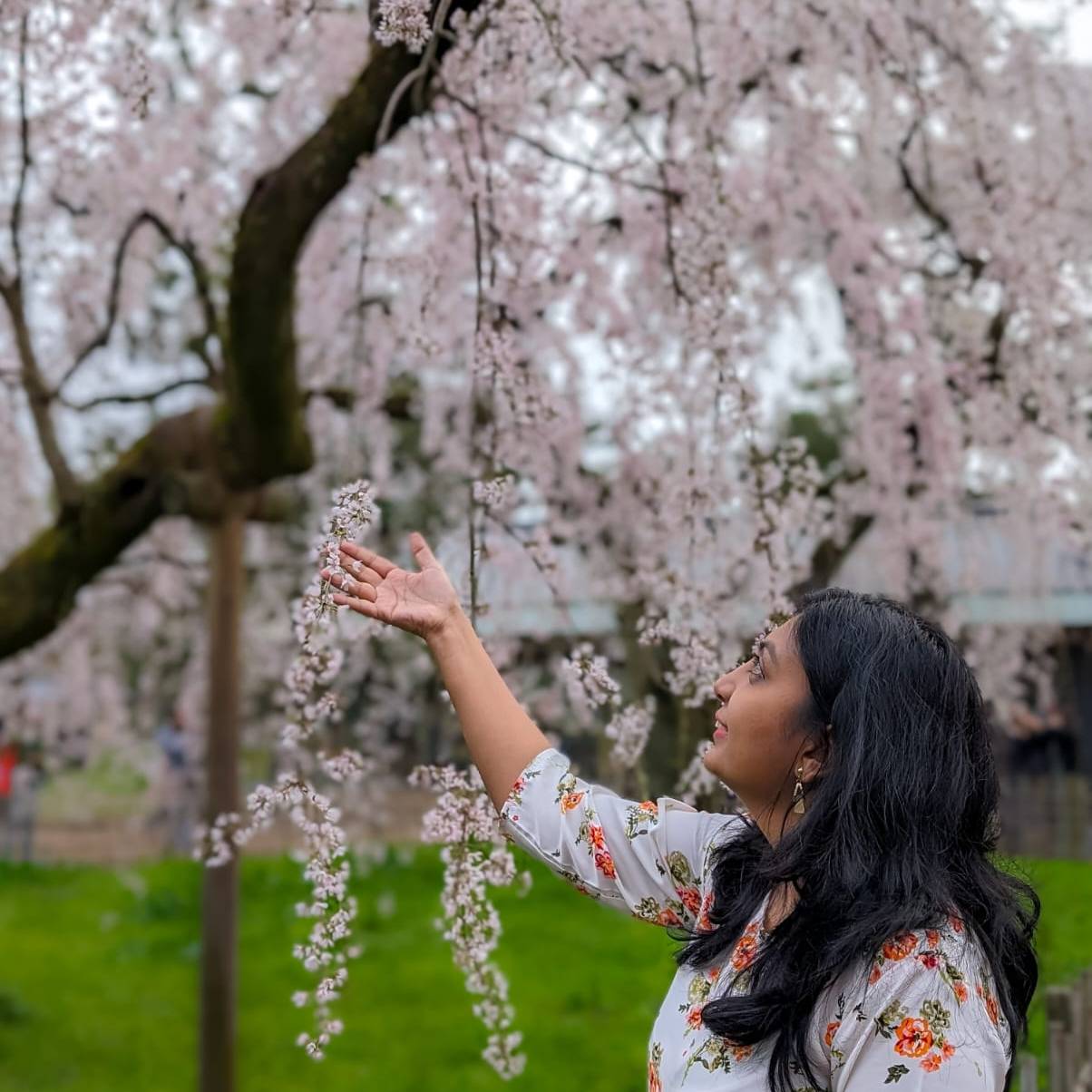
The last stop of the day was the Kyoto Imperial Palace. The palace itself was closed by the time we reached there in the late evening. But the gardens were very beautiful with lots of weeping Sakura trees in full bloom. We ended up quite content with the photo opportunities with cherry blossoms we got on the first day, considering we were early as per predictions for the full bloom. It gave us hope that rest of the days in Kyoto wouldn’t be as bad for Sakura spotting as we had dreaded.


If you have more time, you could also cover couple of other places nearby – Nijo Castle & Nishiki Market.
Day Two
By this day, unfortunately our daughter fell sick. We had to dial back on what all we could visit on this day and so made it a bit leisurely.
Morning: Visit the Arashiyama Bamboo Grove area
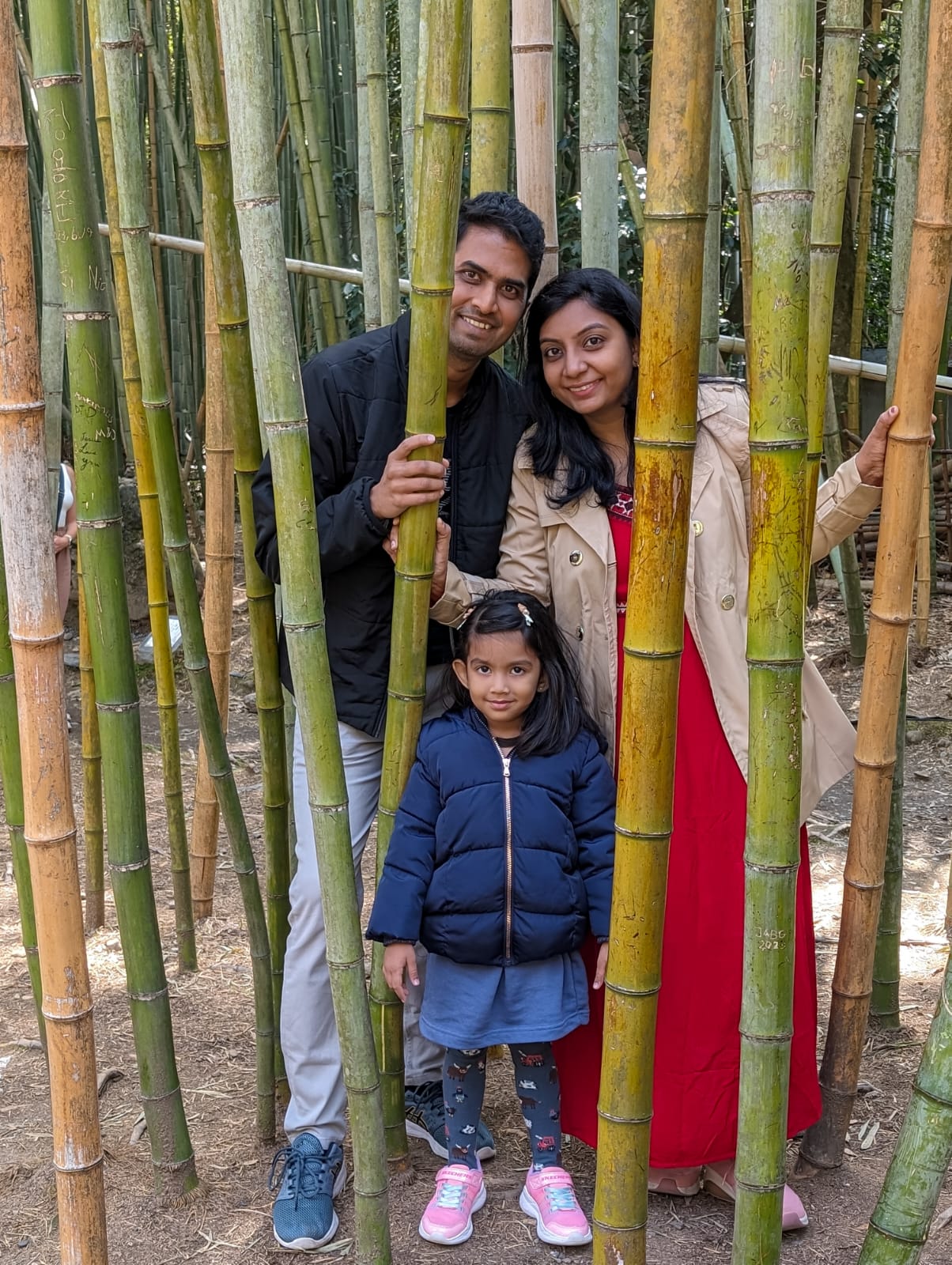
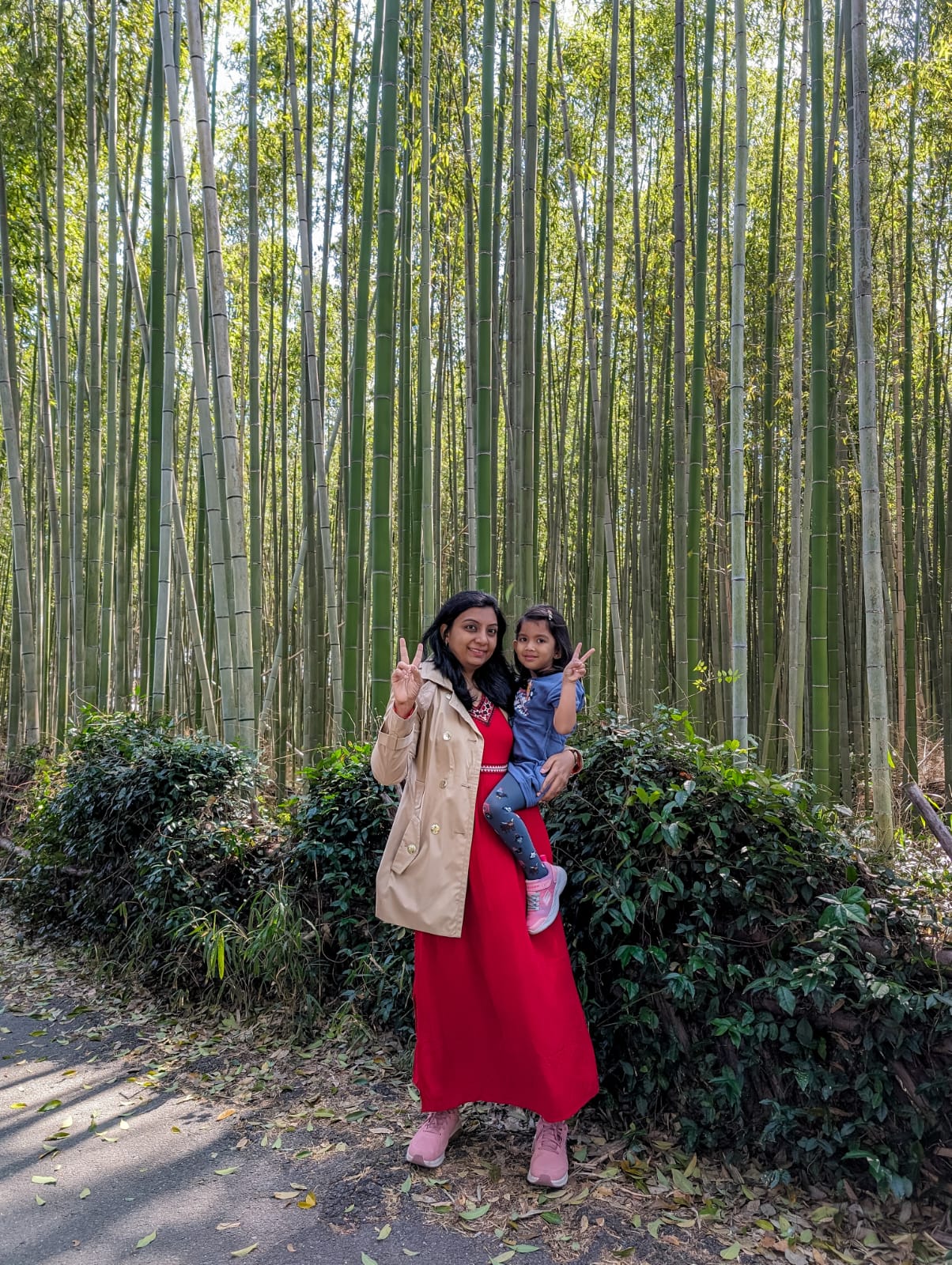
Located at the foot of the “Storm Mountains” in the north of the city of Kyoto, this world-famous, seemingly endless forest of swaying bamboo trees is perfect for a relaxing retreat to nature during a stay in Japan. It is open 24×7 and admission is free. The closest JR station is the JR Saga-Arashiyama Station which is 20 mins ride from the Kyoto central station. From there it is a 15 mins walk to the grove. Keep in mind that trains departing from the Hankyu Arashiyama Station (nearest station to grove) are not covered by the JR Pass. The romantic train – Sagano Scenic Railway also departs from this area and passes a gorge offering lovely views along the Hozu River.
It is recommended to visit very early in the morning during peak seasons to get good shots of the grove without people as it can get quite crowded otherwise. The sound of the rustling bamboo within this forest is an experience in itself. The path was fairly accessible for stroller and we spent about an hour in the forest area before heading to Tenryu-ji temple.


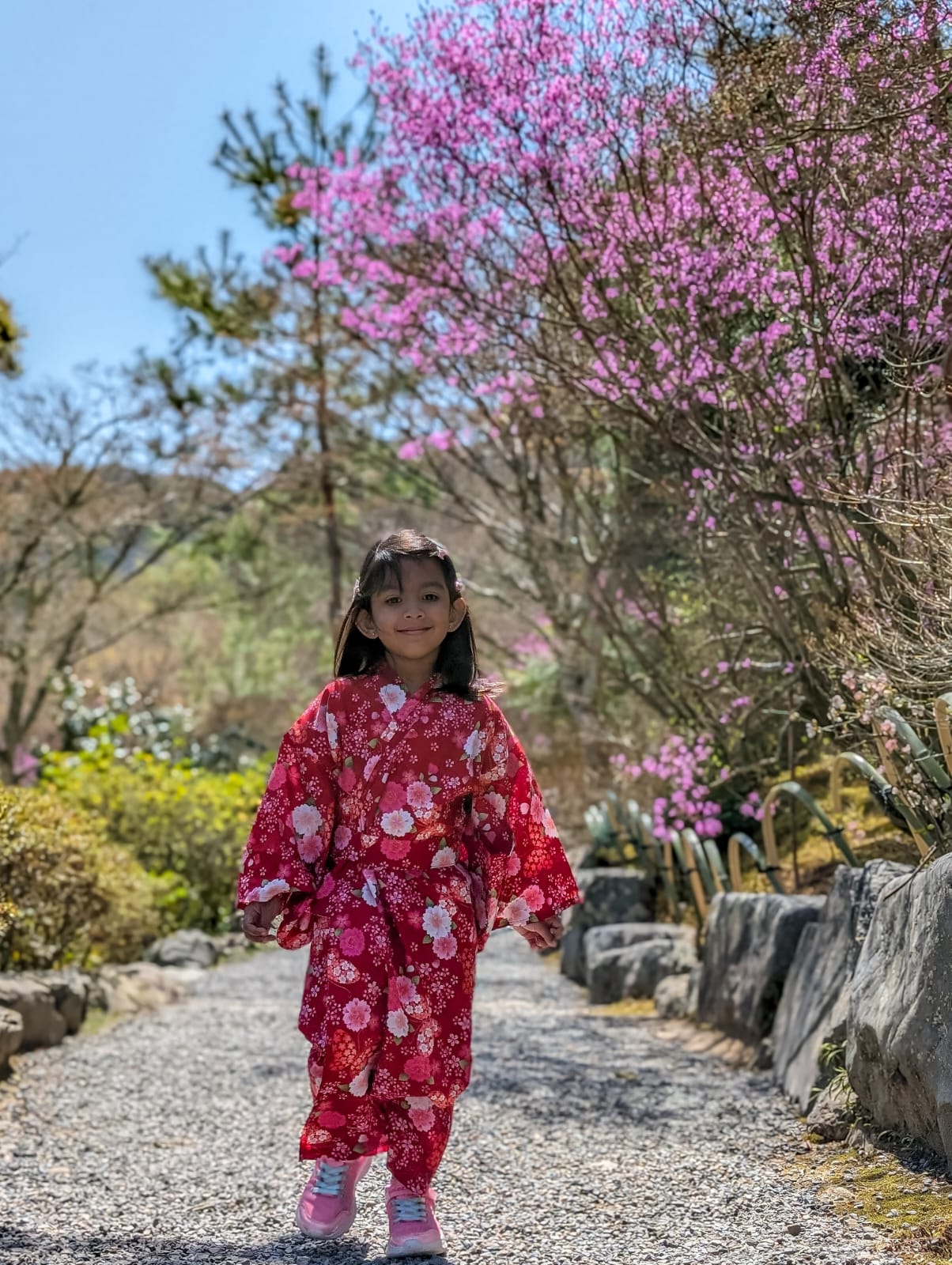
Tenryu-ji temple has an entrance fee of 500 Yen per person. It has a main temple and a beautiful Zen garden around it. We were in luck as this was one of the few places in Kyoto on that day that had cherry trees in full bloom. The beautiful Zen gardens littered with pink cherry blossoms all over and the main weeping cherry blossom tree closer to the main temple was a wonderful sight indeed. It isn’t too stroller friendly and we had to park our stroller closer to the entrance and cover the rest on foot. It is one of those places which is beautiful yet not intimidating by its size, you can cover the whole area in half an hour. We stayed around an hour here before breaking for lunch on the main street.


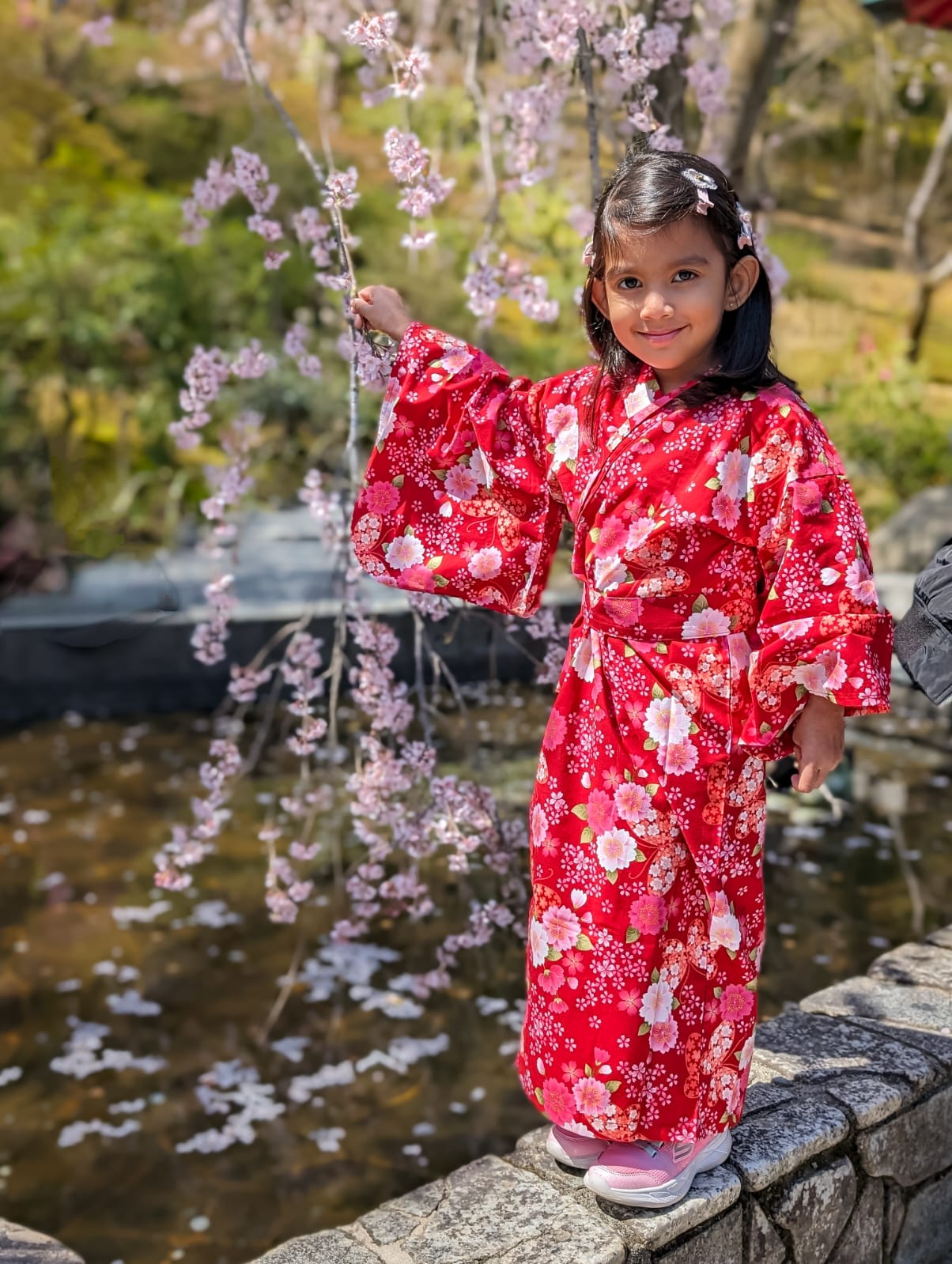
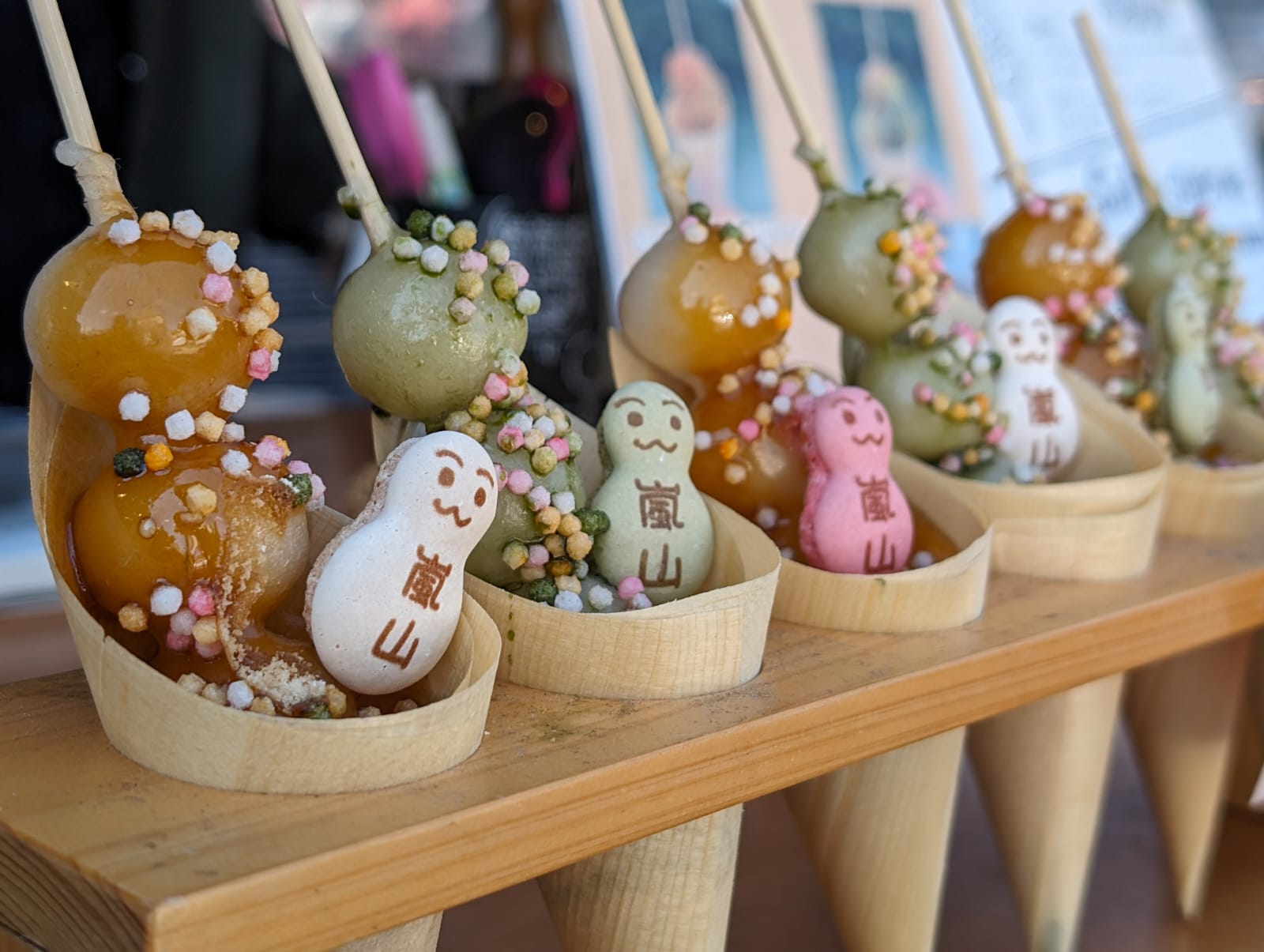
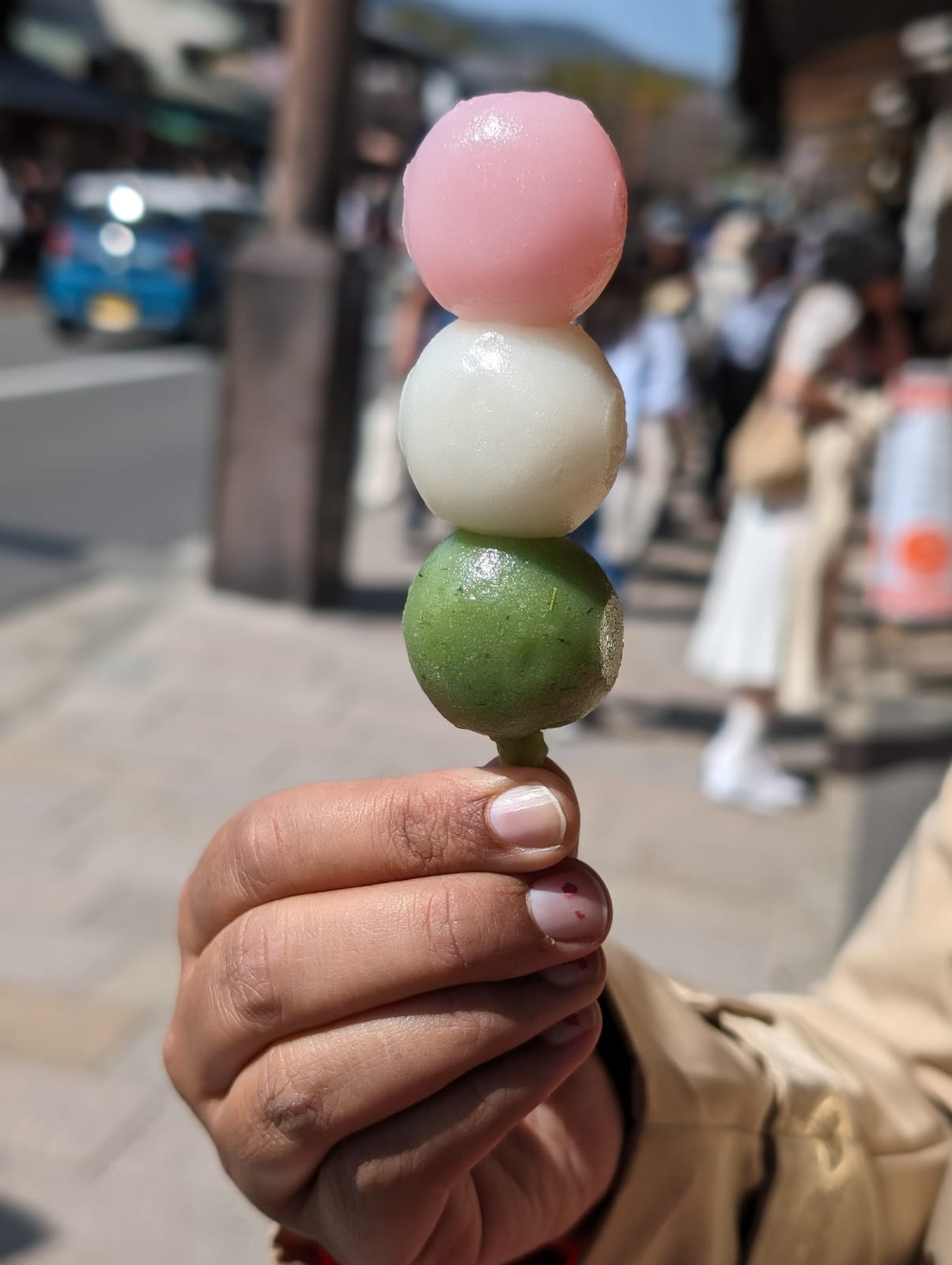
The Togetsukyo bridge is a 10 min walk from the entrance to bamboo grove along the Arashiyama main street. This stretch of the street is quite touristy with street being lined up with lots of eateries, money changers, shopping and other shops alike. We were able to try out a lot of the Japanese sweet delicacies we had on our list on this street – sakura mochi, miso dango, matcha vanilla baumkuchen etc.

The Togetsukyo bridge is a landmark in itself stretching 155m across the Hozu river and built against the backdrop of the rolling hills. There are lots of sakura trees closer to the bridge. Taking a shot of the bridge with sakura, the river and the mountains in the backdrop forms for a perfect shot, which I heard is often used in many of the Japanese period dramas. We spent half an hour here before heading back to the JR Saga-Arashiyama Station.
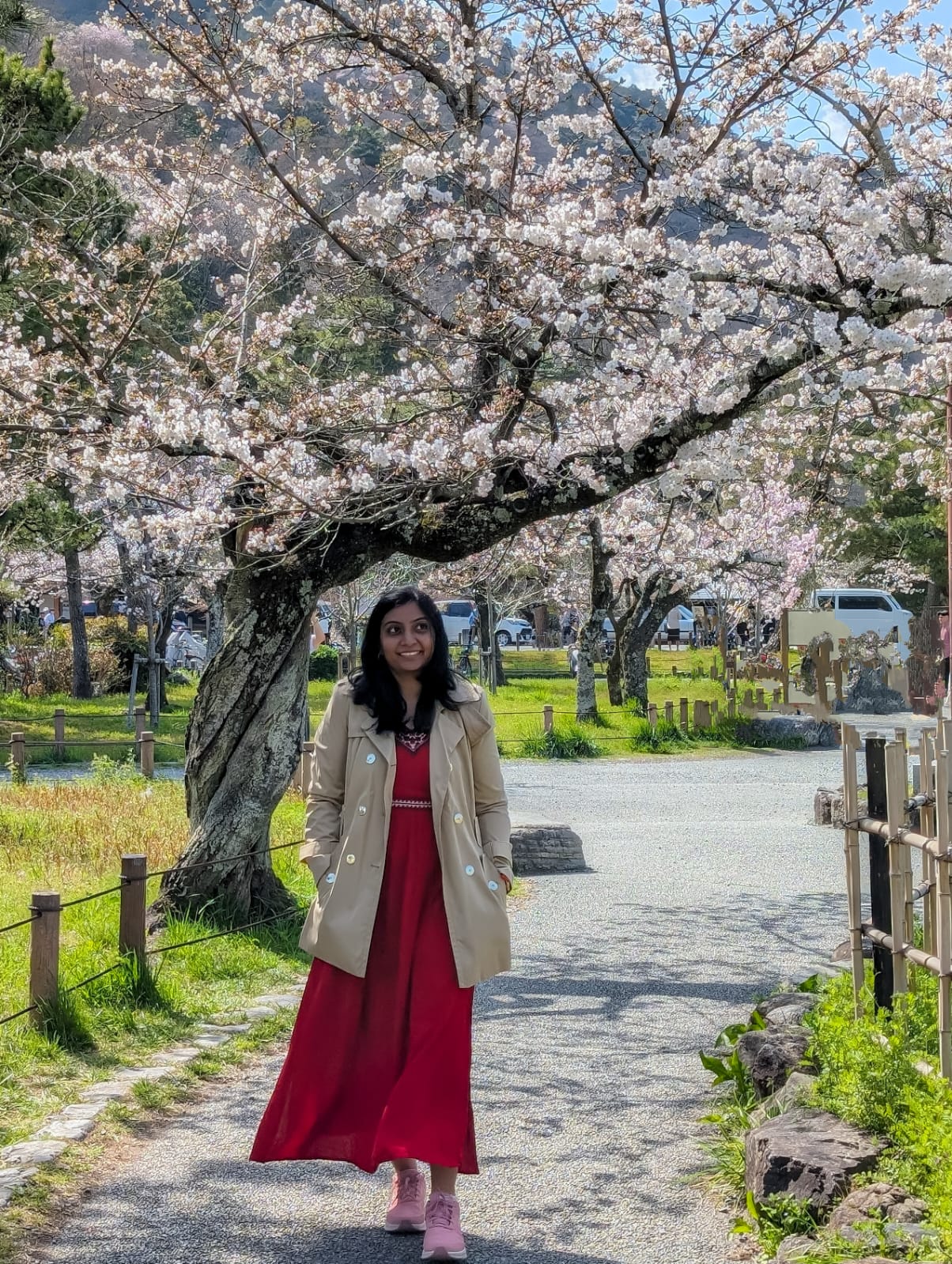

Other places to cover if you have more time in this area: Adashino Nenbutsuji temple, Jojakko-ji temple, Kimono forest
Late Afternoon: Visit Kinkaku-ji Temple (Golden Pavilion)
Kinkaku-ji temple also known as the Golden Pavilion is an iconic temple in Kyoto instantly recognizable by its golden coating. It is a UNESCO World Heritage site and incredibly popular with tourists. The temple isn’t very accessible by train. From the JR Arashiyama station, we took the JR San-in line to Emmachi station and then the bus 205/204 to Kinkaku-ji. The bus wasn’t covered in the JR pass and we had to pay extra for it. The entrance fee to the temple was 500 Yen.
The temple complex has a pond and the main temple built on it. There are gardens surrounding the pond and a gravel path that cuts through it. The walking path forms a loop and you can turn back on the other direction. It is also not very stroller friendly with lots of climbs up and down during the 15 mins walk around the gardens. Since you can’t really get very close to the main temple itself, having to share the space with lots of other tourists wasn’t too bad as you will end up with some opportunity to photograph yourself with the temple and pond in the backdrop. Overall the place can get quite crowded and the walk itself wouldn’t feel like a stroll in the park. Visit only for the main temple, you will find better and more peaceful gardens elsewhere.


If you have more time, additional places you can consider: Ryoan-ji temple and rock garden, Hirano shrine. We also had plans to stay back at the Kyoto station when the stairs gets illuminated in the evenings, but decided to drop the idea considering all our other constraints.
Day Three
Our day 3 of Kyoto sightseeing happened to be the last full day of our stay in Kyoto. The cherry blossoms had progressed well to almost full bloom now. The weather had turned gloomy on the day, with on and off spells of rains. It turned out to be a boon in some sense for us as the local crowd stayed away and we had lot of the iconic places all to ourselves.
Morning: Ginkaku-ji temple (Silver Pavilion) & Philosopher’s path
Ginkaku-ji isn’t well connected to city through trains. We took the Keihan Main line (private) from our stay to the Demachiyanagi station and took the bus 203 from there to the temple. Once we got down at the bus stop, we were greeted by a lovely path lined up with almost fully bloomed pink cherry trees. It is a short walk from the bus stop to the temple.


Ginkaku-ji temple, also known as the silver pavilion, is a Zen Buddhist temple built many centuries ago. It is a UNESCO World Heritage and unlike its cousin Kinkaku-ji (Golden Pavilion), it is not Silver at all. It has a very similar feel to the Kinkaku-ji but a bit less glamourous. There is the central temple and a walking path which goes up and down through a Zen garden. The gardens are quite pretty, the temple is serene but still doesn’t compare well to Ginkaku-ji. If you are short on time, I would suggest one can skip this place.


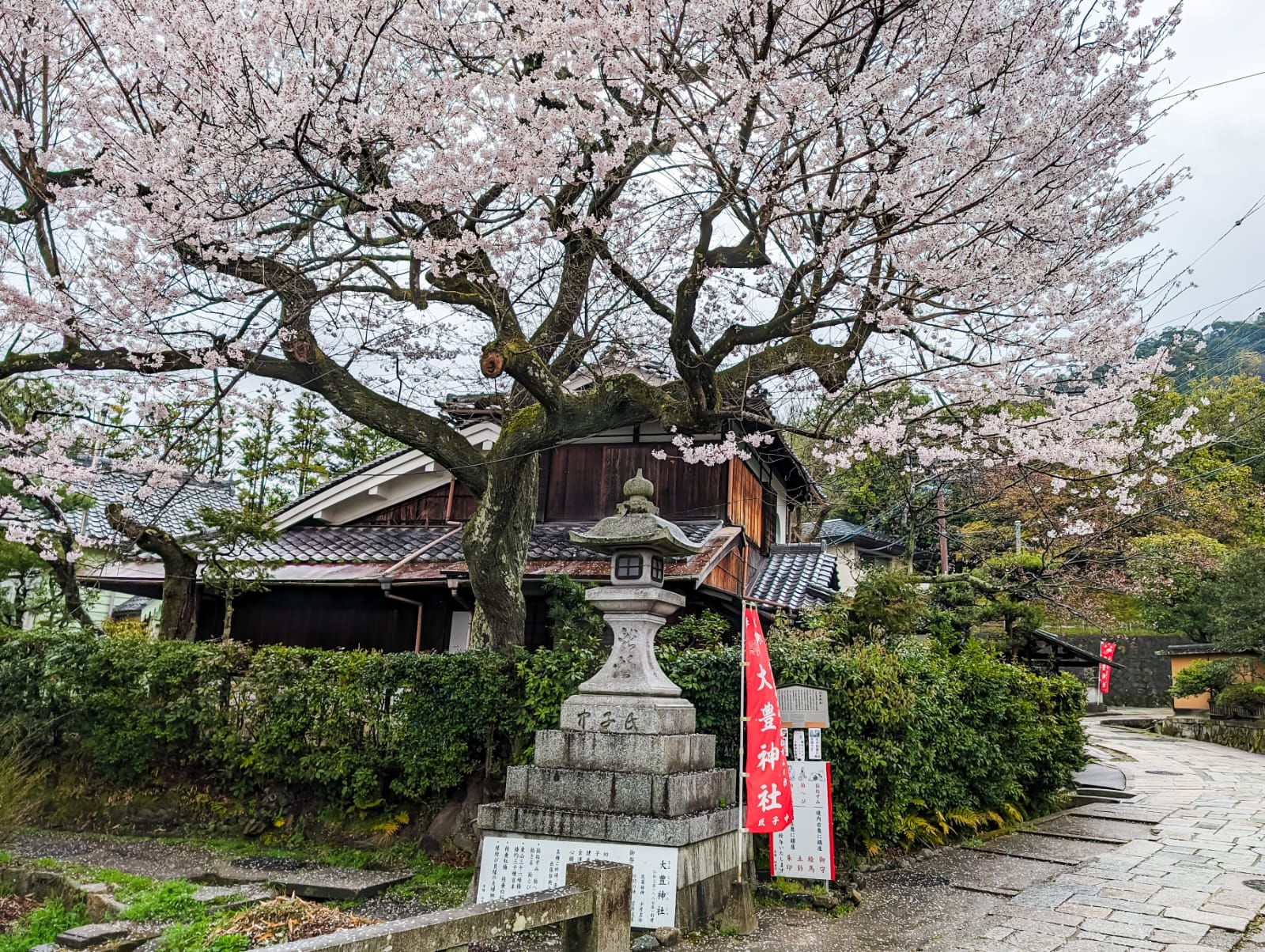
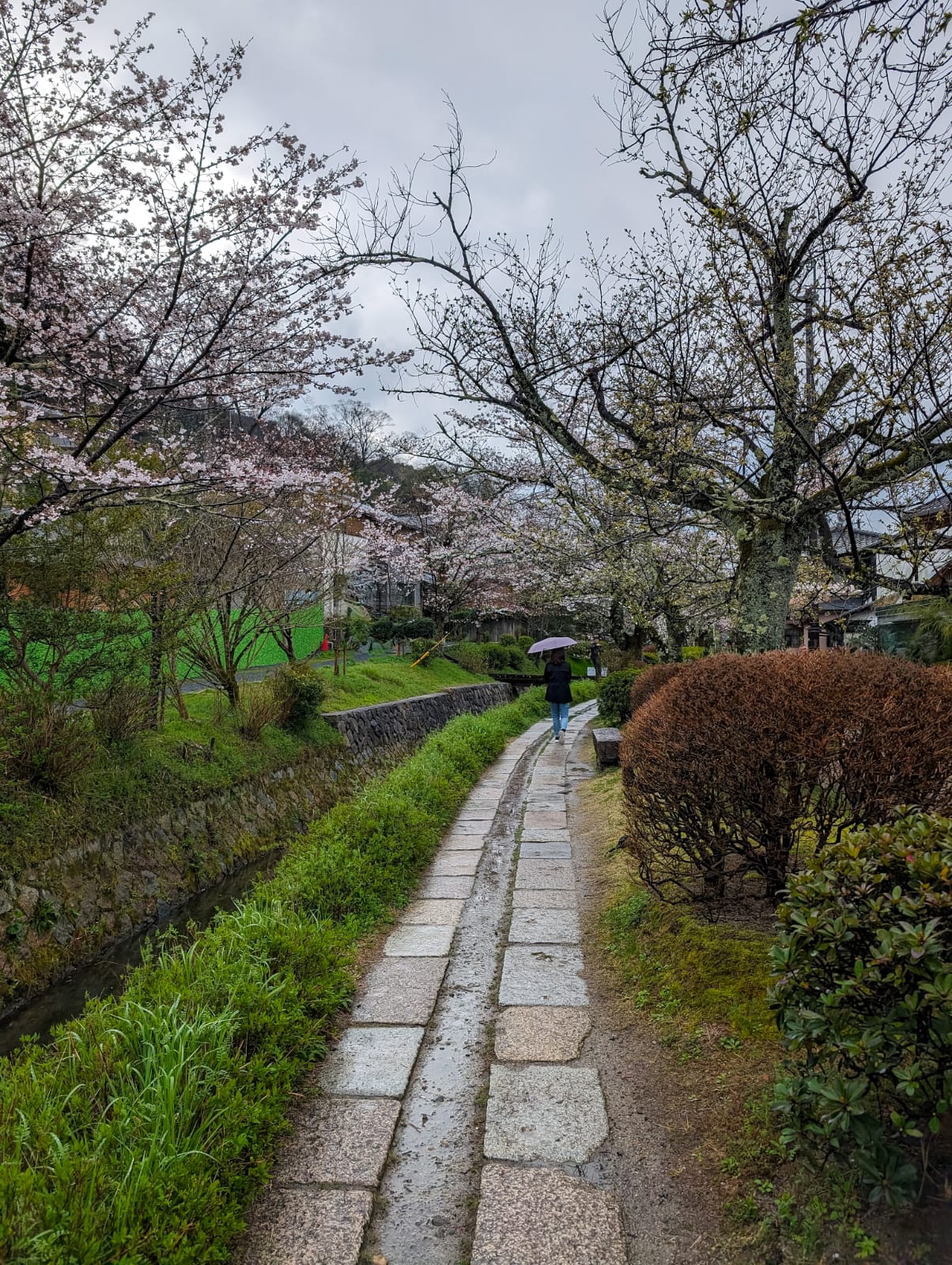
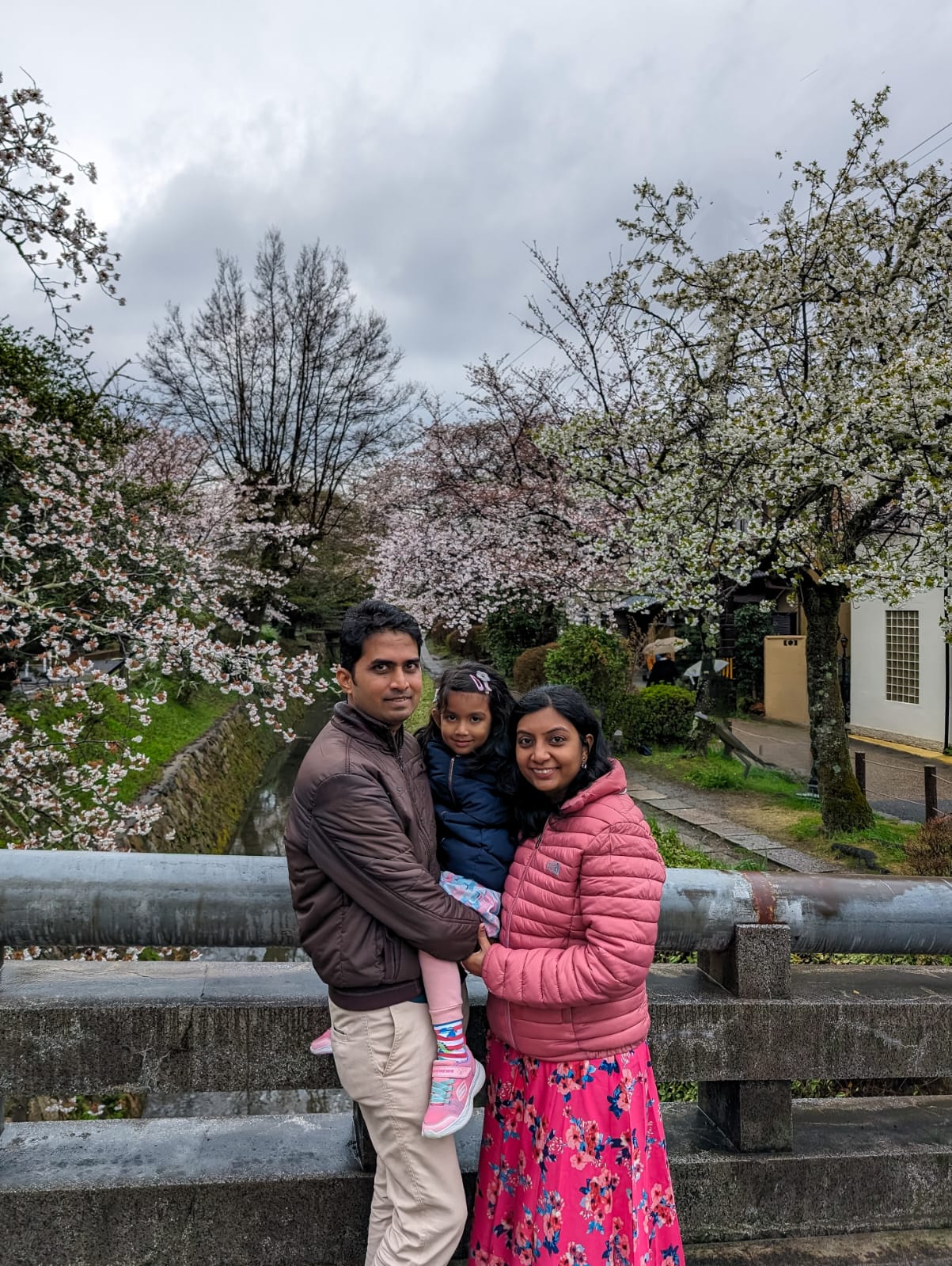
Approximately two kilometers long, the Philisopher’s path (Tetsugaku no michi) begins around Ginkaku-ji and ends in the neighborhood of Nanzenji. The path runs along a canal and is a prime spot for cherry blossom viewing during full bloom in Kyoto and continues to attract thousands of tourists each year. The path takes its name from philosopher Kitaro Nishida, who used to stroll along here and meditate. Since it was raining, there weren’t many people walking on this path and we were able to get some very good shots of the path lined with Sakura trees. Restaurants, cafes, and boutiques can be found along the path and we stopped at one of the cafes for a quick sip of coffee and snacks in the cold soggy weather.


Afternoon: Visit Keage Incline
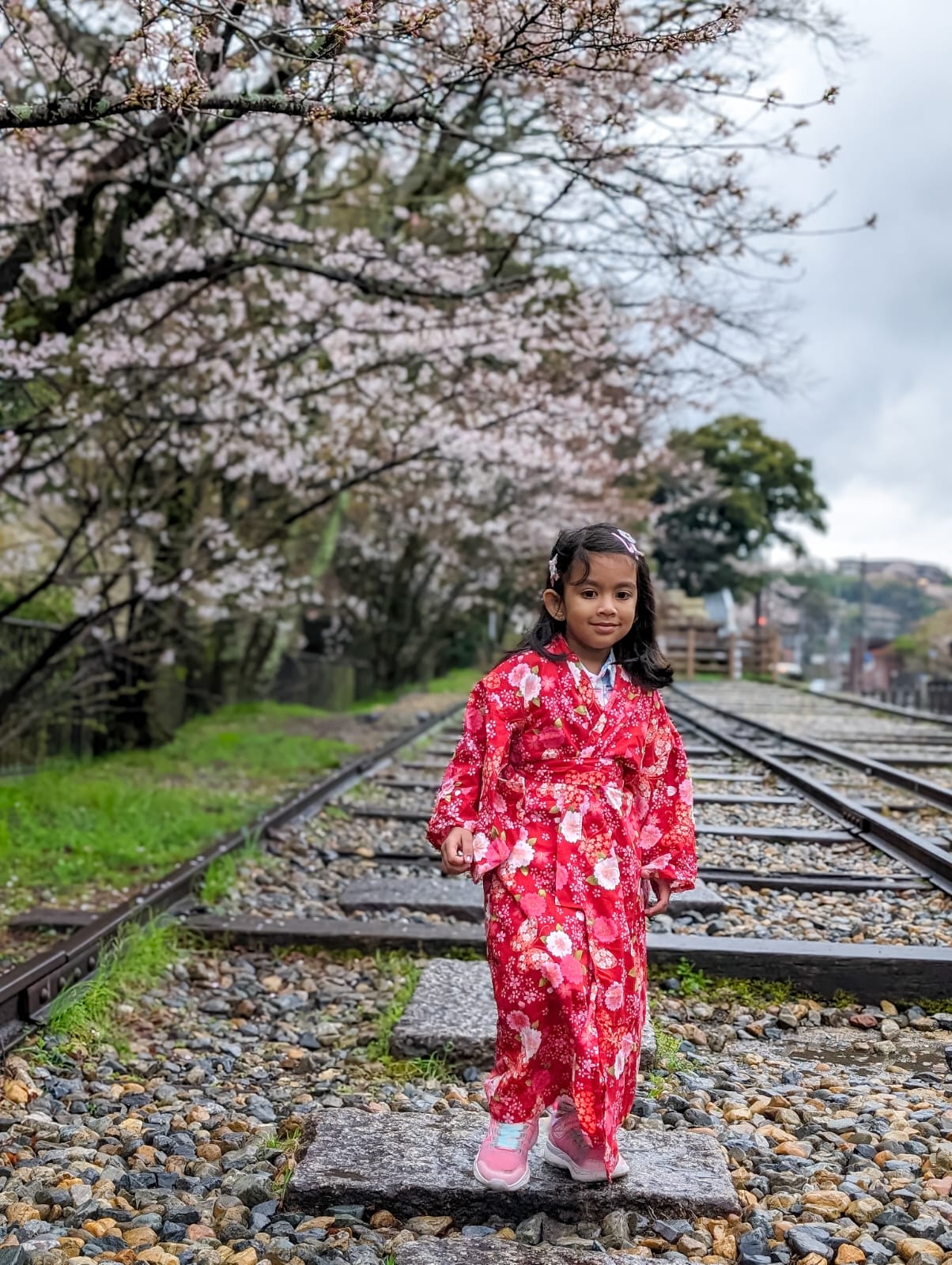
Our next stop on the itinerary was the Keage Incline. It is an abandoned railway line, now turned into a tourist walking path, slightly inclined and lined with numerous Sakura trees. It is a famous instagram spot and is usually gets very crowded during Sakura season. Since it was raining that way, we were able to find enough spaces without people in the frame to get good shots overall. After the philosopher’s path ends at Nanzen-ji temple, you have to walk about a km to reach this spot. Overall, we were happy with the beauty of this place and it totally lived up to its expectation.


Late afternoon: Attractions along the Ninenzaka and Sannenzaka paths ending at Kiyomizu Dera
From Keage Incline, we stated walking towards the Ninenzaka area and stopped around to see the Yasaka shrine and Maruyama park cherry blossoms along the way.


Ninenzaka and Sannenzaka are two ancient alleys located in Higashiyama district which continue to retain the old signature Kyoto architecture and a walk along these paths are one of the must do things in Kyoto. These paths hosts numerous souvenir and street food shops and finally end at the famous Kiyomizu Dera temple.
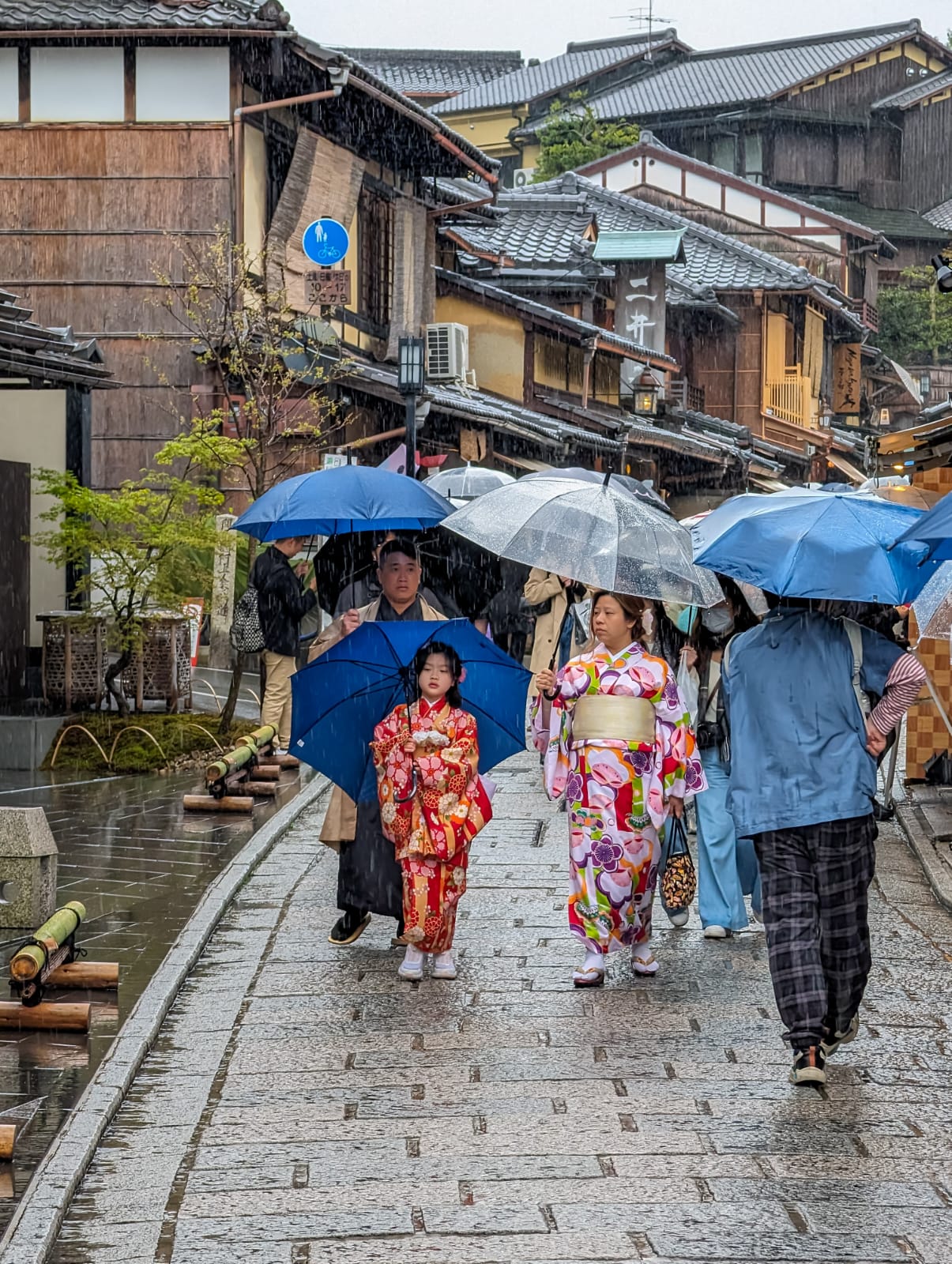

Ninenzaka is where you will find the famous insta-worthy Yasaka Pagoda Photospot. It also hosts the famous 2 storied Starbucks in a traditional Japanese architecture without an English signage to it, one of its kind in the whole world! The alleys can get very crowded during peak seasons, but it wasn’t too bad for us, thanks to the rain.


The roads finally led us to the west gate of the famous and iconic Kiyomizu dera temple. Kiyomizu dera stands for “Pure Water Temple” and this name comes from Otawa Waterfall whose streams run through the temple complex. The temple complex is quite big and hosts multiple smaller buildings inside it. The main temple platform itself is ticketed entry and yet there are so many other structures outside the ticketed zone that looked stunning in itself. The almost bloomed cherry trees around the complex gave much needed fillip to the beauty of the place as seen from naked eyes as well as through the camera lenses.
By the time we reached the ticket booth, it started raining heavily and the skies had turned black. So we decided to drop the idea of entering the main complex and took shelter outside. It’s beauty is unmatched and if there is one temple you should see while in Kyoto, it must be this. This remains an unfinished item on our list for future travels to Japan. We walked back to one of the restaurants on the main road and waited for the rains to recede while we also finished our dinner.


Late Evening/Night: Explore Gion area
To reach the Gion area, we took the scenic walk along the Maruyama park, Yasaka shrine and Chion-in temple to get a glimpse of the night illuminations.

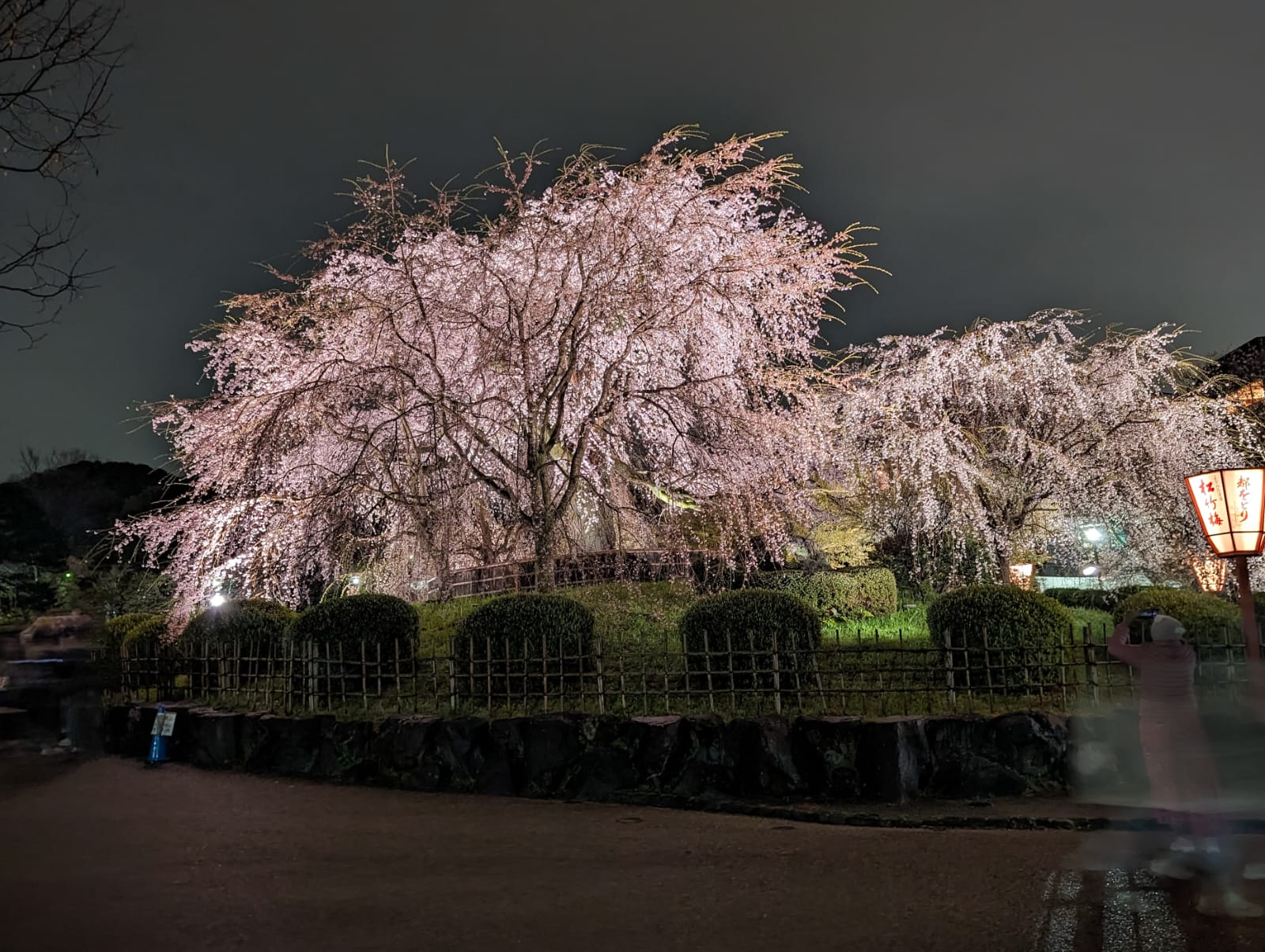
Gion is Kyoto’s most famous geisha district and forms one of the most popular places to visit in Kyoto. It’s lined with numerous shops, restaurants and tea houses and best explored in the late evening or during the night when it gets light up. We strolled along the most famous Hanami-koji street before heading to the Shirakawa lane.

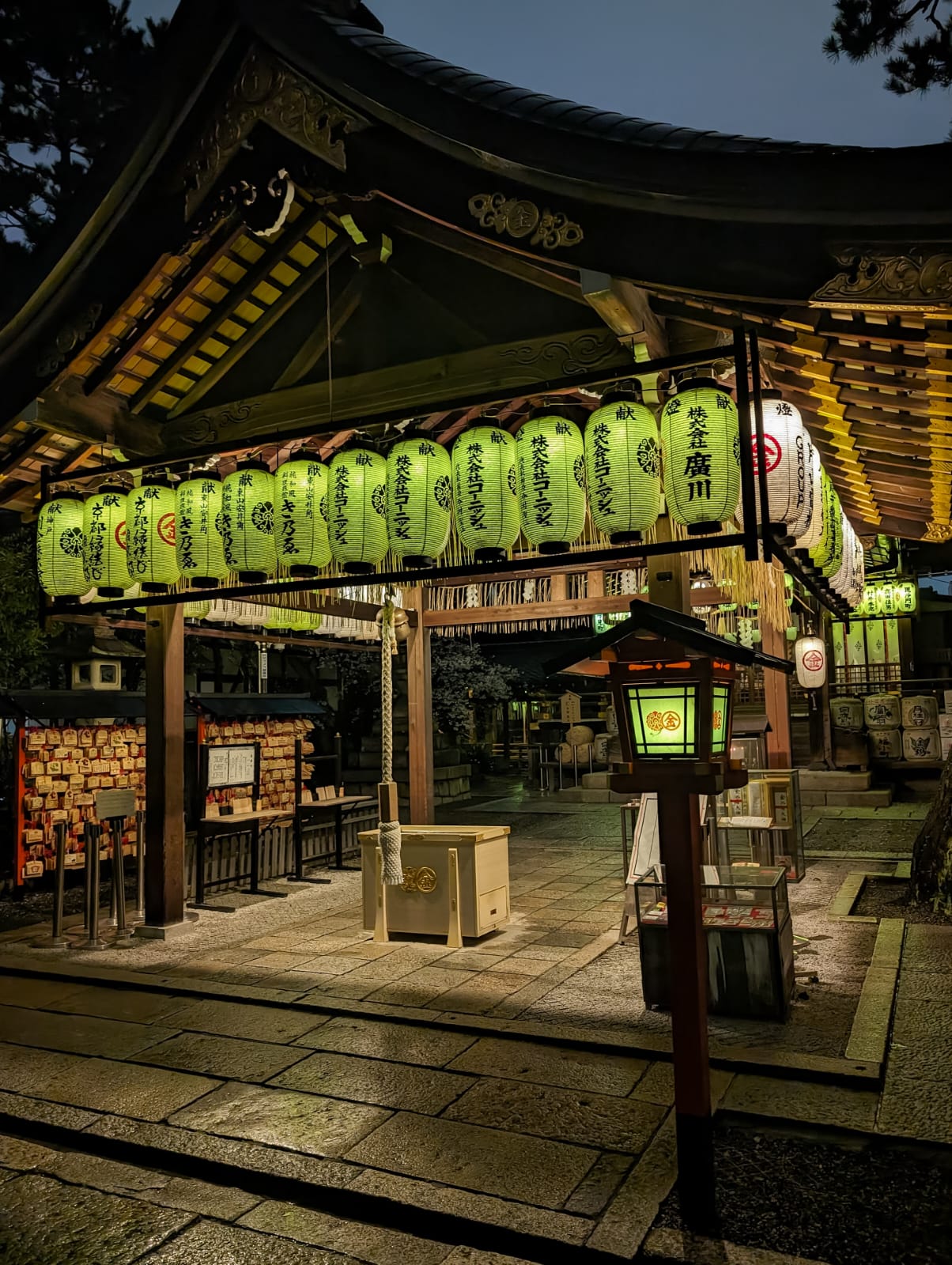
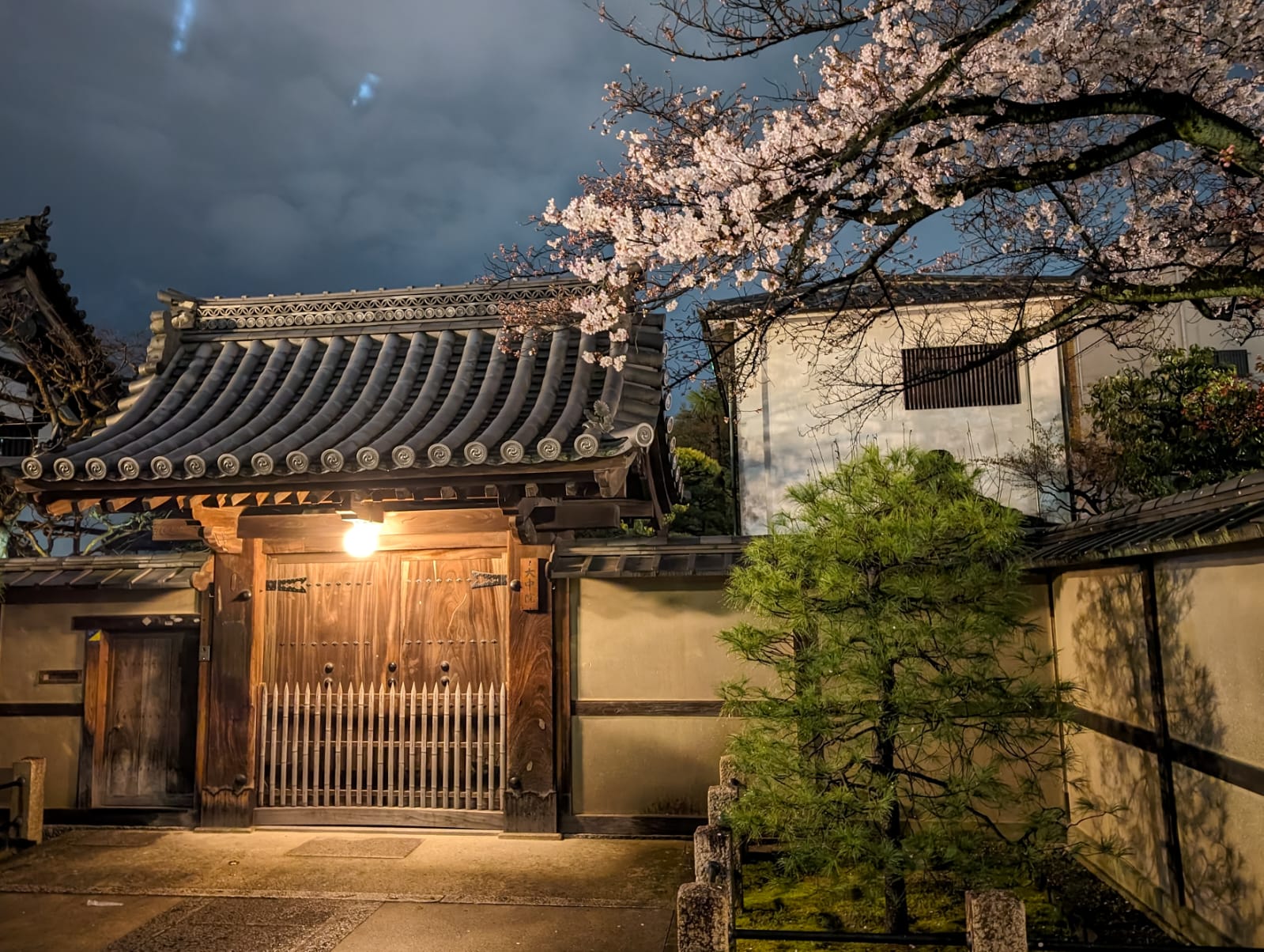

The Shinbashi-dori, Tatsumi bridge and Shirakawa lane are all inter-mingled or closeby to each other and form a beautiful cluster of spots in Gion area to explore at night with illuminated Sakura trees. We were also able to spot Geishas at the tea houses lined along the canal.
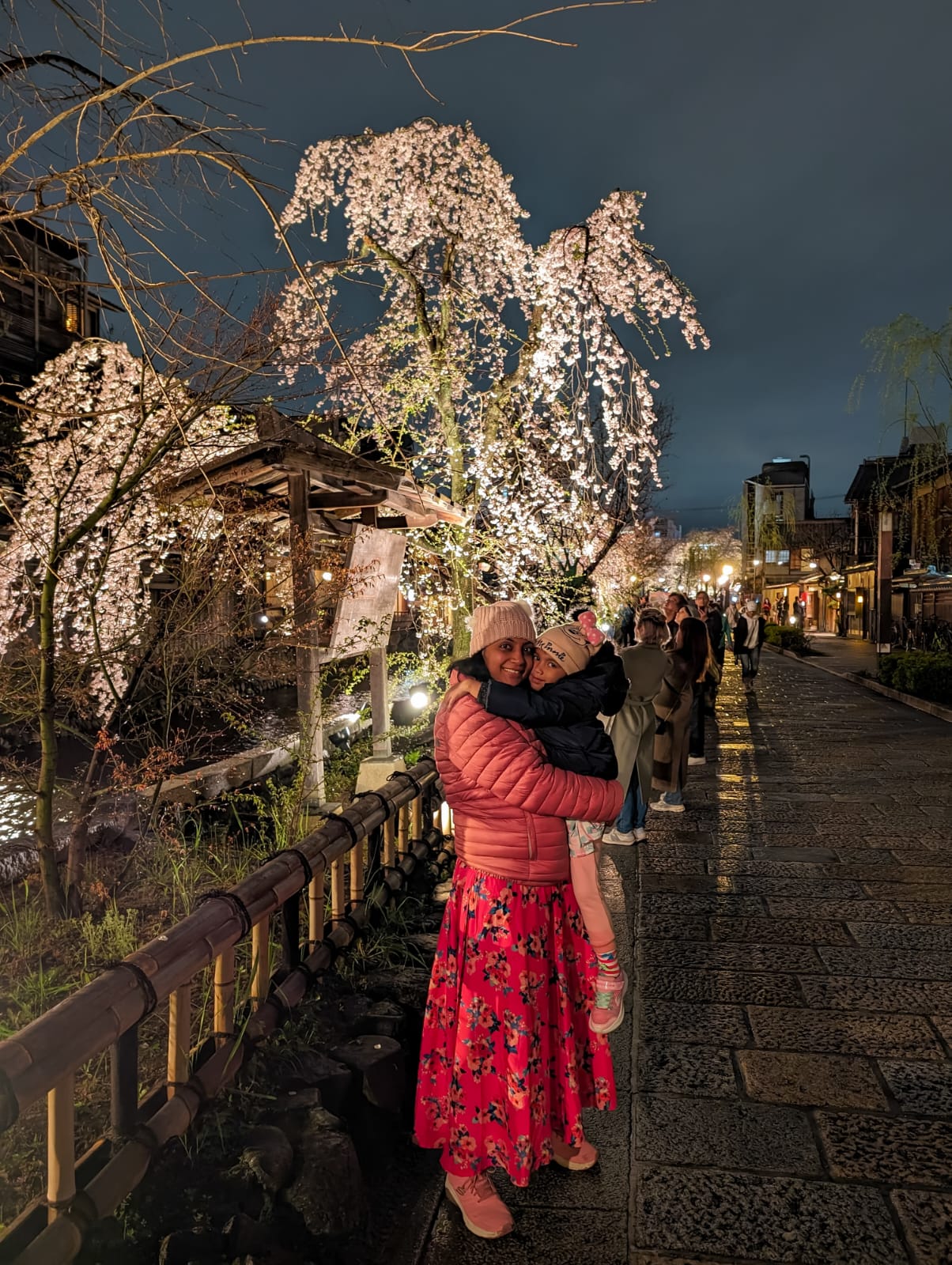


Overall, it turned out to be quite a hectic and fun filled day. We were able to cover a lot of important places from Kyoto and got good shots of iconic places sprinkled with Sakuras in the foreground/background.
Closing thoughts
Kyoto turned out to be exactly what we had imagined – ancient architecture, multiple Zen gardens, lots of walk and some amazing street foods. We were quite content in the end with all the places we were able to cover considering the various constraints we had.
 Unending Vacations
[…] A guide to 3 days in Kyoto […]
LikeLike