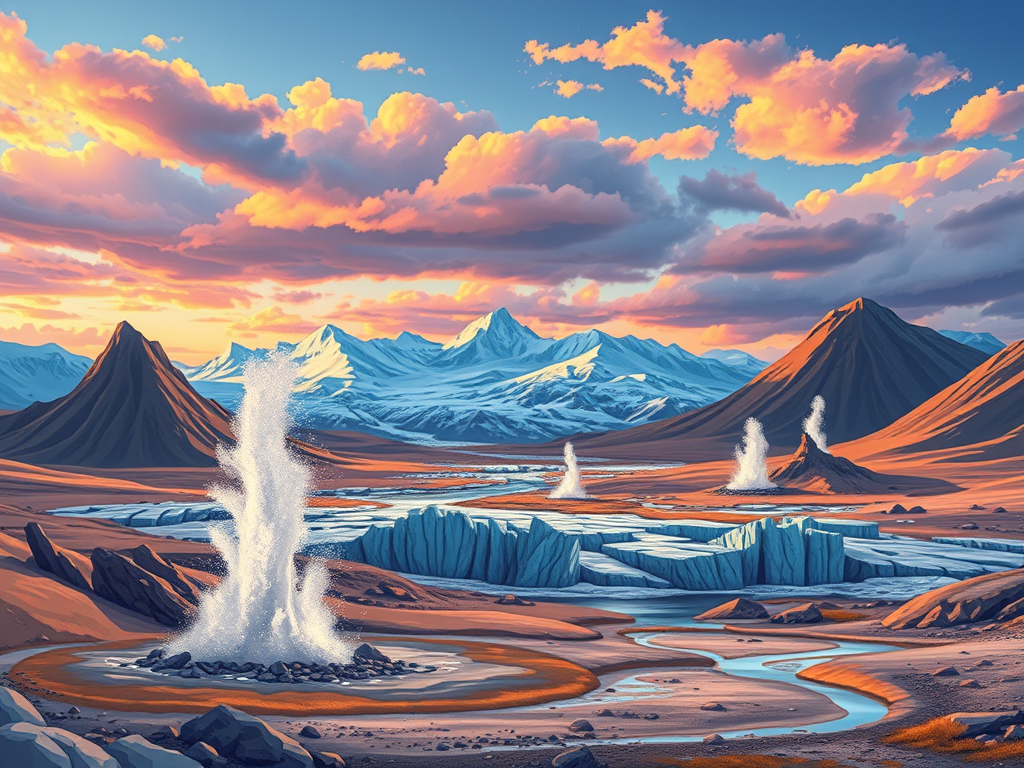
Welcome to Iceland, the land of Fire and Ice. An island so diverse, it feels like you are on a different planet altogether. With a population of less than half a million people, much of the island remains untouched. Best way to experience this natural wonderland is through taking a car ride along its ring road, which goes around the entire island providing easy access to some of its most breathtaking sites. We visited Iceland during our multi country European adventure in October 2024 and spent 8 fabulous nights on this island chasing Northern lights, Waterfalls, Glaciers, Geysers, Geothermal Wonderlands among others.
Best time to visit
There are primarily 2 seasons you should target to visit Iceland as a tourist – Summer or Autumn.
Summers are the peak season in Iceland and sees lots of tourist activities. It starts from June and runs through August with lots of day light, even a mid night sun during June. These are perfect to explore the vast natural beauty that Iceland has on offer. Weather is warmer, yet not warm enough to remove your jacket completely. Another advantage of travelling during this season is that the roads are clear and accessible, including those ‘F’ roads. Some of the cons include sharing space with lots of other tourists, prices tend to be higher – food, stays, rental car etc. You can also forget chasing Northern lights during this season.
Autumn runs from August till October. This is probably better suited for tourists if you want to experience both natural beauty and northern lights. Starting September, you will start experiencing some activities and sightings around northern lights as the day light gets shorter. Temperatures also start dropping and can get to zero by October, including some snow. In general, this is a great time to experience the country with cheaper prices on car rental, stays, food, lesser tourists etc. and enough day light for you to explore the many sites it has on offer. Plus great chance of seeing northern lights as well. The cons of travelling during this season include possible storms and road closures, and unpredictable weather including some rain.
When we went in mid October, the weather around Reykjavik was high single digits and as we travelled north, it started getting much colder (zero or sub zero) and even saw many days of snowfall.
Visa
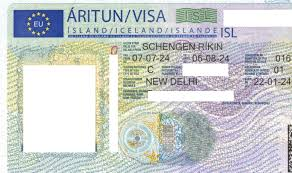
Iceland being part of the Schengen region, you will require a Schengen tourist visa to visit the country. Just like any other Schengen Visa, the process can be painful. Iceland is pretty unique in the sense that it has the highest approval rates on the application from India (around 1% rejection rate for Indians if I remember correctly). The primary reason could be that the general tourists (including the first timers) don’t really apply directly to Iceland embassy. They also insist on producing flights to and from Iceland (since its an island and primary means to get there is through flight) during application process, which pushes away casual tourists.
A big hinderance to getting a stamping from Iceland embassy is that the slots for visa application through VFS are hardly available. They tend to release slots for 2 months or so at a time, on some random day and even on each day, there are only 5 slots available. After tracking the slots for 2 months, we were able to get the required slots at the VFS center in Bangalore and submit our applications. If you are really desperate, you can also do a walk-in at their Delhi VFS center on Fridays, but slots are limited and be prepared to queue up very early. We also came to know that Bangalore VFS offers some limited walk-in slots for Iceland visa every Wednesday, but you might have to take their premium lounge facility. The processing of application is very fast and we got our visa in 2 days.
Currency & Credit Card Usage
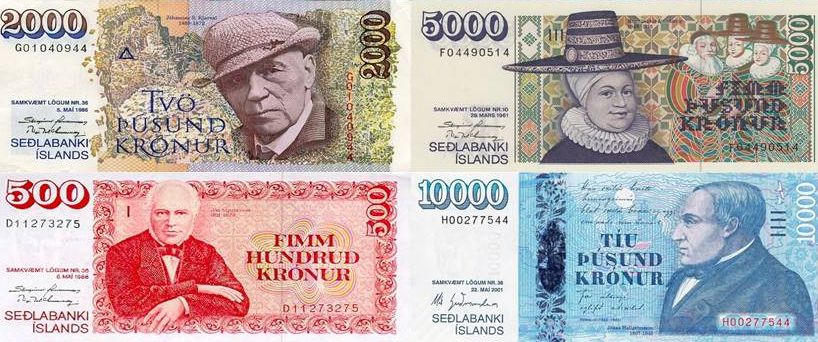
The country’s currency is called Icelandic Krona (IKR) and roughly equals 0.6 Rs/IKR (as of October 2024). Of all the countries we have visited so far, Iceland is one such country where we have found the credit cards to be accepted 100% of the time. So do no bother bringing cash or exchanging currency at the airport. In fact, lot of places including the parking machines don’t even have any means to pay by cash.
Food & Grocery

Food is generally expensive in Iceland. Outside of the capital city of Reykjavik, the population is so sparse that finding places to eat in itself can be a bit of an exercise. Make sure to plan your pitstops for lunches accordingly. On the positive side, you have to order your food at the counter and they will serve the food at your table. So you can get away with sharing food, ordering limited food etc., and don’t have to afraid of being judged in a bad light by the staff which is very typical behavior in many of the European countries. You can offset some of the high cost of dine in food by taking some bakery stuff from the supermarkets like muffins, croissant etc. For grocery shopping, it is best to stock up in one of the supermarkets in Reykjavik before embarking on your ring road journey.
Car Rental

Best way to experience Iceland is by renting a car and driving through the country by yourself. This way, you will be able to access the remote parts of the country which are usually more beautiful and not accessible if you go with tour packages. But driving in Iceland can be quite an adventure; the unpredictable weather, high winds, blowing sand, gravel roads etc. all add to the complexity of the journey. Make sure to choose the right season to visit Iceland to be able to have a confident and safe journey on your travel. Many of us don’t opt for insurance for rental vehicles in other countries, but Iceland is different. Considering the mentioned complexities, its super important to take full coverage or something close (including gravel protection) while renting your car. There are different types of coverages on offer –
- Collision Damage Waiver (CDW) – This is optional in many countries but in Iceland, its included in all rentals bringing the excess to around 1000 USD or something.
- Super CDW – An elevated version of CDW that will reduce your deductible. We took this and made our deductible to zero and I would recommend for others as well.
- Gravel insurance – For protection again gravel cracks on your windshield when driving through gravel roads. Recommended, we took this as well.
- Theft Insurance – For protection against theft of your vehicle. Iceland is usually a safe place, so this can be ignored.
- Sand and Ash Insurance – Mostly helpful for dings in the paint from sand blowing. We took this – Recommended.
We got a good deal on car rental through Avis with the World Mastercard Elite card offer. Avis and Hertz both run similar elevated discount offers for Visa Infinite and World Mastercard Elite cards. Make sure to take advantage of them.

Campervan vs Car – If you are just 2 people (or in multiples of 2) and want to save some money on accommodations, renting a campervan could be a good choice. Iceland has tons of campsites and websites to look for free or paid camping overnight. Since we were with a kid, we decided to rent a car and book BNBs all around Iceland as we moved from one place to another. Another advantage of campervan is you could keep your plans flexible and not be affected too much by the changing weather conditions, which you can’t do with car rental.
Clothing Guide/What to shop for Iceland
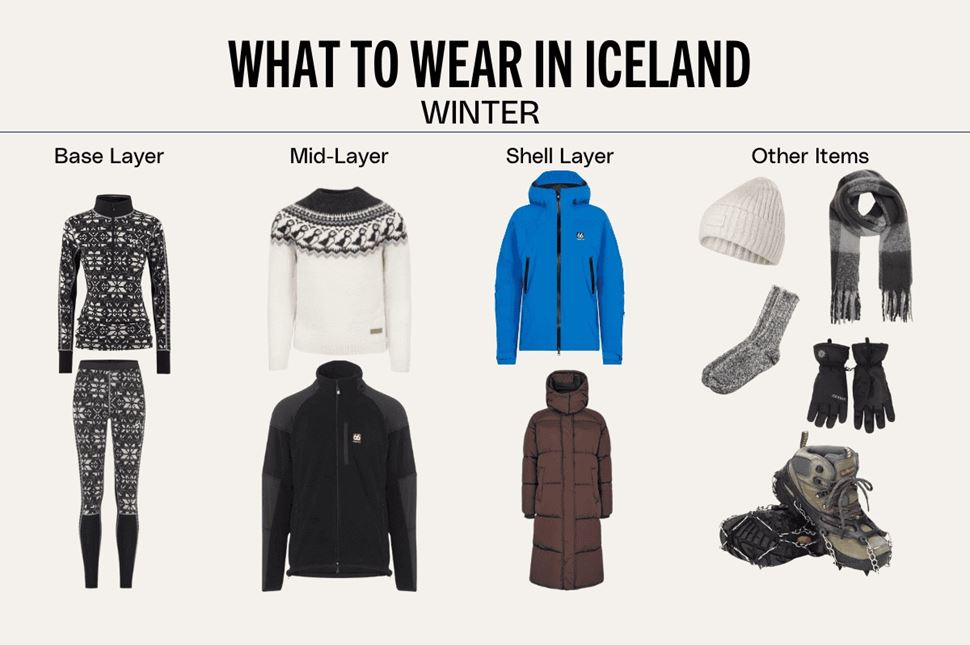
Iceland is generally said to have unpredictable weather, so irrespective of which season you go, you should be prepared for the worst. Iceland is extremely windy and a good Jacket goes a long way in making your life comfortable during your stay. Along with that, you will need one or two layers of Thermals/Base layers made of Merino Wool or Polyester from a good brand like Decathlon. Raincoats are suggested since places around waterfalls tend to make your clothes went, even if there is no rain around. We also took along a fleece jacket from Decathlon which was super value for money. Apart from this, make sure to bring along good sets of socks, mostly of thick wool and waterproof hiking boots. We also found water resistant pants (snow pants) from Decathlon which could be good alternative to traditional Jeans for outer layer. Remember, on couple of days, the temperature did drop to Zero or below, so planning well was important and you should too.
Itinerary
Our high level itinerary was as follows –
Day 1: Reach Reykjavik & overnight stay. [Stay: Reykjavik-Guesthouse Galtafell]
Day 2: Drive through the Golden Circle route ending at Reynisfara [Stay: Hörgsland Cottages]
Day 3: Visit the Diamond Beach, Jokulsarlon & Stokknes peninsula [Stay: Stafafell Cottages]
Day 4: Drive through the east of Iceland on our way to North (visit places like Egillstadir, Seydisfjordur & Stuðlagil Canyon) [Stay: Fjalladýrð Guesthouse]
Day 5: Visit Dettifoss, Selfoss, Namfjall geothermal area and Myvatn Nature Baths [Stay: Breidamyri Farm Apartments]
Day 6: Visit Godafoss, explore Akureyri city [Stay: Fraendgardur]
Day 7: Explore Snaefellsnes Peninsula – Stops at Búðakirkja church, Arnarstapi Cliff Walk, Hellnar viewpoint, Kirkjufell Mountain [Stay: Kirkjufell Central Apartment]
Day 8 & 9: Reach Reykjavik by noon. Explore the town for rest of the day. [Stay: Reykjavik-Guesthouse Galtafell]
A note on our accommodations – all turned out to be excellent and recommended for others as well.
Day by day guide to what we did in Iceland
Day 1: Reach Reykjavik & overnight stay.
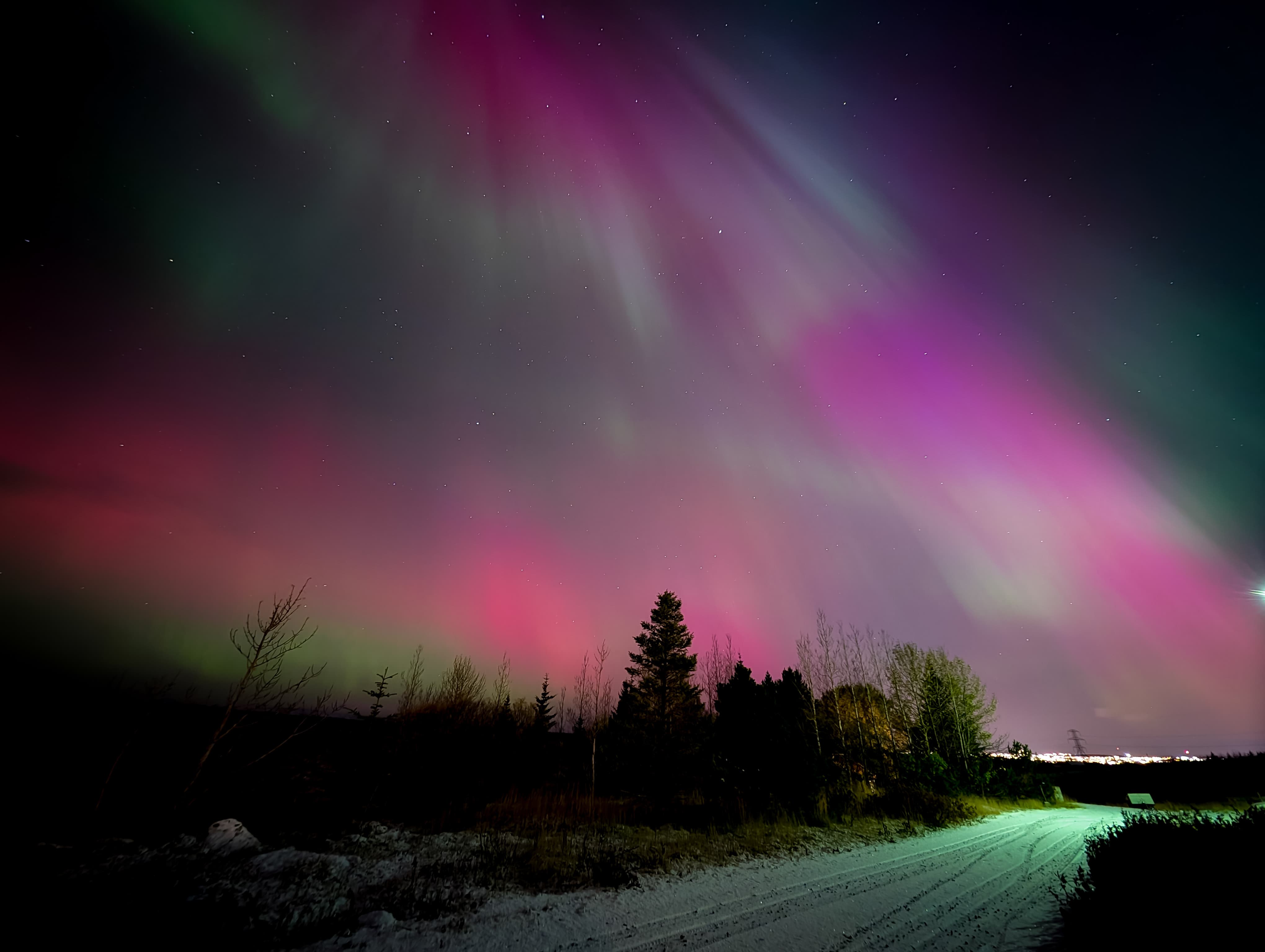
We landed at Reykjavik airport by late afternoon and after picking up our rental car, headed to one of the biggest supermarkets on route to our stay – BONUS. Make sure to stock up supplies before heading towards the less populated parts of Iceland. Luckily for us, this was also the day when a big geomagnetic storm hit the earth pushing the KP index to 8 (G2 storm as they call it, one of the rarest). More on the Northern Lights chase and technical aspects around it in this post.
We finished our dinner quickly and headed out in search of the Northern Lights. And boy did we get some show! It was truly one of a kind experience, being our first experience at the Northern Lights and such luck at that! We spent a good couple of hours seeing the lights dance around before saying goodbye to them.


Day 2: Drive through the Golden Circle route ending at Reynisfara
The Golden Circle is Iceland’s most famous scenic route. It is a round-trip sightseeing tour that combines stunning landmarks and historically significant places. If you are in Iceland for a short visit and don’t plan to rent a car, this is probably what you end up doing on guided tours. For us, even though we started in Reykjavik, we didn’t circle back to the origin and headed onwards and upwards towards our BNB at the end of the day towards the south east of Iceland. Along this route are many famous tourist attractions and covering them all in 1 day takes time. So not surprising that this day turned out to be one of the longest days on our Iceland travel. Make sure to start early.
Thingvellir national park


After an hour drive from Reykjavik, you will get to this UNESCO World heritage site. The lava fields at Thingvellir are torn apart by tectonic forces, leaving admirable gorges and fissures. The park contains various hiking trails and one could scuba or snorkel between the 2 tectonic plates. The area around this is blessed with natural beauty and it remains one of the important stops along the Golden Circle for the tourists. The entrance is free but parking charges apply (1000 ISK).
Strokkur Geyser
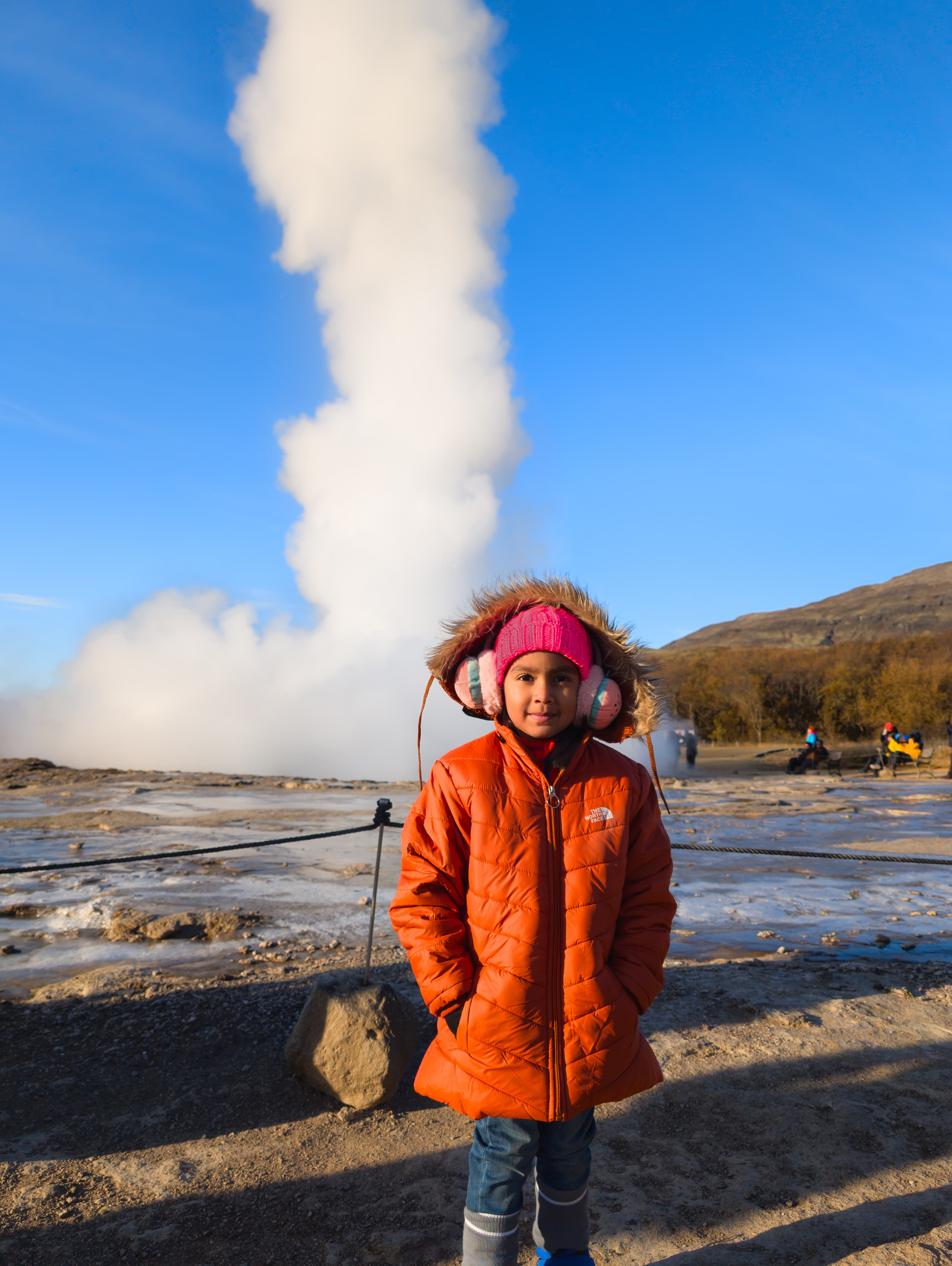

The next famous attraction on this route is the Strokkur Geyser. It is the most active geyser in the valley throwing water up to an impressive 15 to 20 meters high every 10 to 15 mins. The geyser is located after a short 5 min walk from the parking lot. Parking and entrance are both free here.
Gulfoss falls
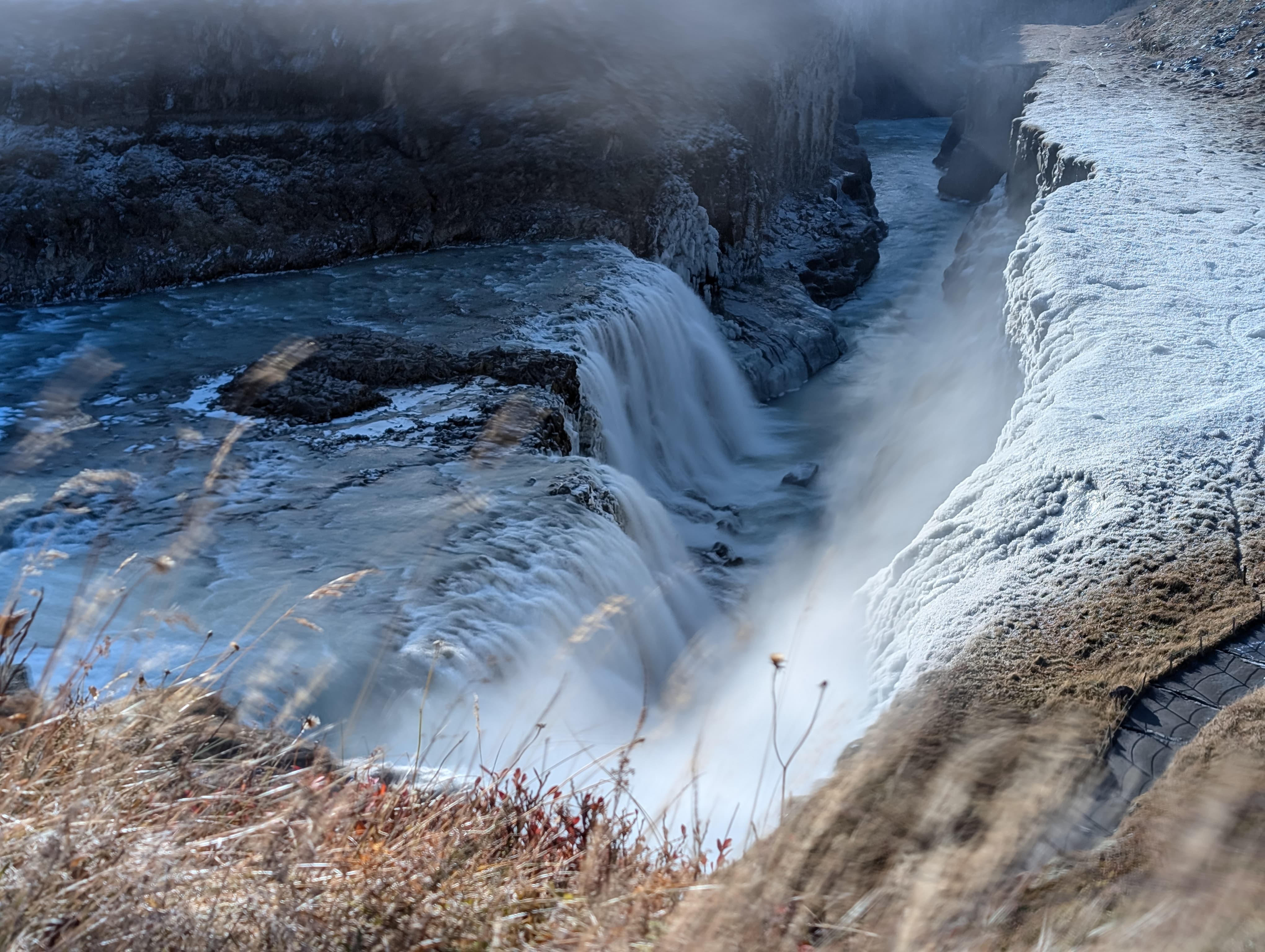
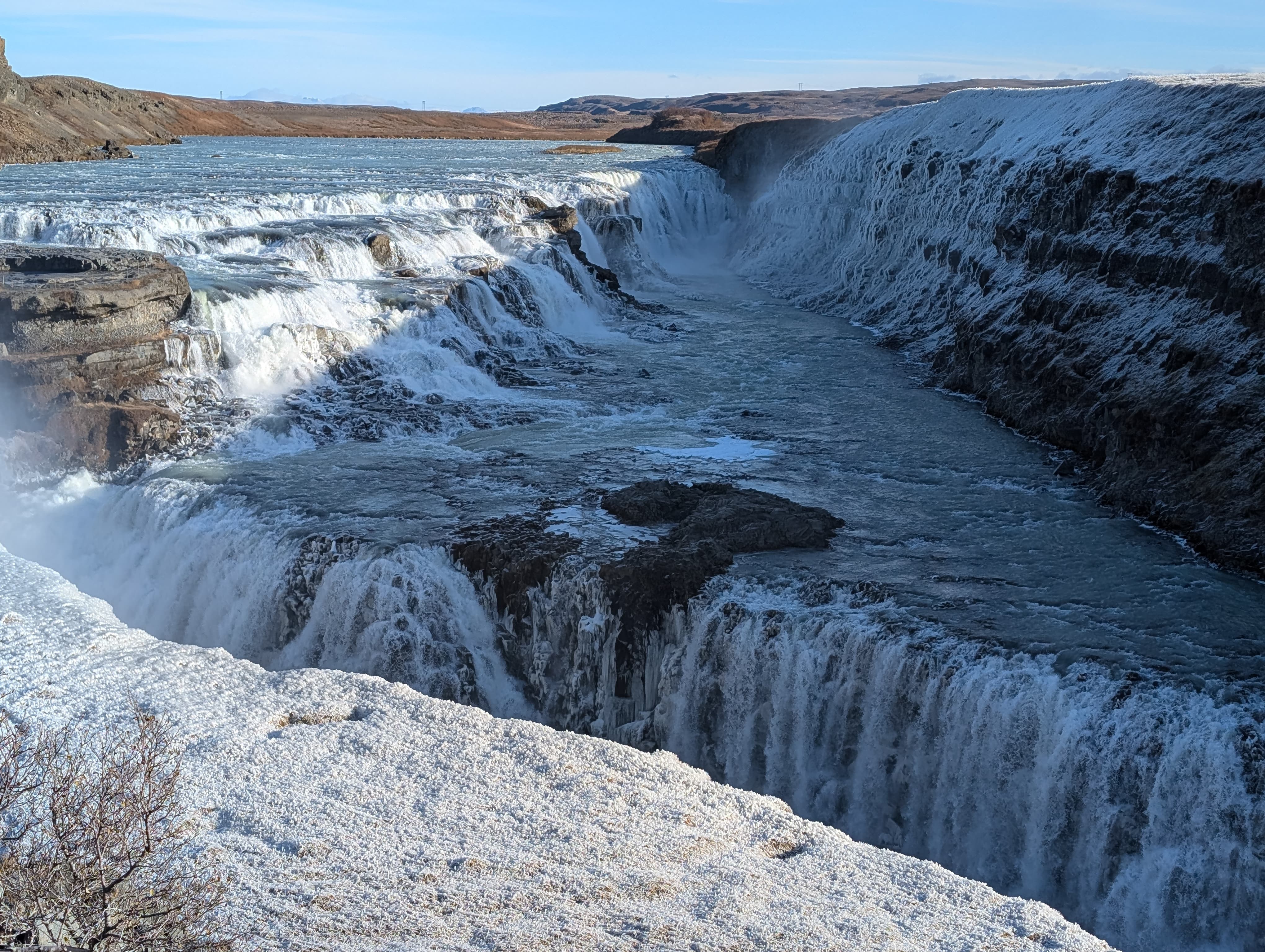

Gullfoss, which translates to the “Golden Falls,” is one of Iceland’s most famous natural attractions. The flow of water is powerful, plunging into a dramatic canyon to the depths of around 30 meters. The drop is actually made of 2 distinct stages: The first drop of around 10 meters and the second larger plunge of around 20 meters creating for an impressive display of nature’s power.
Seljalandsfoss
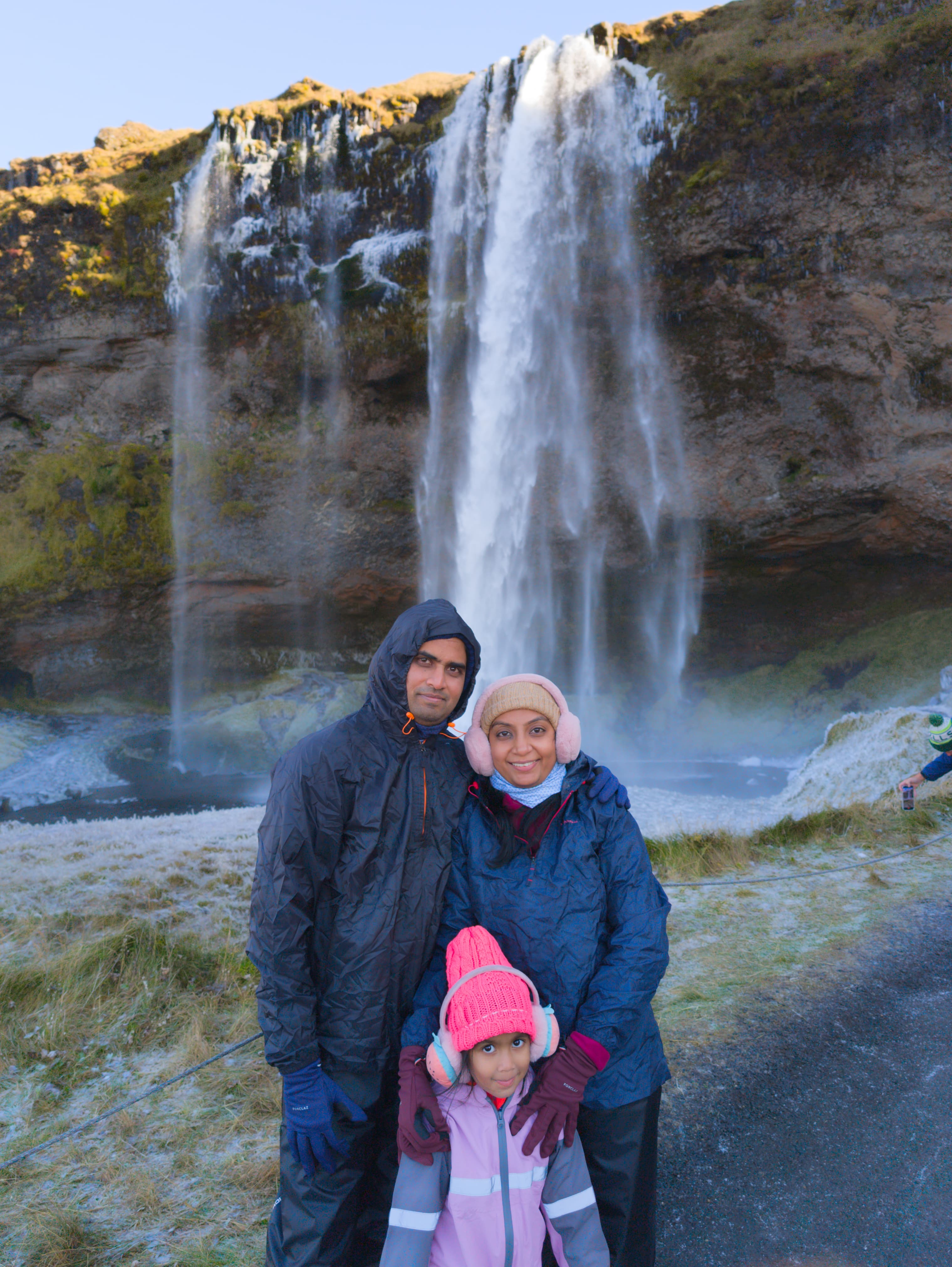

The next stop on our journey is another famous waterfall – Seljalandsfoss. Even though the rush of water isn’t too powerful or too high, the eye catching thing here is that one can walk behind the waterfall to get a different perspective of the waterfall, a truly one of a kind experience. Unfortunately for us, the path to the back of the falls was slippery with ice formations and was hence, closed for public. If you are here in summer, you will get your chance to go behind the fall. Make sure to wear rain coats since you are sure to get drenched in rain/water while you are passing behind the falls. Parking is paid but entrance is free.
Gljufrabui waterfalls


Gljufrabui is an exquisite waterfall hidden inside a gorge only about 150 meters away from the Seljalandsfoss. The small cave entrance to the falls is narrow and slippery, make sure to display extra caution while attempting to visit this gorge. The experience of this area wouldn’t be complete without exploring this other lesser known waterfall. It shares the same parking space as Seljalandsfoss and so you can cover both together before heading towards your next stop.
Skogafoss
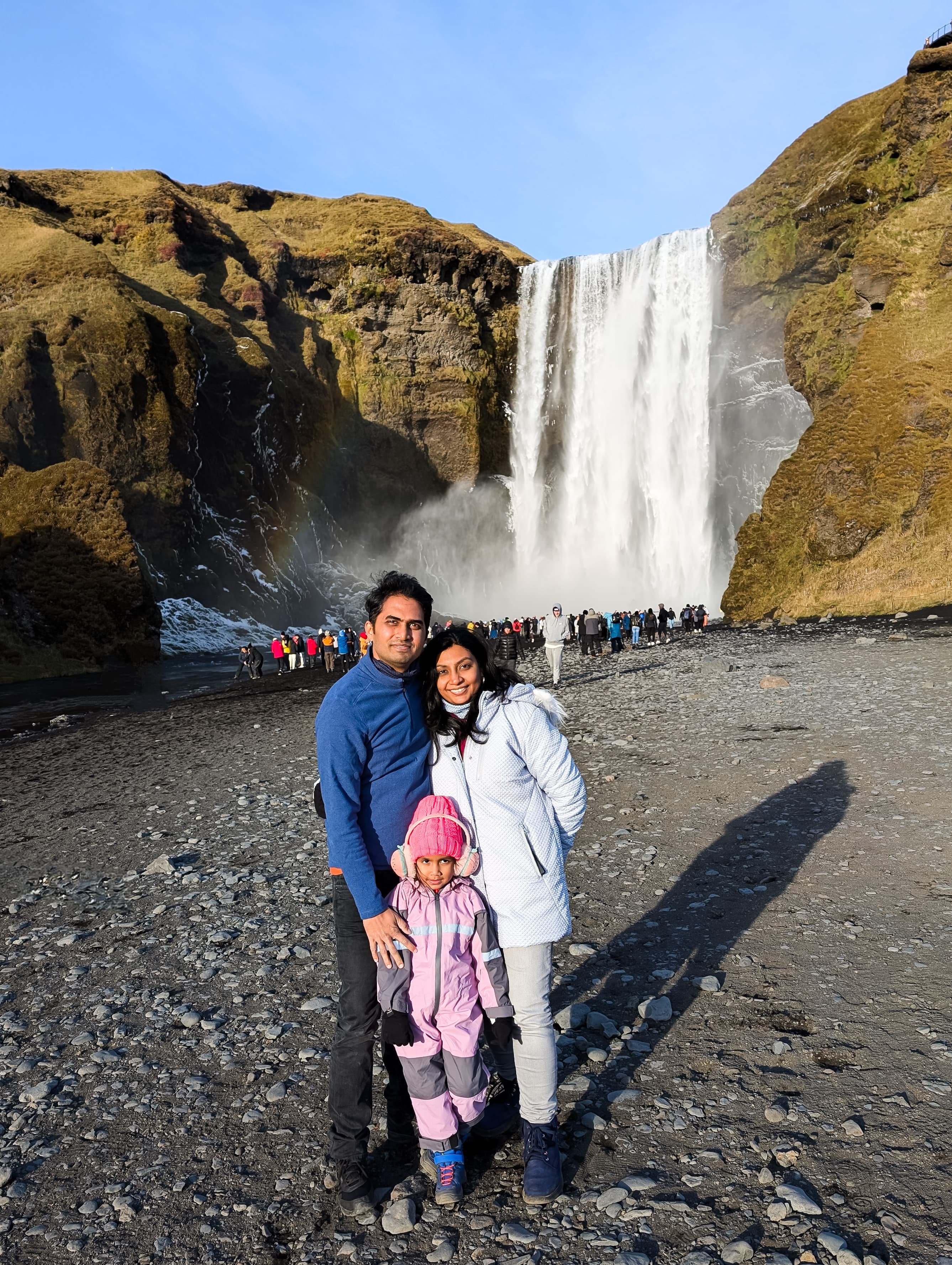

Skogafoss is a another beautiful waterfall in Iceland and exhibits powerful flow of water in both height and width. The waterfall is most famous for the rainbows that are formed around it(double rainbows if you are lucky), when the sun is at a good angle to the waterfalls. It also has a set of stairs that you can climb beside the falls that take you all the way up to the top of the falls giving your a top view of the waterfalls. The parking is free and the restaurant adjacent to this is also very good. This will form a good stop for a late lunch or evening snack.
Reynisfara black sand beach


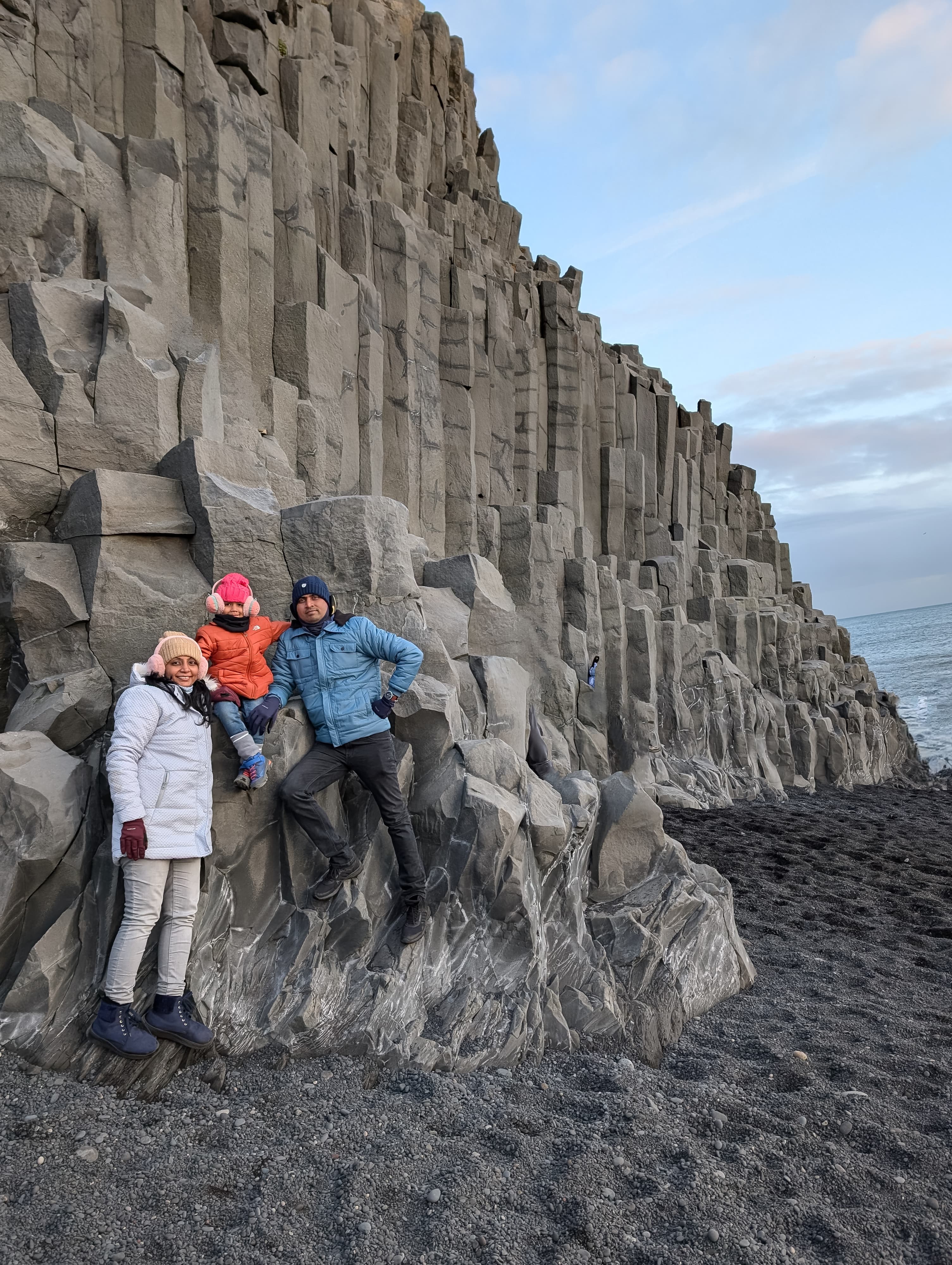
Our last stop on this adventurous day was the famous Reynisfara black sand beach. This is probably the most famous beach in all of Iceland and usually found on the postcards of Iceland. What sets this apart is the black volcanic sand, the stone pebbles & tall picturesque rock formations along the beach. The beach is also known for its Sneaker waves which appear out of no where to catch the unsuspecting tourists off guard and wash them into the sea. There are ample signs on the beach entrance to warn tourists of the same and to keep away from the edge of the water. Make sure to exhibit extreme caution when visiting this beach.
Day 3: Visit the Diamond Beach, Jokulsarlon & Stokknes peninsula
After an action packed day 2, we had a lighter day on day 3, where we started at around 8:30 am to reach our next accommodation by 5 pm.
Fjallsarlon Glacier Lagoon
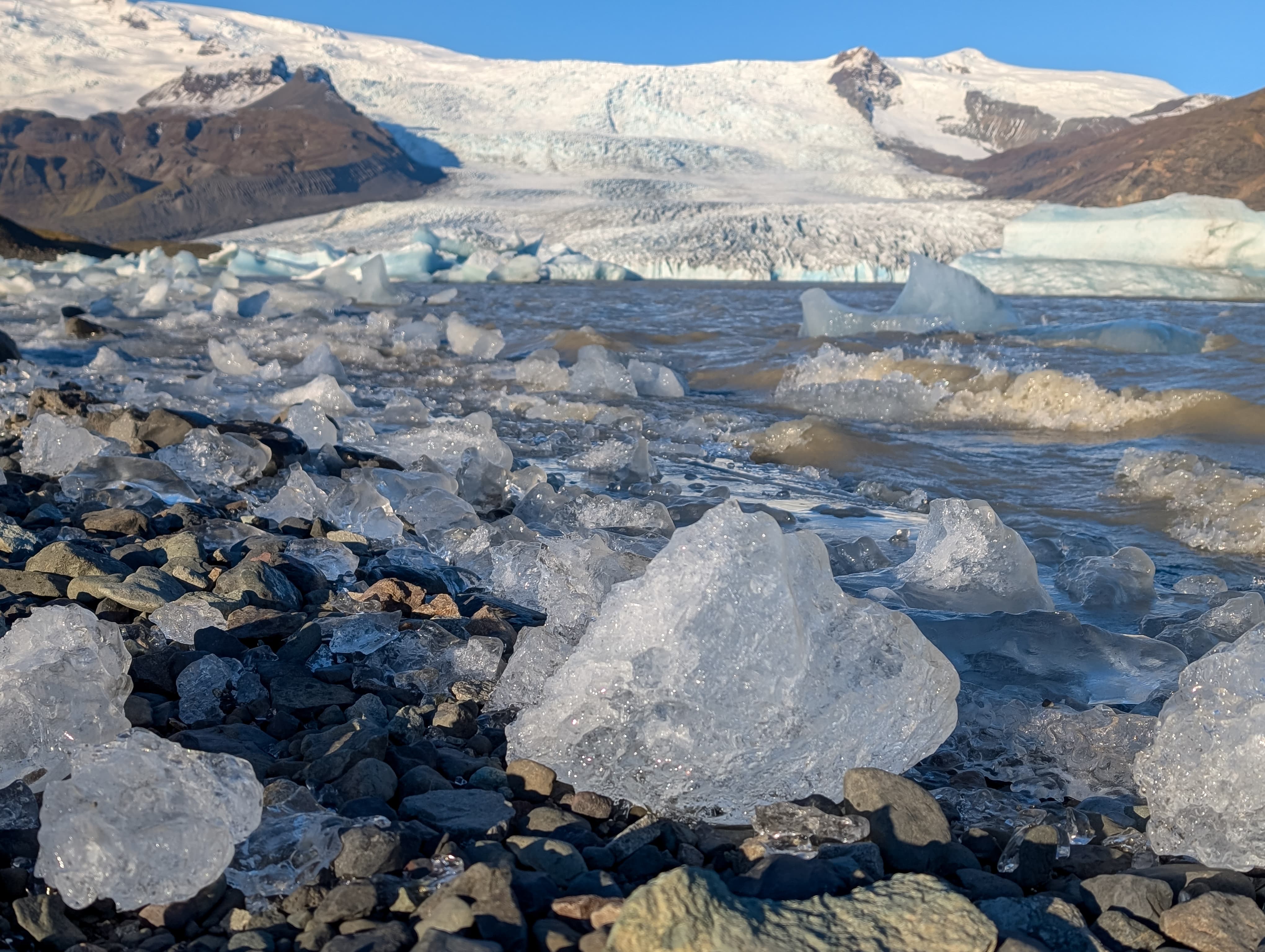


Fjallsarlon Glacier Lagoon is one of the lesser known glacial lagoons in Iceland, located just before the famous Jokulsarlon. With the many hundreds of icebergs that float atop the lagoon’s surface, Fjallsarlon is considered to be a strong second to its more famous sibling. The other attractive thing around this lagoon is its less touristy, none of the tours stop here. You will have ample time here to take photos and stay uninterrupted.
Diamond Beach


One of the most jaw dropping attractions in Iceland is the Diamond beach, the black volcanic sand beach located next to Jokulsarlon Glacier Lagoon. The transparent and white icebergs washing on the black sand beach and shining like diamonds in the morning light is a spectacular sight to behold. The parking areas for this beach and the Jokulsarlon Glacier Lagoon are all connected or of the same network. No need to pay extra for parking here if you have done so in the other one. Make sure to park at the first parking lot designated as “Breidamerksandur” on google maps as this one comes earlier than the crowed Diamond beach parking and is seemingly the better part of the beach.
Jokulsarlon Glacier Lagoon

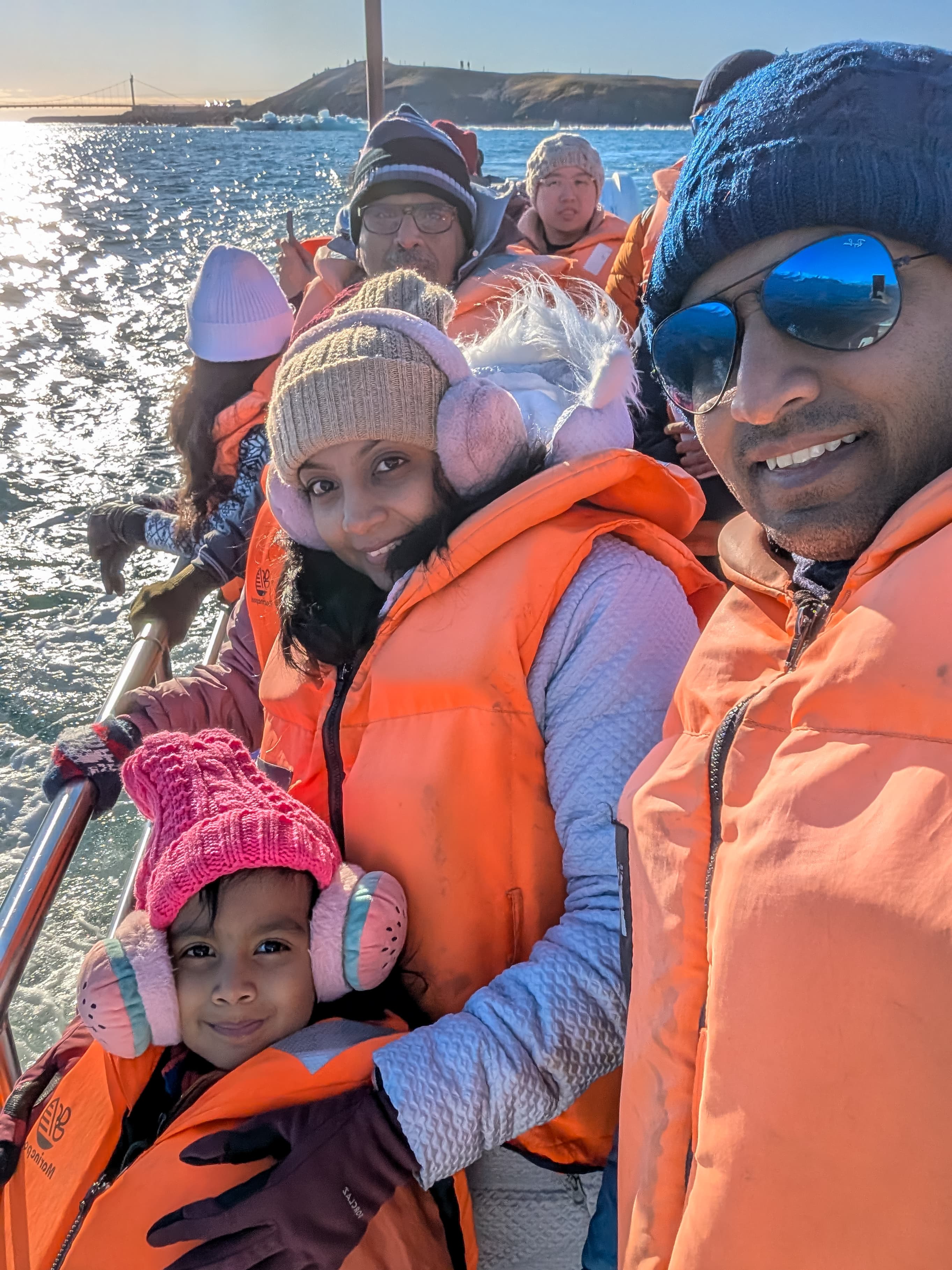
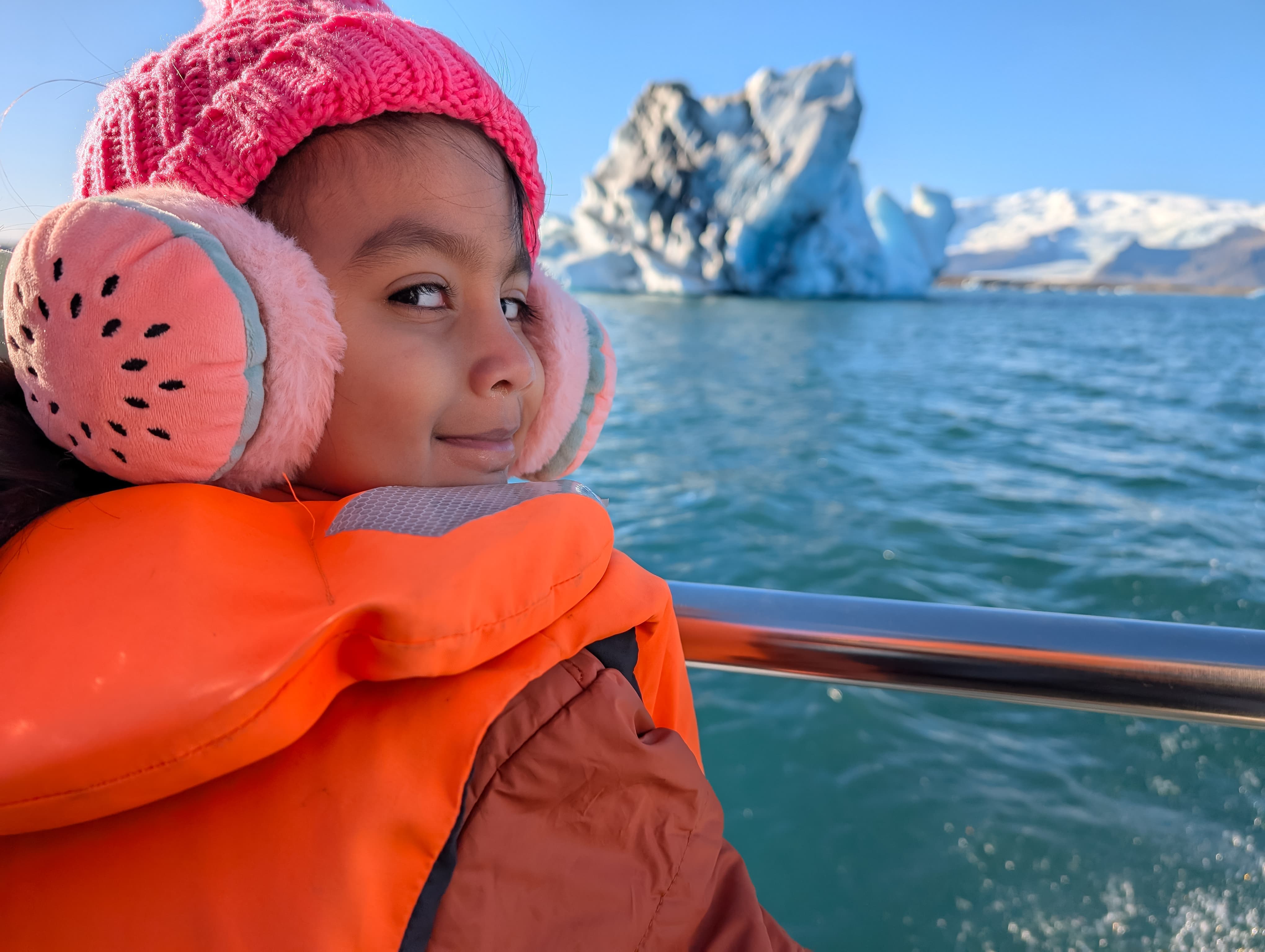
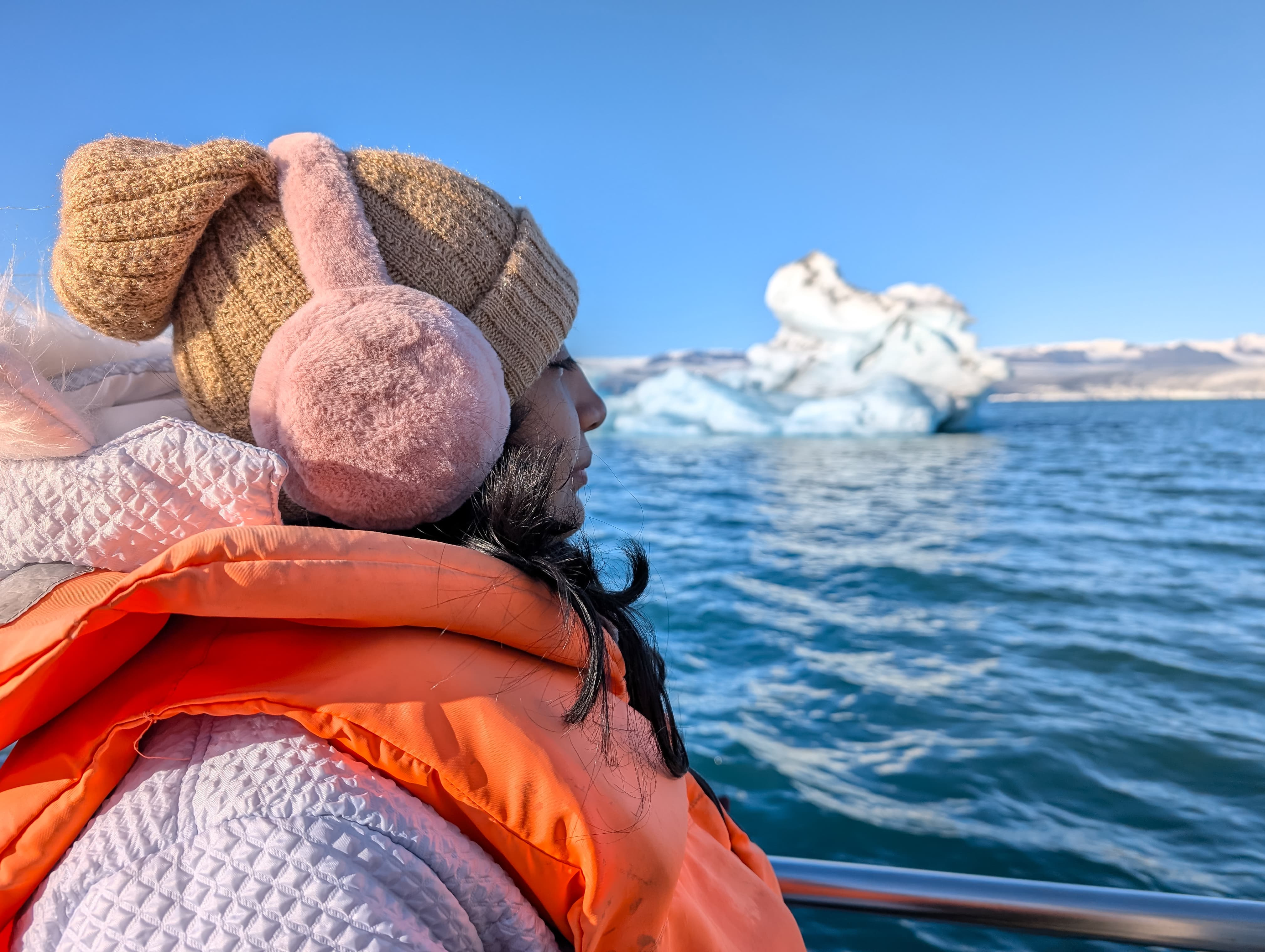

Jokulsarlon is one of Iceland’s most iconic natural wonders. The icebergs breaking of Europe’s largest glacier, Vatnajökull, float freely around the lagoon making for a eye popping experience. Ofcourse, the extent and no of icebergs breaking off of the main glacier dictates how beautiful the lagoon looks on any given day. The stronger the sun, the higher chance of breakages and hence, its more picturesque to look at during summers than in the colder months.
There are two boat tours that are on offer on this lagoon – Zodiac tour and Amphibian tour. Zodiac tour takes people on a smaller and faster speed boat in smaller number compared to the other one, and you get a chance to go up close to the icebergs. Smaller kids below 6 years are not allowed on these and its also usually pricier than the larger Amphibian tour. The Amphibian tour on the other hand carries lot more passengers and is slower and doesn’t attempt to go too close to the glaciers while it does traverse the same route around the water. The name comes from the fact that the boat initially starts on land moving on wheels before moving into water transforming into a boat. Make sure to book your tours in advance as these tend to get sold out early, especially the zodiac ones.
Stokknes peninsula
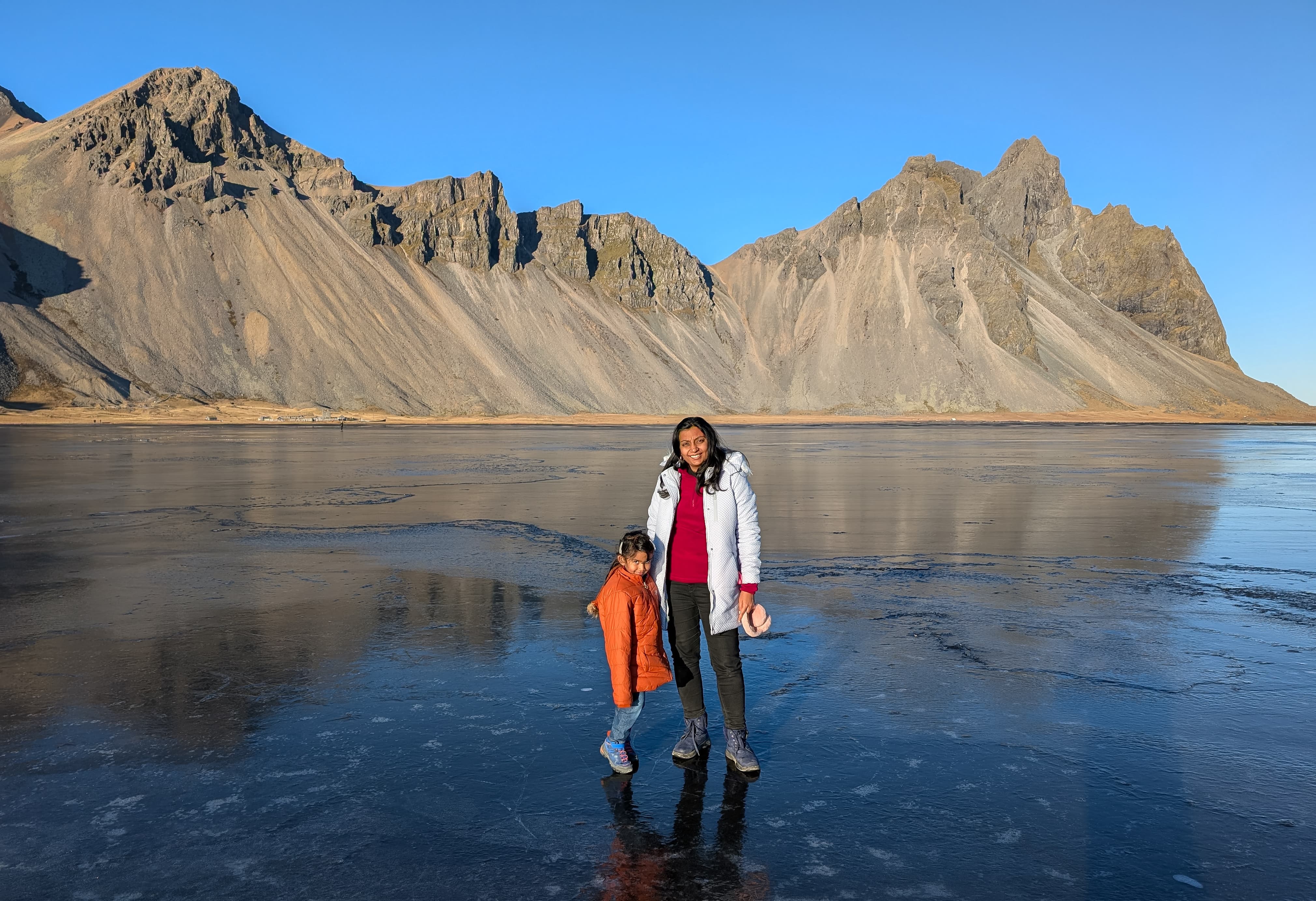

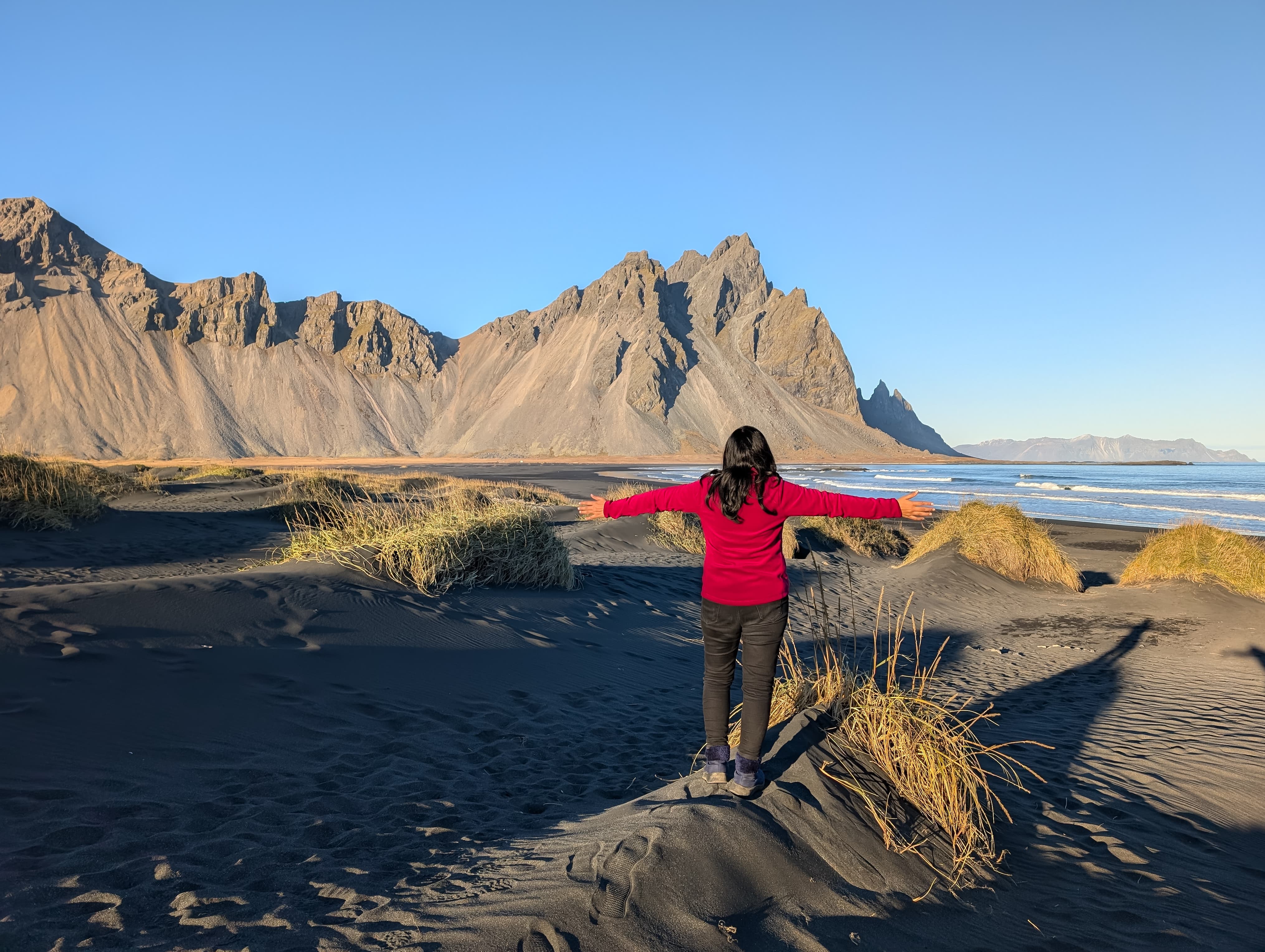
Stokknes peninsula is one of the naturally gifted regions of Iceland and has an entrance fee to access the attractions. The “Viking cafe” at the start on this route is where you pay for the entrance as this is a private property. There are 3 main attractions on offer – the Vestrahorn Mountain, the black sandy beach and Viking village. As you park the car near the mountain ranges and descend upon the thin icy later of water overlooking the mountain, the clear reflection of the mountain onto the ice film make for a spectacular scene and makes you marvel about the grandeur of the place. Just a few meters ahead is where you find the black sand beach where the waves of water looks pristine hitting against the black shores. The last stop we went was the abandoned Viking Village. its about 1 km walk to the village from the parking lot and it takes you back in time giving you glimpse into the incredible life of Vikings with their almost in tact ship as well.
Day 4: Drive through the east of Iceland on our way to North (visit places like Egillstadir, Seydisfjordur & Stuðlagil Canyon)

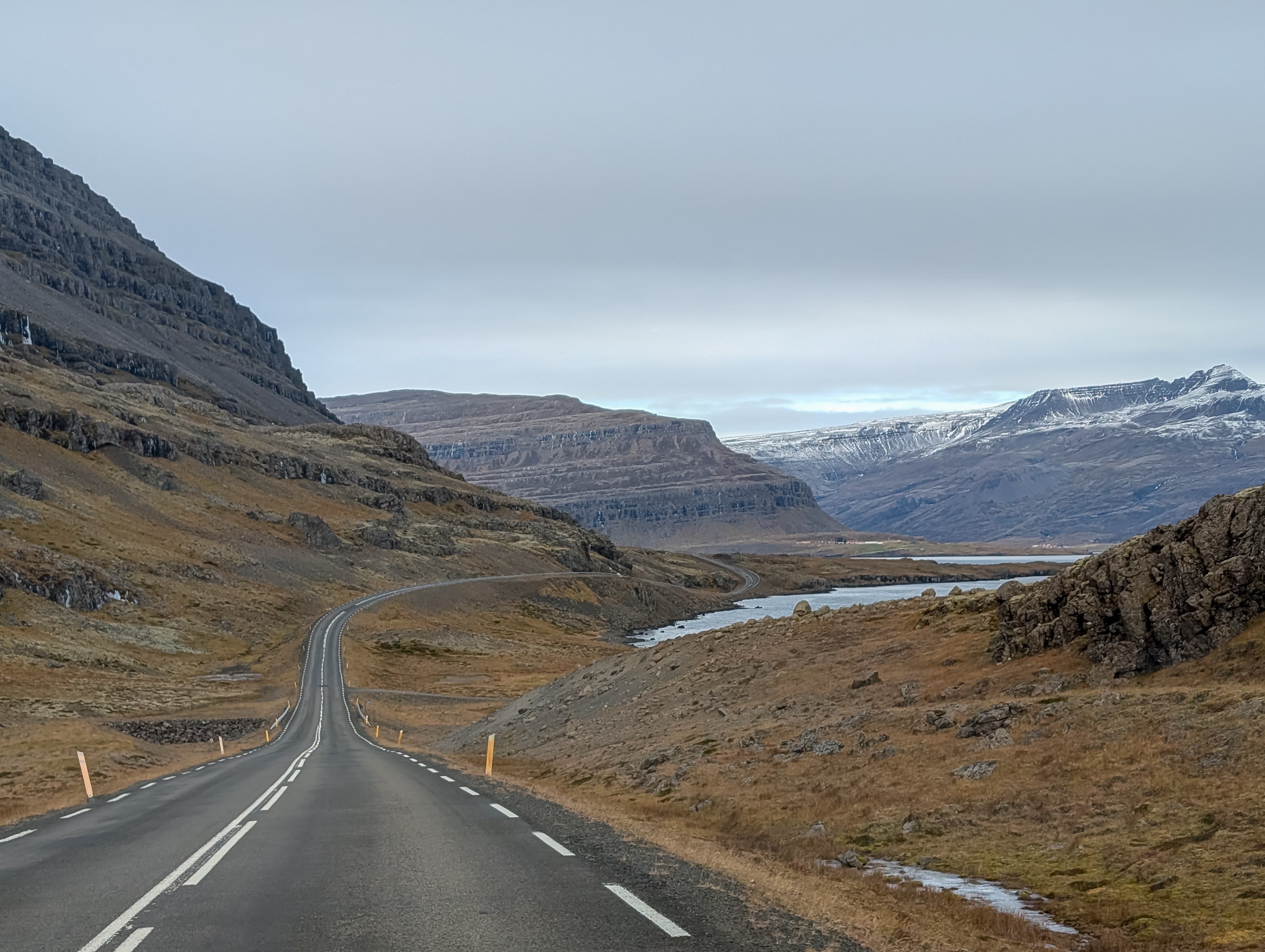

This was going to be one of the low key days of our Iceland itinerary. The east of Iceland isn’t blessed with many natural attractions compared to the north or south and so, this day was primarily for transitioning from the south to the north of the island. The drive nonetheless turned out to be beautiful with varying terrains and experiences along the way. After a quick stop at the nearby lighthouse (Hvalnes Lighthouse) in the morning, we made our way to our next big stop – Egillstadir. This is one of the bigger towns in the west of Iceland and was a good place to aim for a stop for lunch.
There are a couple of ways you could drive this journey – one is the longer but along the coast drive which is inevitable if you are doing this during off season. The other is through one of the F roads that shortens the journey considerably (F939 to be precise). Attempt this only if you have a vehicle with AWD and are in good weather conditions. Make sure to check the relevant app before proceeding. The ‘F’ roads are the unpaved mountain roads that are used often to shorten the journey between major towns in Iceland. The one we used – F939 was quite picturesque and an adventure in itself, considering the temperatures were reaching almost zero and lot of things could have gone wrong while riding this. Nonetheless, it was quite short and we came out unscathed, before heading towards Egillstadir. Since it was a bit early when we reached the town, we decided to explore the nearby town of Seydisfjordur, before breaking for lunch.
Seydisfjordur

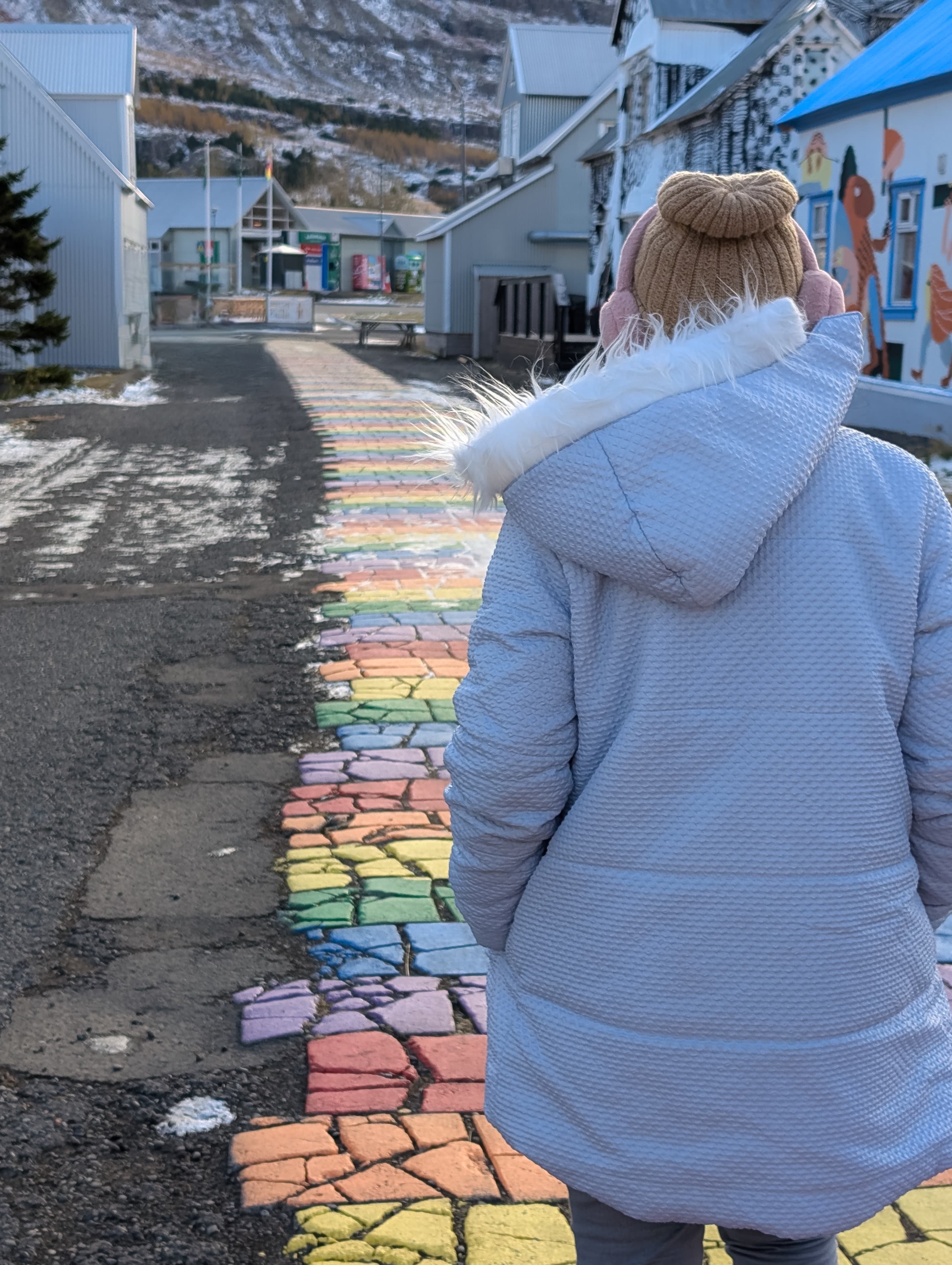


Seydisfjordur was truly a hidden gem in that part of the island. It is a quaint little fishing village by the lake, the journey to the village involved ascending and descending altitudes on mountainous terrain and was an amazing experience to drive that route. There are many instaworthy attractions to be found here, including the Rainbow street running in front of the Blue church, the Gufufoss waterfall etc. After a brief stop, we made our way towards Egillstadir for lunch and eventually onwards towards our main destination on this day – the Stuðlagil Canyon.
Stuðlagil Canyon


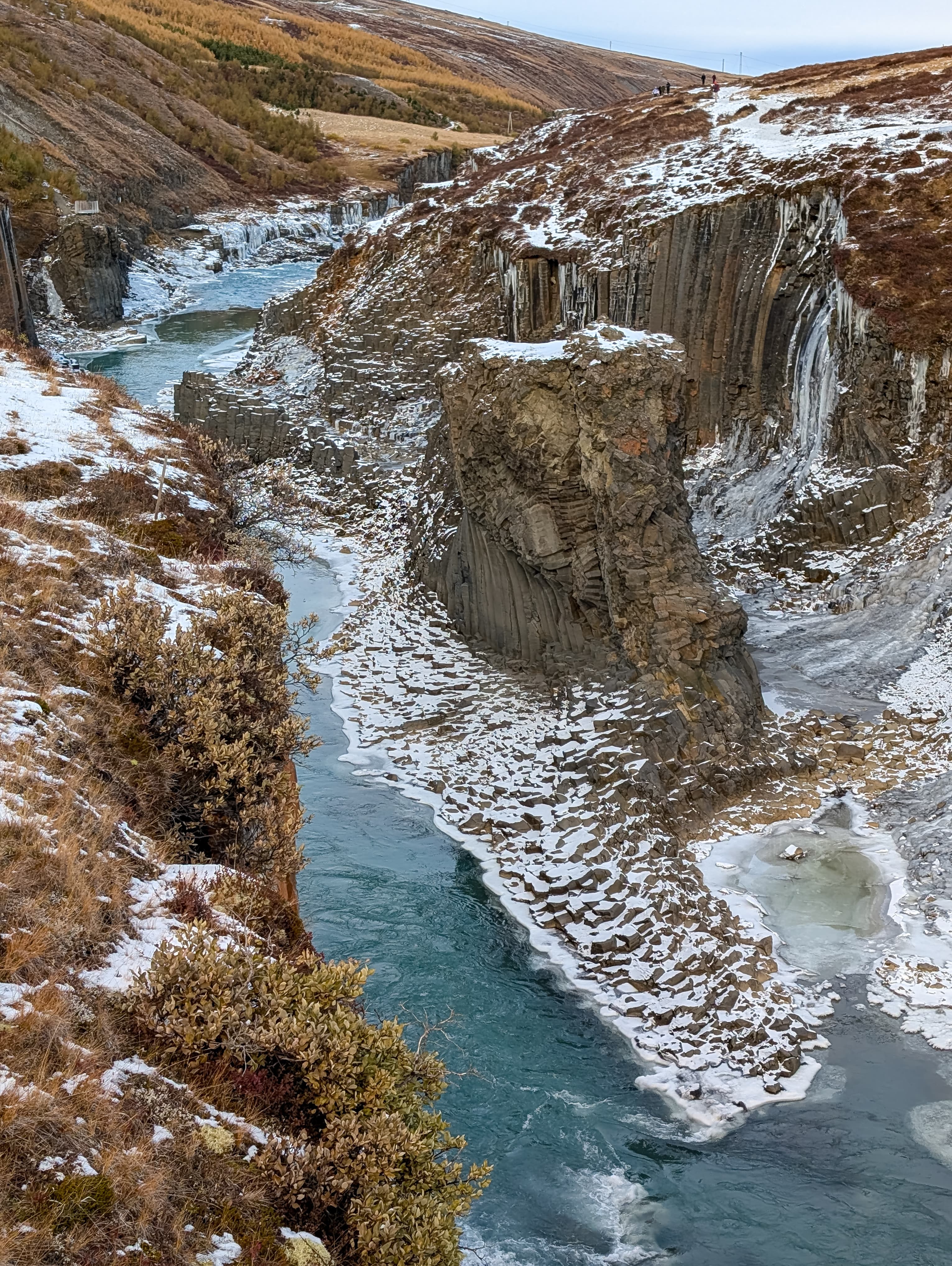
Stuðlagil Canyon is the set of basalt rock formations, very similar to the ones we saw in the Reynisfjara black sand beach, just much bigger and taller in size. The basalt column canyon towers over a turquoise glacial river, making for one of the most stunning sights in the country. When we visited, it was freezing temperatures (or almost) and so, the water and the waterfalls were frozen. You can explore the columns from 2 sides – the East side provides a pathway to walk along the river for 2 kms before reaching the peak of the columns. Stop at the 2nd parking lot to get into the trail for the east side. There is also the West side which has a more direct access to the columns, with just 200 steps needed to reach to the viewpoint from the parking lot. Toilets are also found only here. We went to the west side and it made for a quick yet memorable stop at the Canyon.
Day 5: Visit Dettifoss, Selfoss, Namfjall geothermal area and Myvatn Nature Baths
Dettifoss
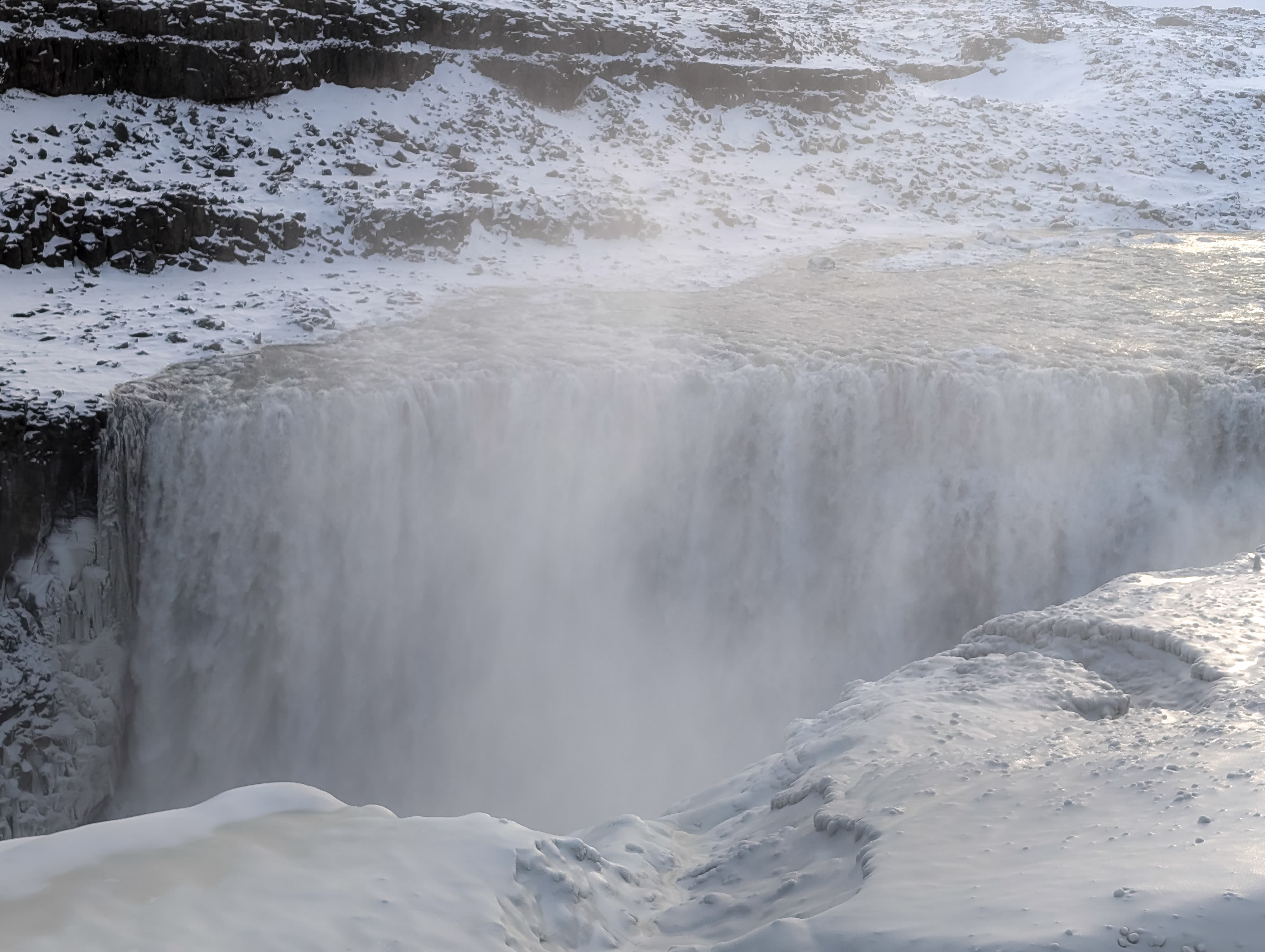
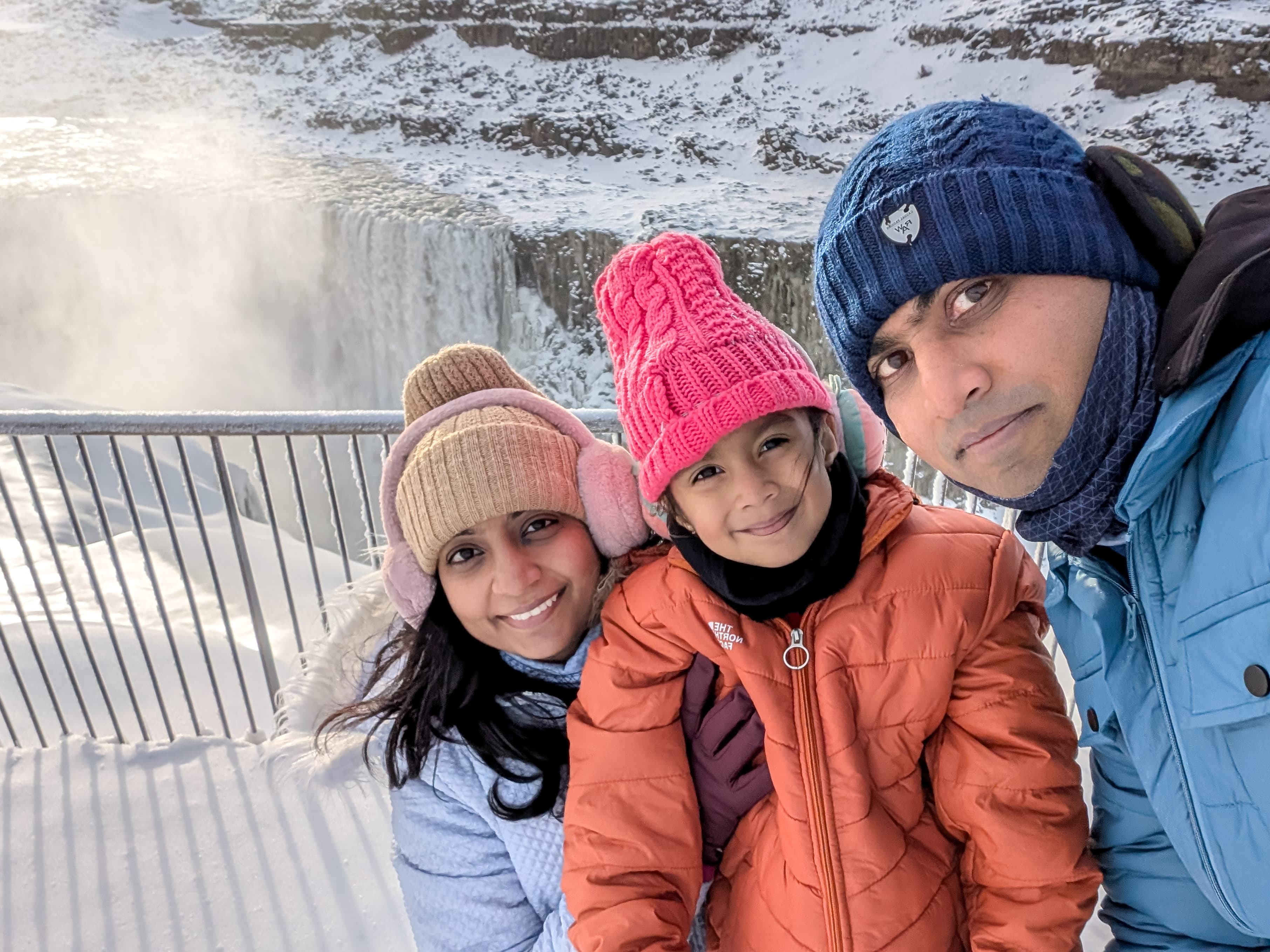
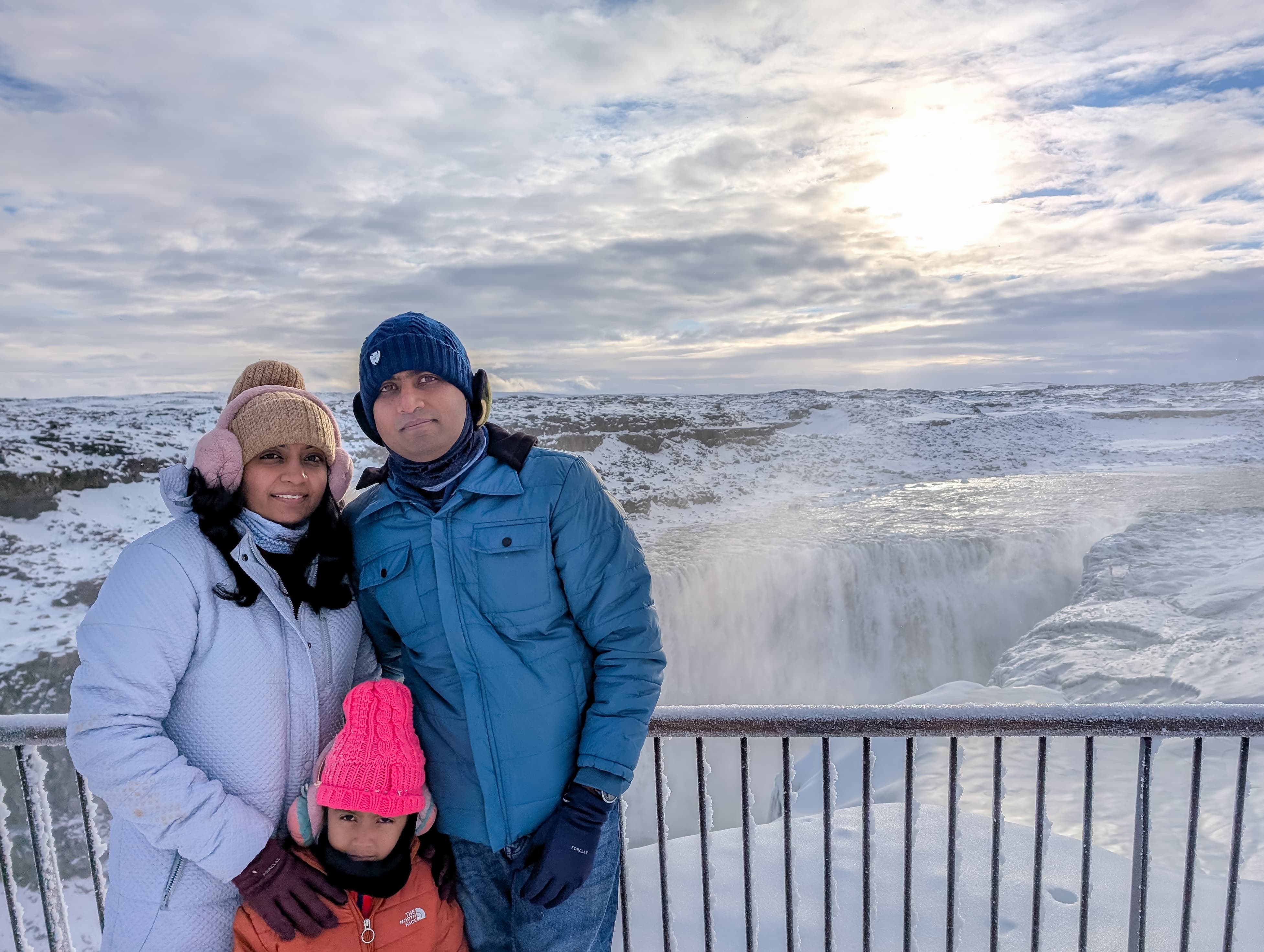
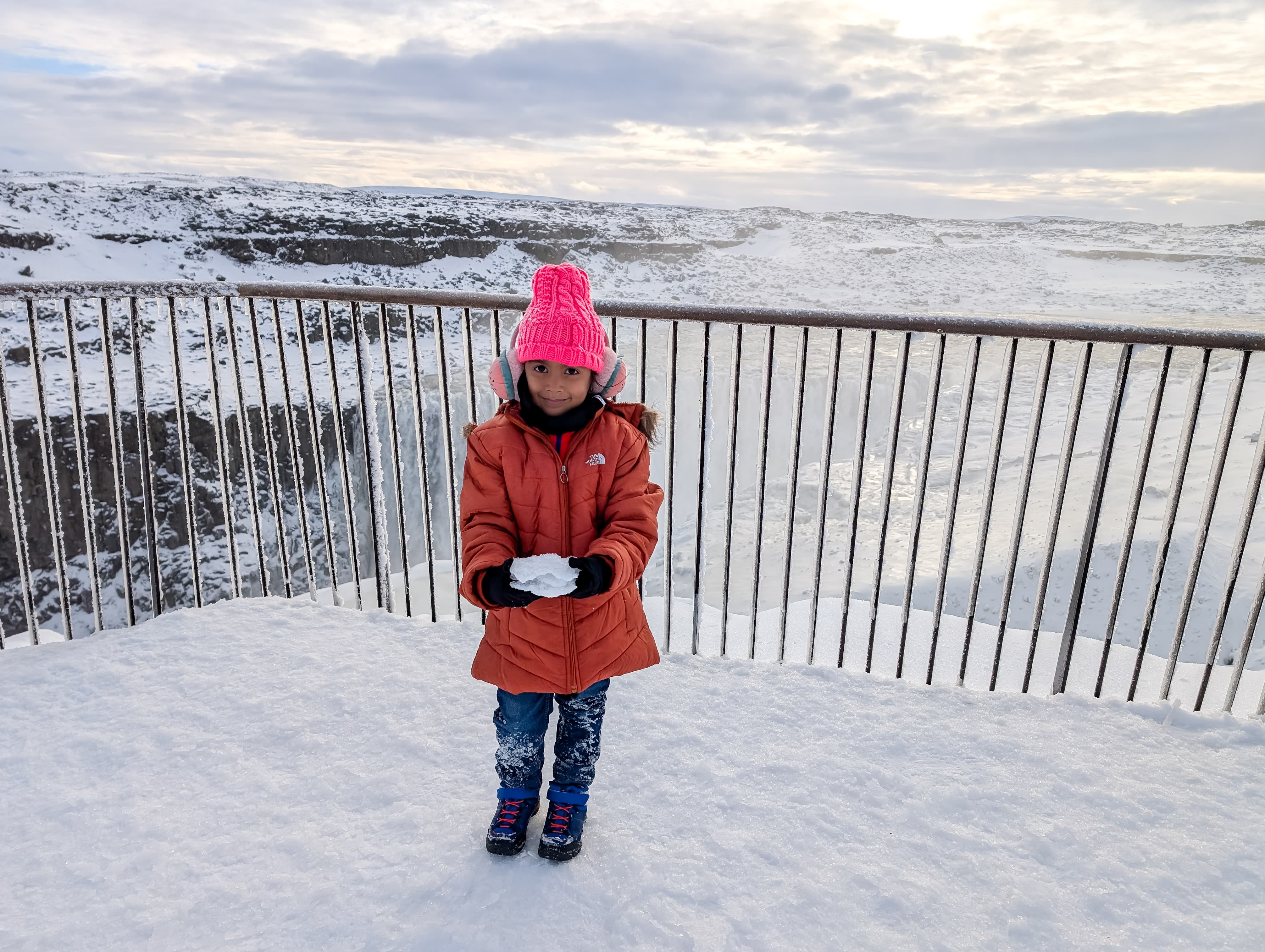

We started the day in the north with gloomy weather and snow falling from the sky. The Vadur.is app which was showing one of the main roads to Dettifoss closed until 8 am showed as open for public just after. We drove slowly on that route to reach the parking safely. Dettifoss is known as one of the most powerful waterfalls in Europe, only second to Rhine falls. Selfoss is very close by, accessible from the same parking lot and is considered the little brother of Dettifoss. From the parking lot, the walk was about 1 km to the Dettifoss viewpoint, which was full of snow and slippery, including some climbs and descent at places. We reached there safely and enjoyed the majesty of Dettifoss flowing in full glory, even though the temperatures were sub zero.
Selfoss
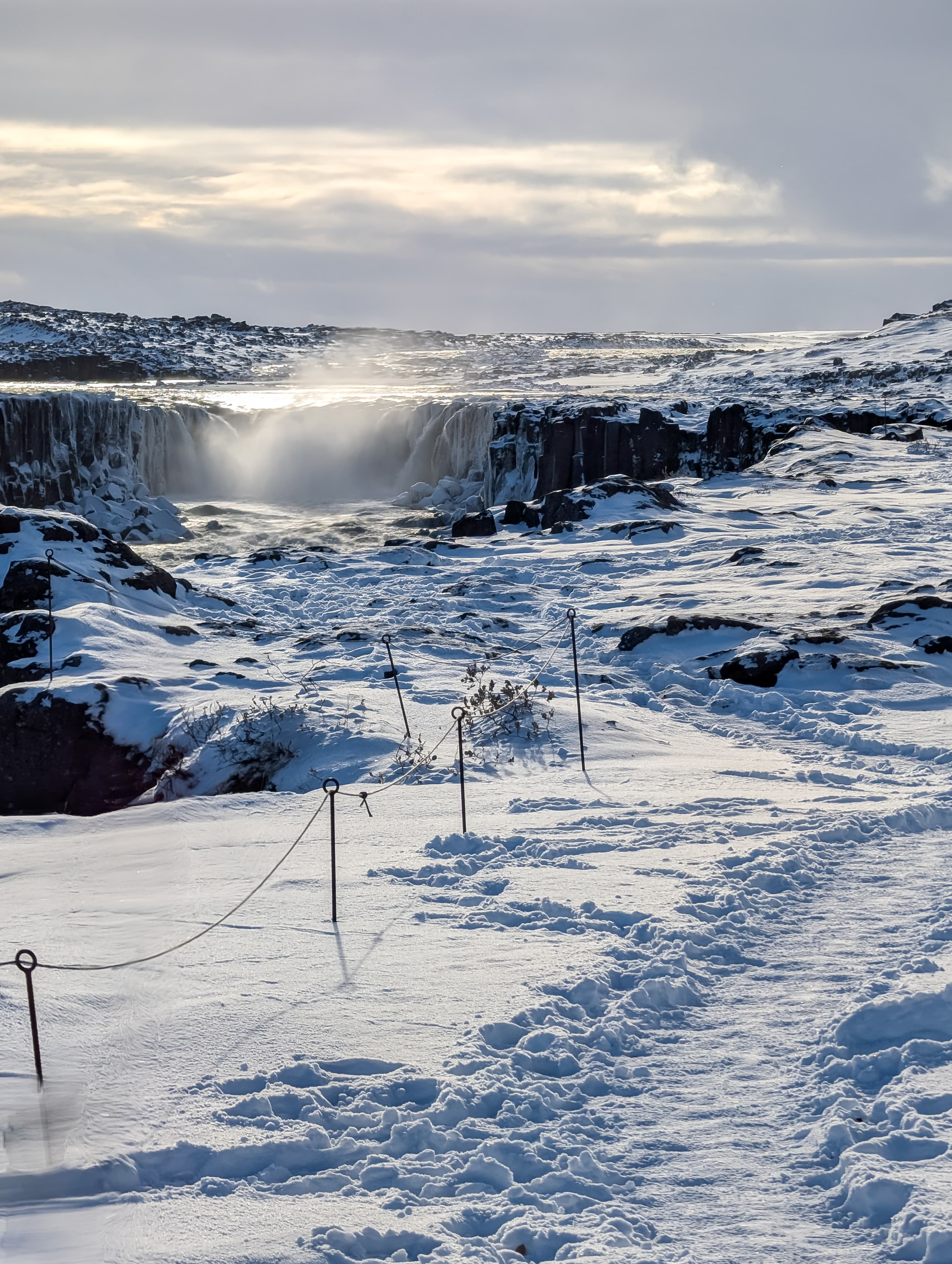

One our way back to the parking lot, we took a detour to see the Selfoss. The viewpoint for Selfoss turned out to be at the much farther distance than we anticipated. The falls looked very distant and we couldn’t really appreciated the beauty of it because of how far it was.
Hverir and Namfjall geothermal area

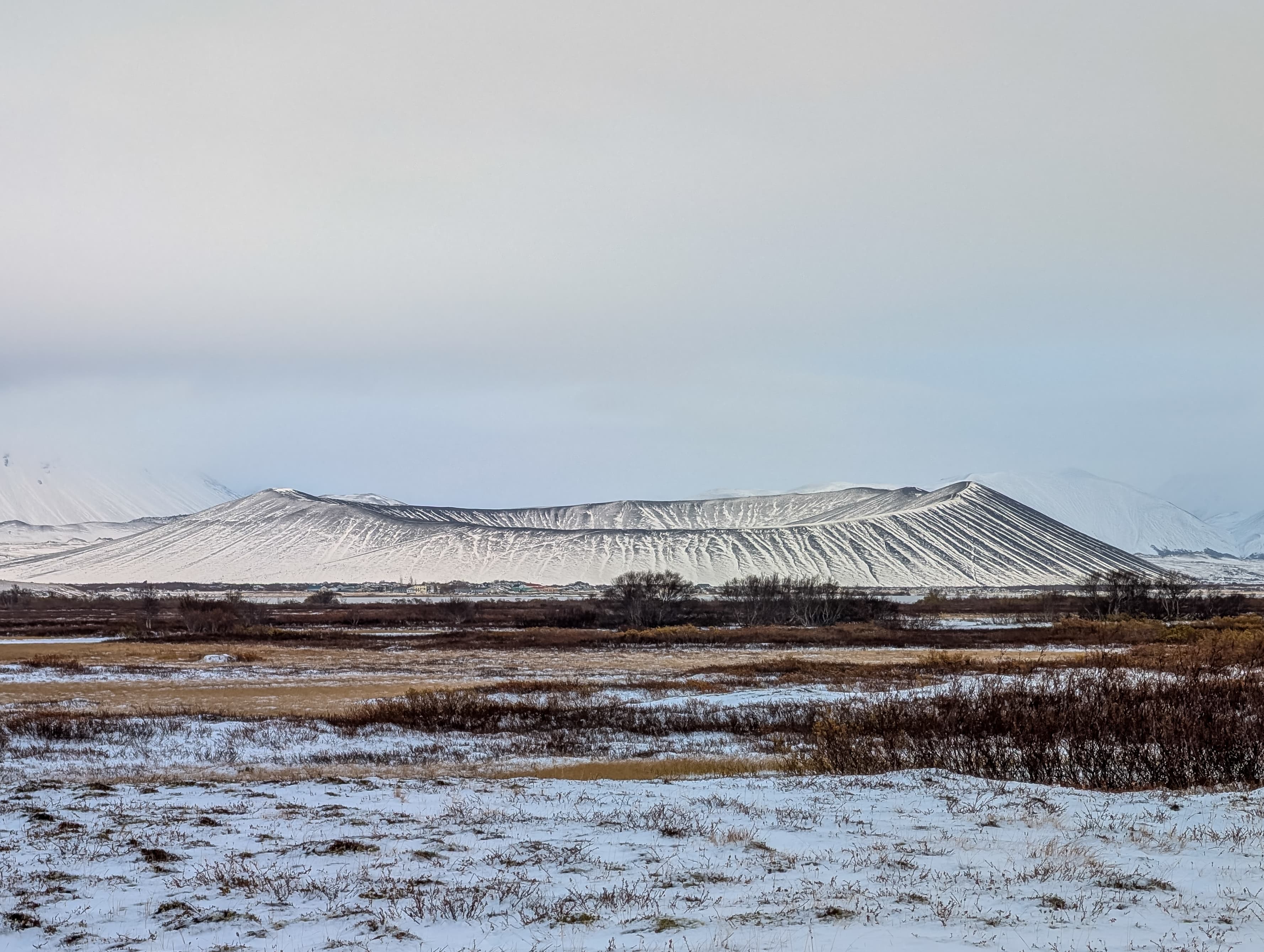

By noon, we headed back, on to our next stop – the Hverir and Namfjall geothermal area. The parking here is paid, but the entry to the geothermal area itself was free. The whole place smelled of strong Sulphur and that gave the area an overwhelming smell of egg. From the parking, it was short walk to the series of Sulphur pools and we enjoyed the vivid colors of the pits, and steamy eruptions in some of the pits but couldn’t stay long because of the strong smell.
Myvatn Nature Baths
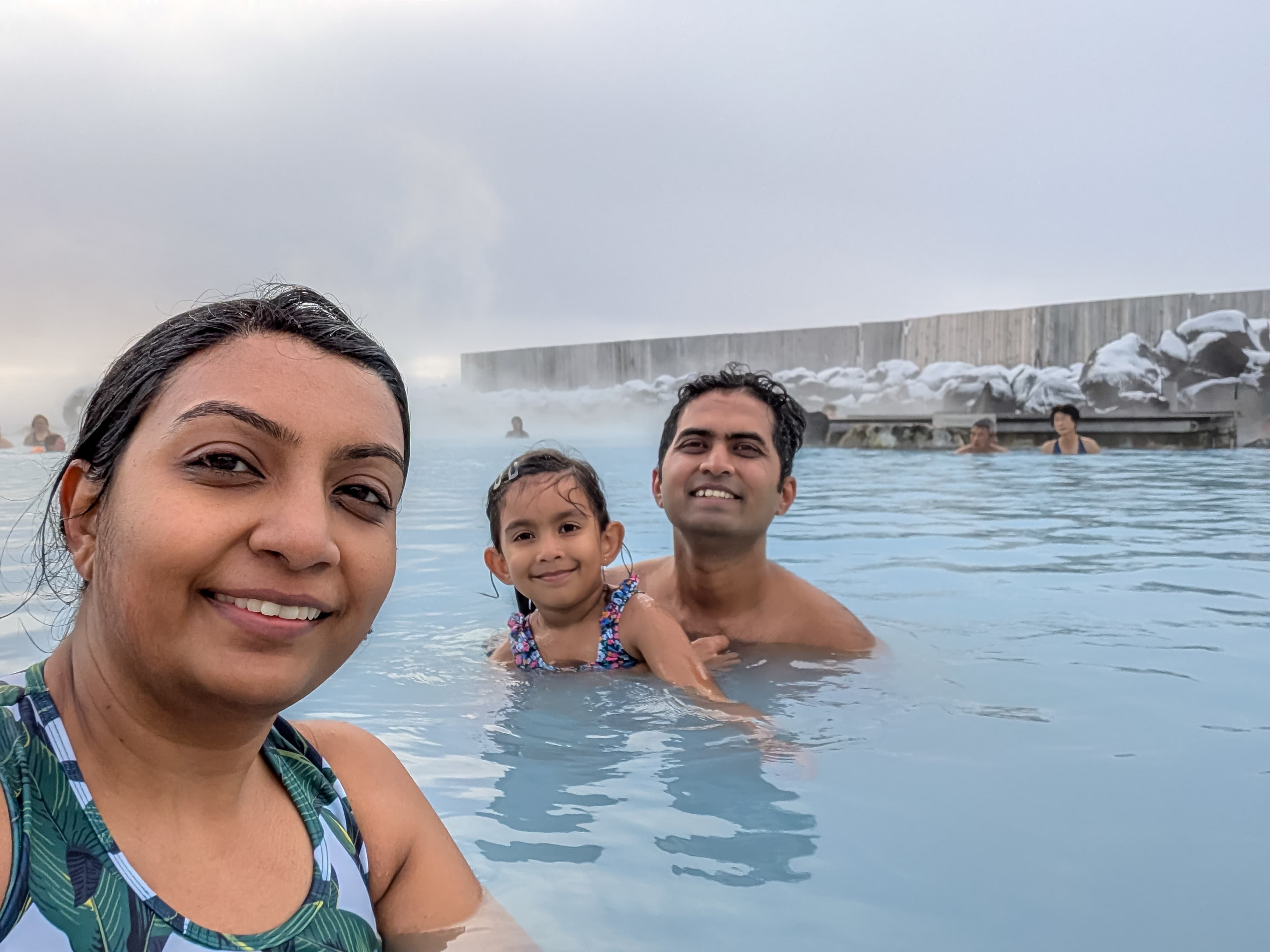
Our last stop of the day was the Myvatn Nature Baths. We finished our lunch here before making our way to the baths. If you didn’t experience the nature baths at the more famous Blue Lagoon near Reykjavik, this is your next best option to enter into one. Myvatn is supposed to be less pricier (starting at 50 USD) and provides like to like experience to the Blue lagoon. The whole complex is tastefully designed offering a refreshing experience at the soothing minerals rich water. There are 2 sections to the pool depending on how hot water you want to be in, the shower areas are also separate for men and women, but the mineral bath area is common to all proving opportunity for families to be together and enjoy together. After spending an hour in the nature bath, we freshened up and exited the complex to make our way to our stay for the night.
Day 6: Visit Godafoss, explore Akureyri city
Godafoss

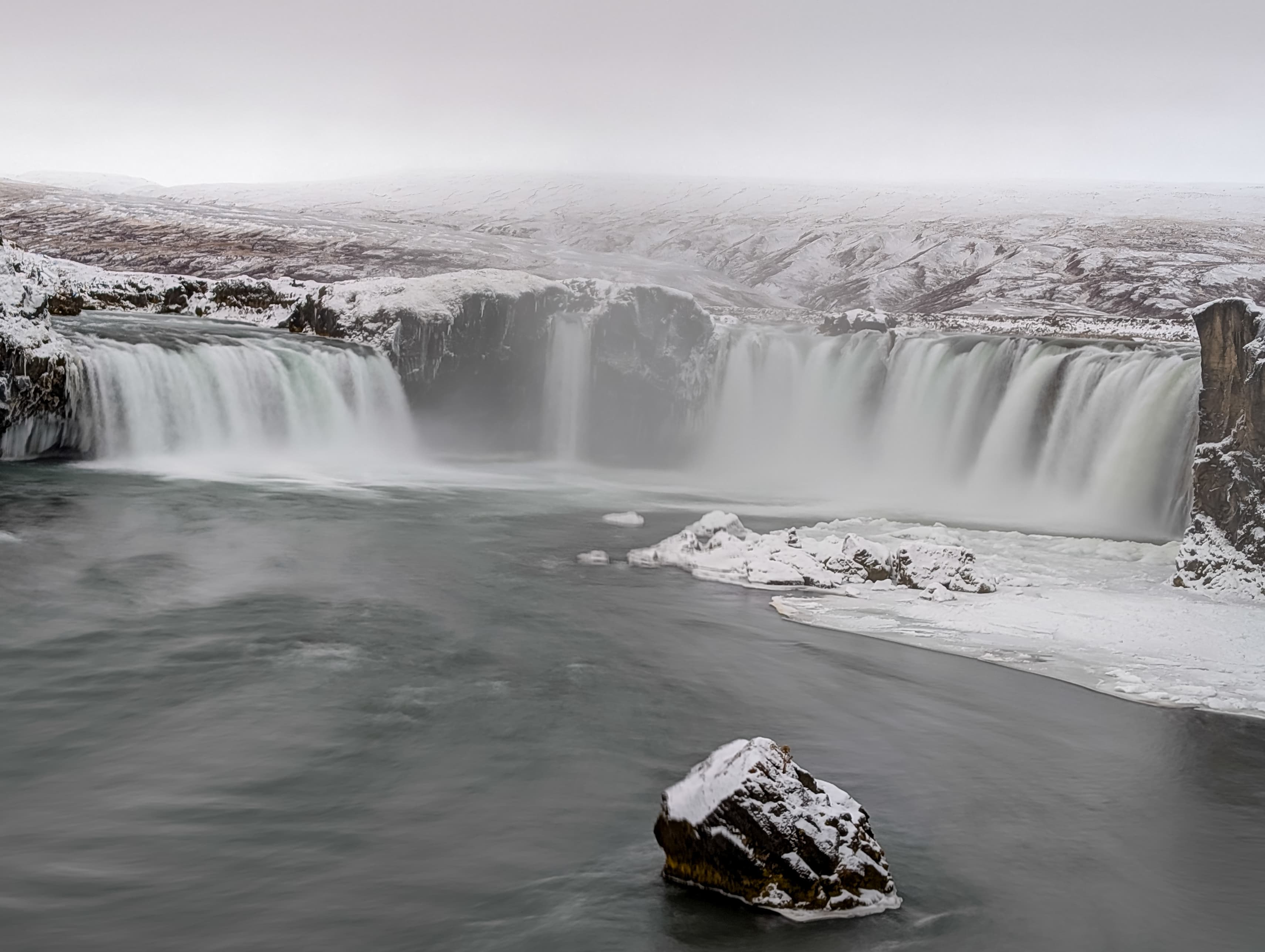
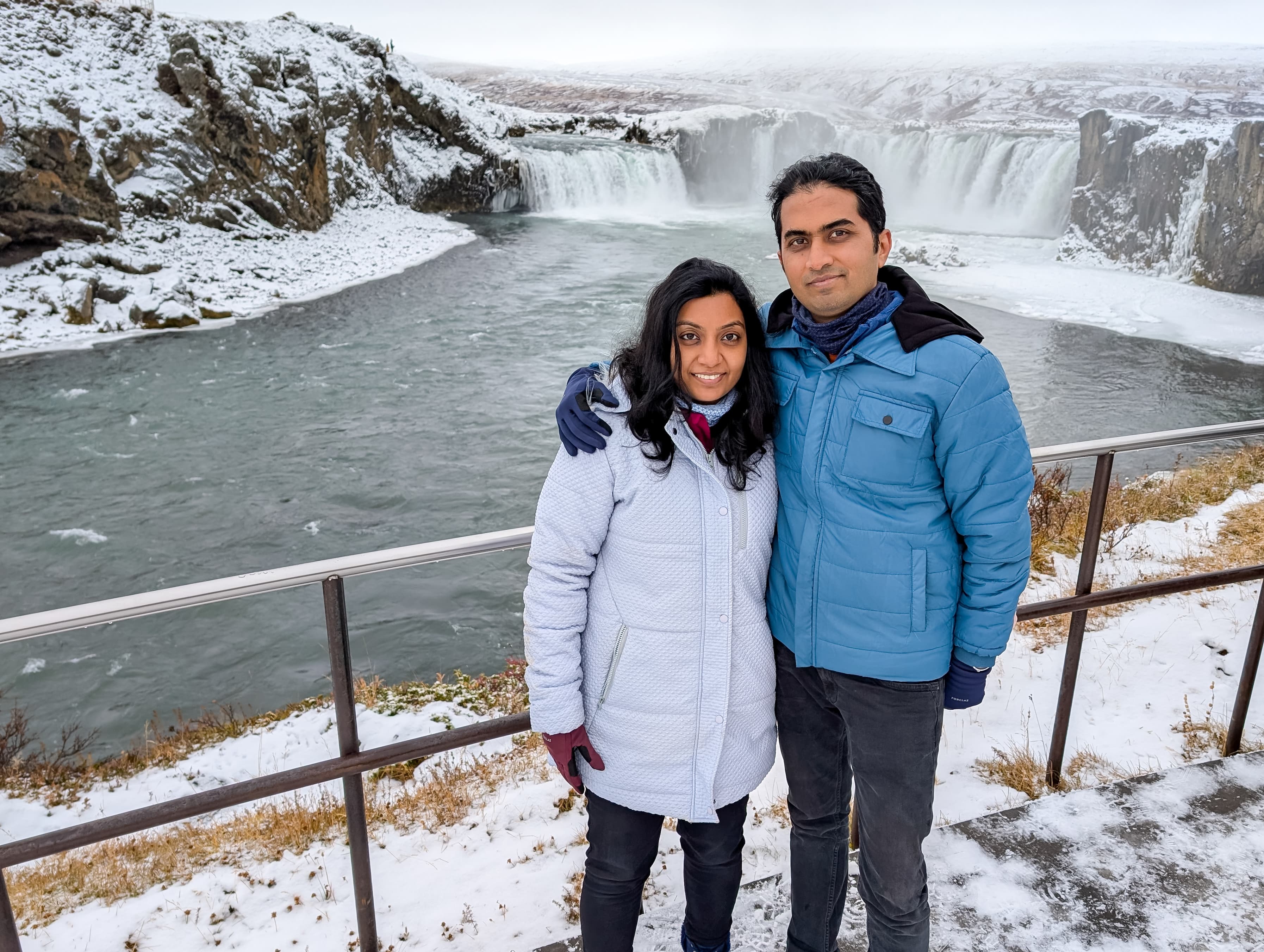
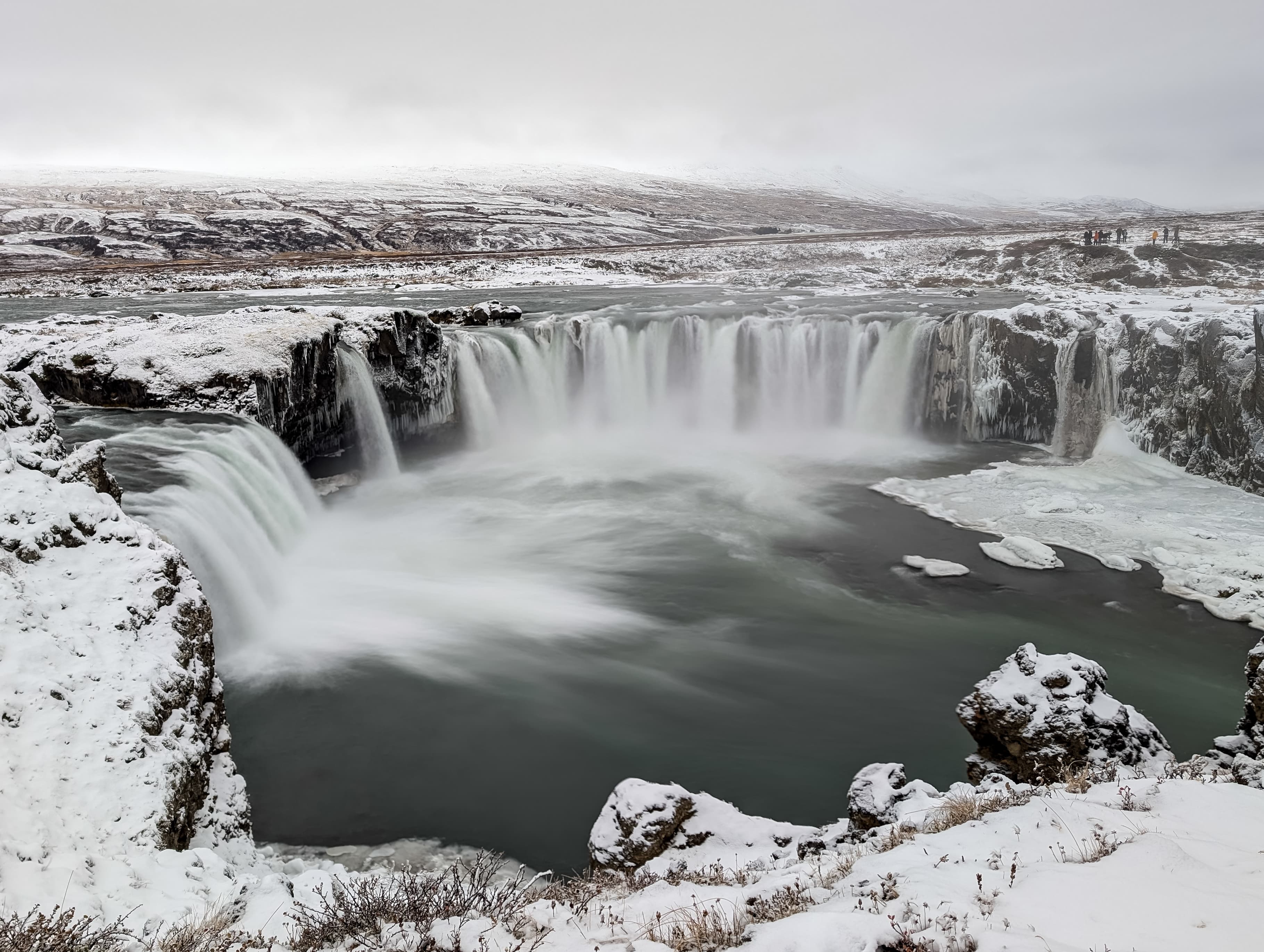

Our first stop of the day was Godafoss – also called “waterfall of the gods”. It is undoubtedly one of the most beautiful waterfalls in all of Iceland and a must visit. The falls can be experienced from 2 sides – the east and the west. Make sure to visit both before leaving the place. Walks for both are fairly short and provide different perspectives of the falls. Though not as powerful as the Detifoss, the sheer width of the falls makes your jaws drop in awe.
Akureyri

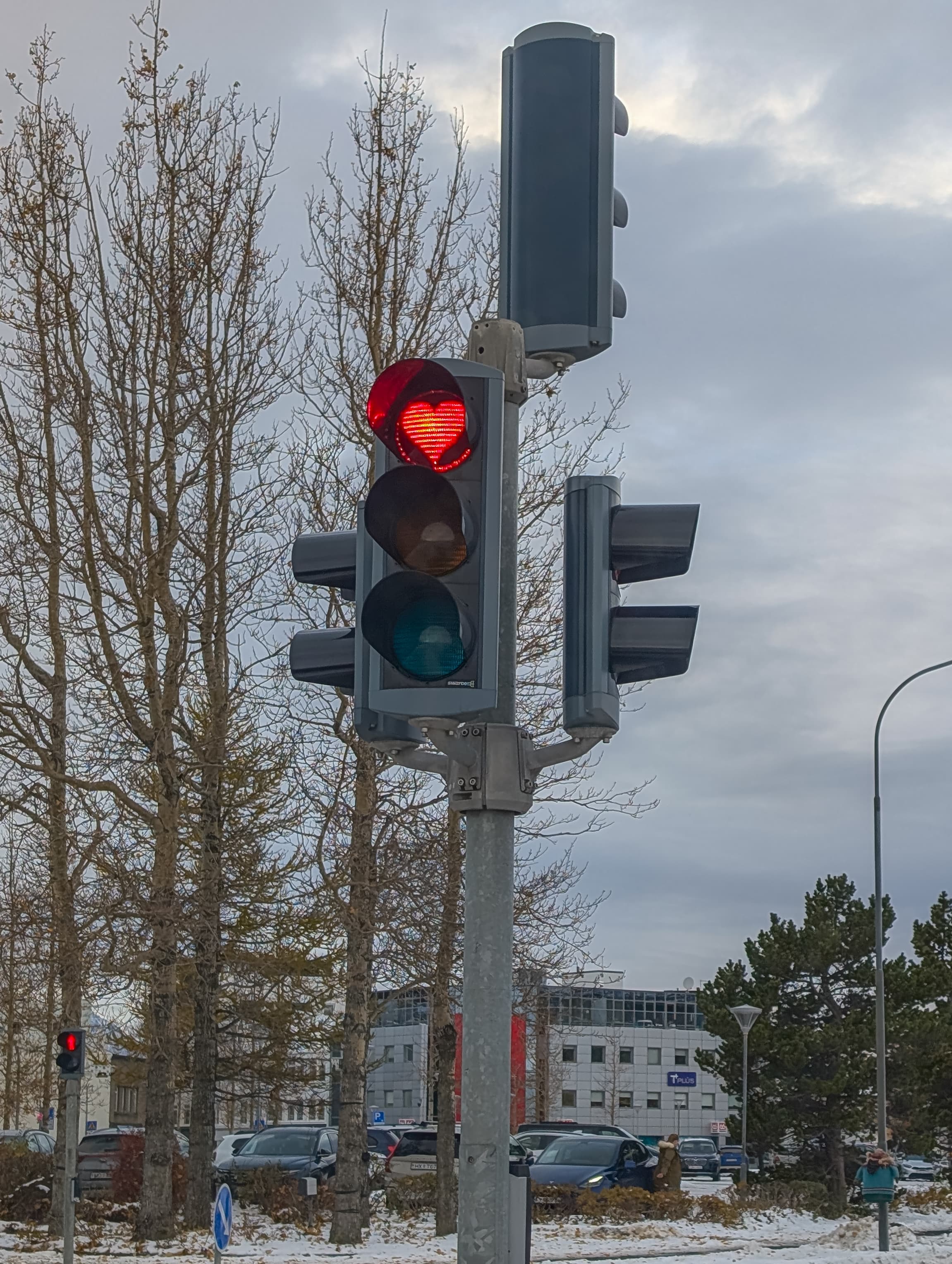
We then headed to one of the biggest towns in north of Iceland – Akureyri. Considered to be the Iceland’s capital of the north, it even has an airport. After stopping by at one of the bigger malls in the city, we explored the city by foot covering places like Akureyri Church, Hafnarstræti Main Street etc., before moving onwards.
Day 7: Explore Snaefellsnes Peninsula – Stops at Búðakirkja church, Arnarstapi Cliff Walk, Hellnar viewpoint, Kirkjufell Mountain
Búðakirkja church
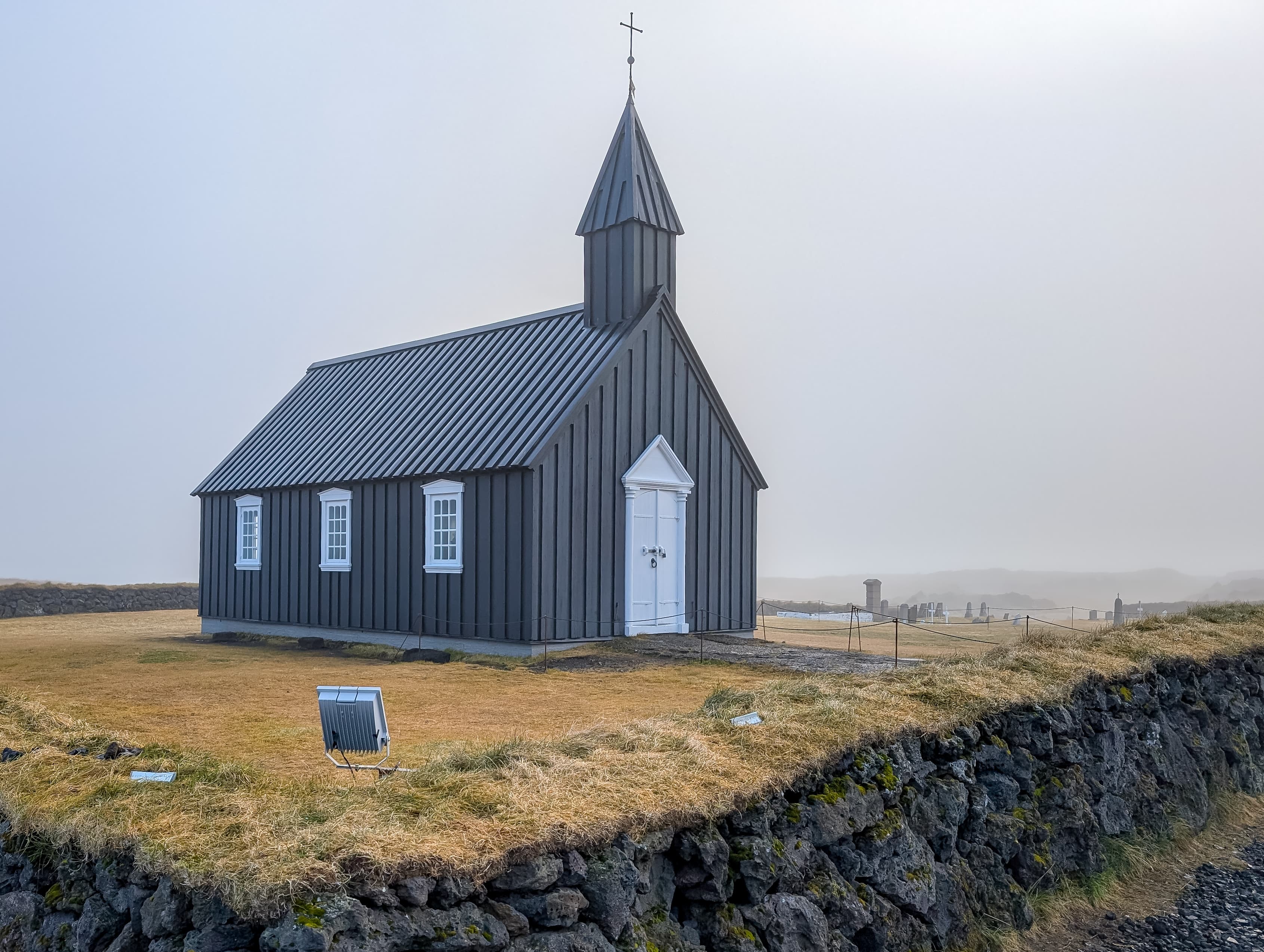
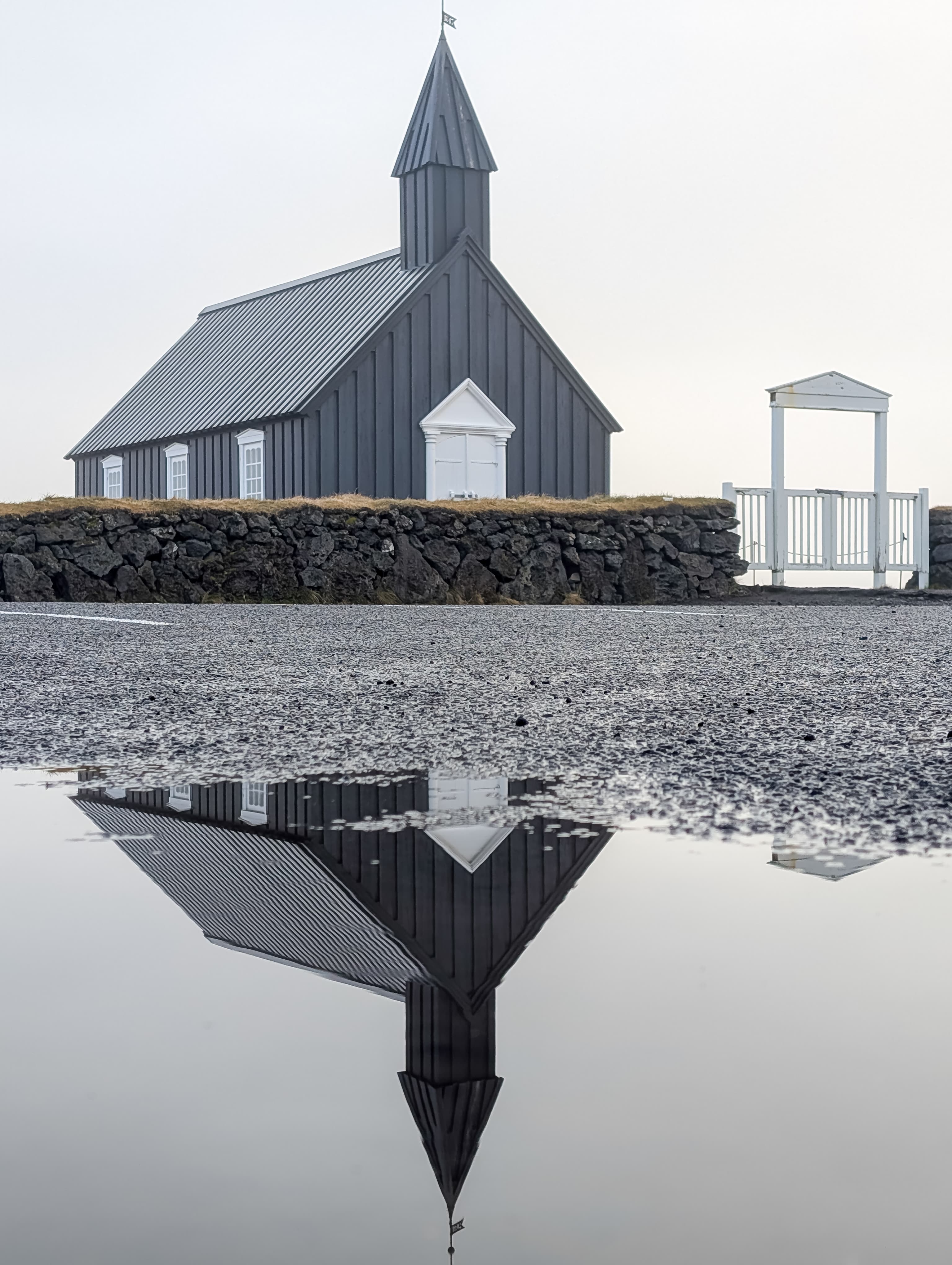
We started this day early as we had plans to explore Snaefellsnes Peninsula. Drive to here from our stay itself was quite long. The weather wasn’t too conducive and visibility was low. We were hoping it will improve as the day progresses. Our first stop was the Búðakirkja church, tiny wooden church dating back to 19th century.
Arnarstapi Cliffs

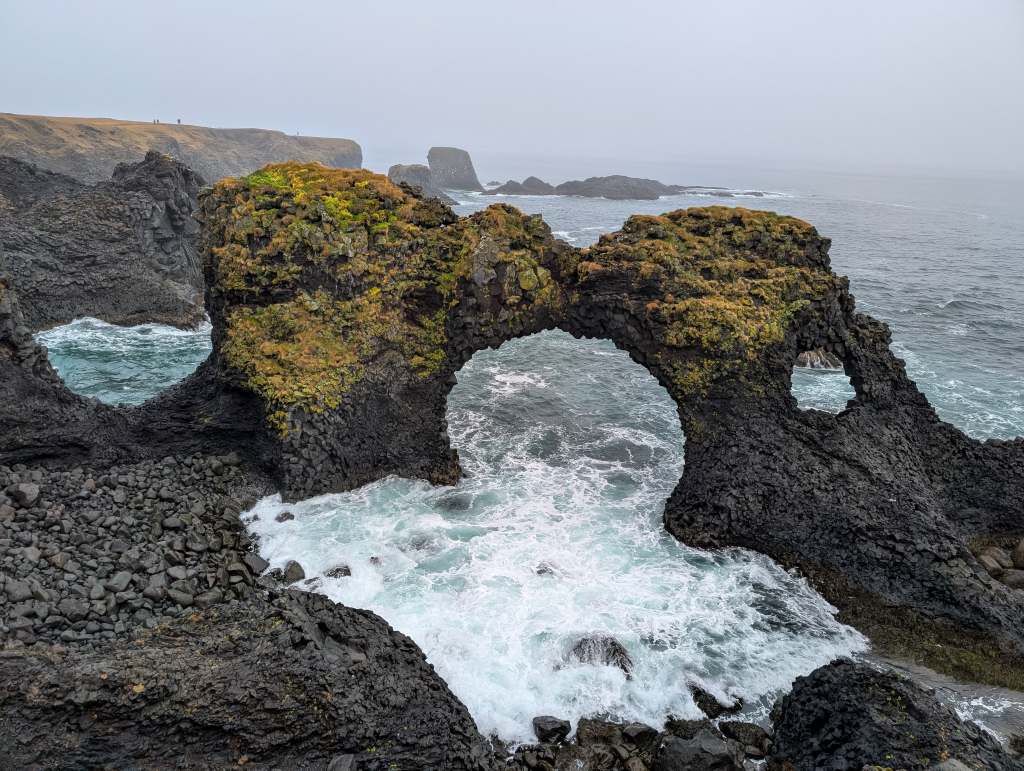


We broke for lunch at the Arnarstapi Cliffs area and waited a bit for the weather to clear. The Arnarstapi Cliffs is one of the top attractions of this peninsula. There are multiple trails along the cliffs offering breathtaking views of the cliffs towering over the adjacent sea. Despite the bad weather, we made the best we could and were able to get some good shots of the dramatic landscape of this Icelanding coastline.

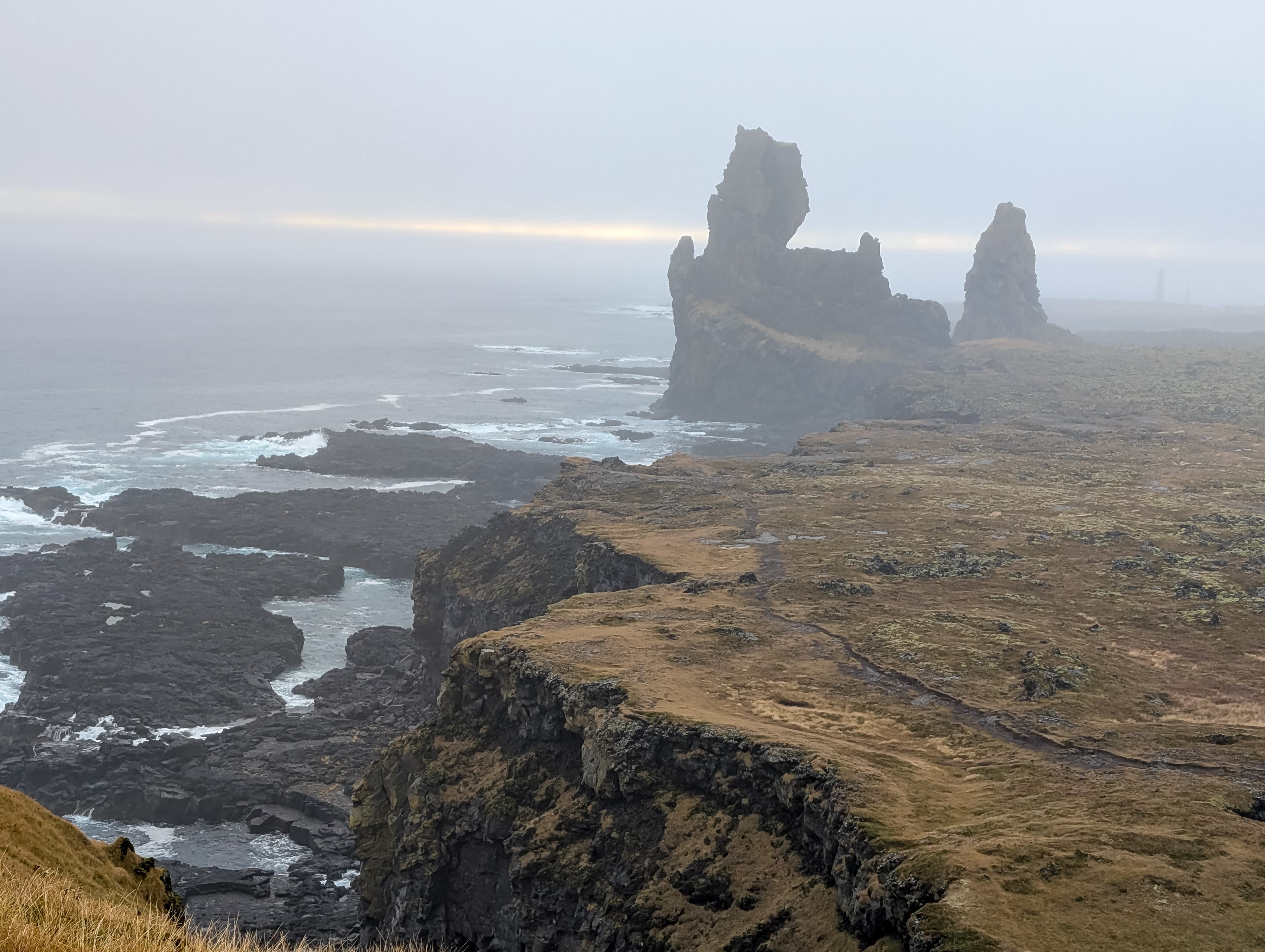

Our next 2 stops were quick and essentially were trying to explore the same set of cliffs from different angles – Hellnar viewpoint and Londrangar Cliffs view point.
Kirkjufell Mountain and Falls
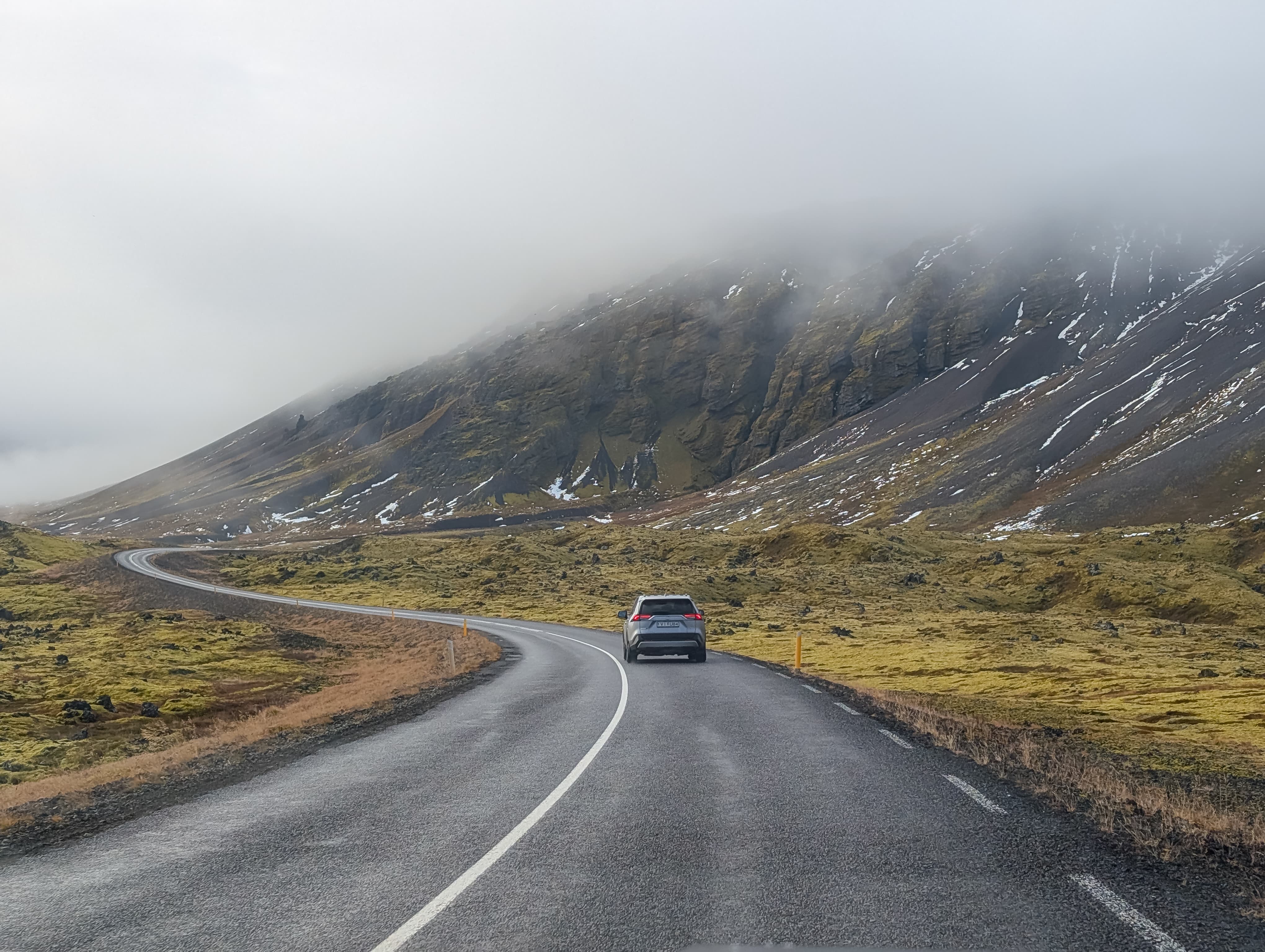
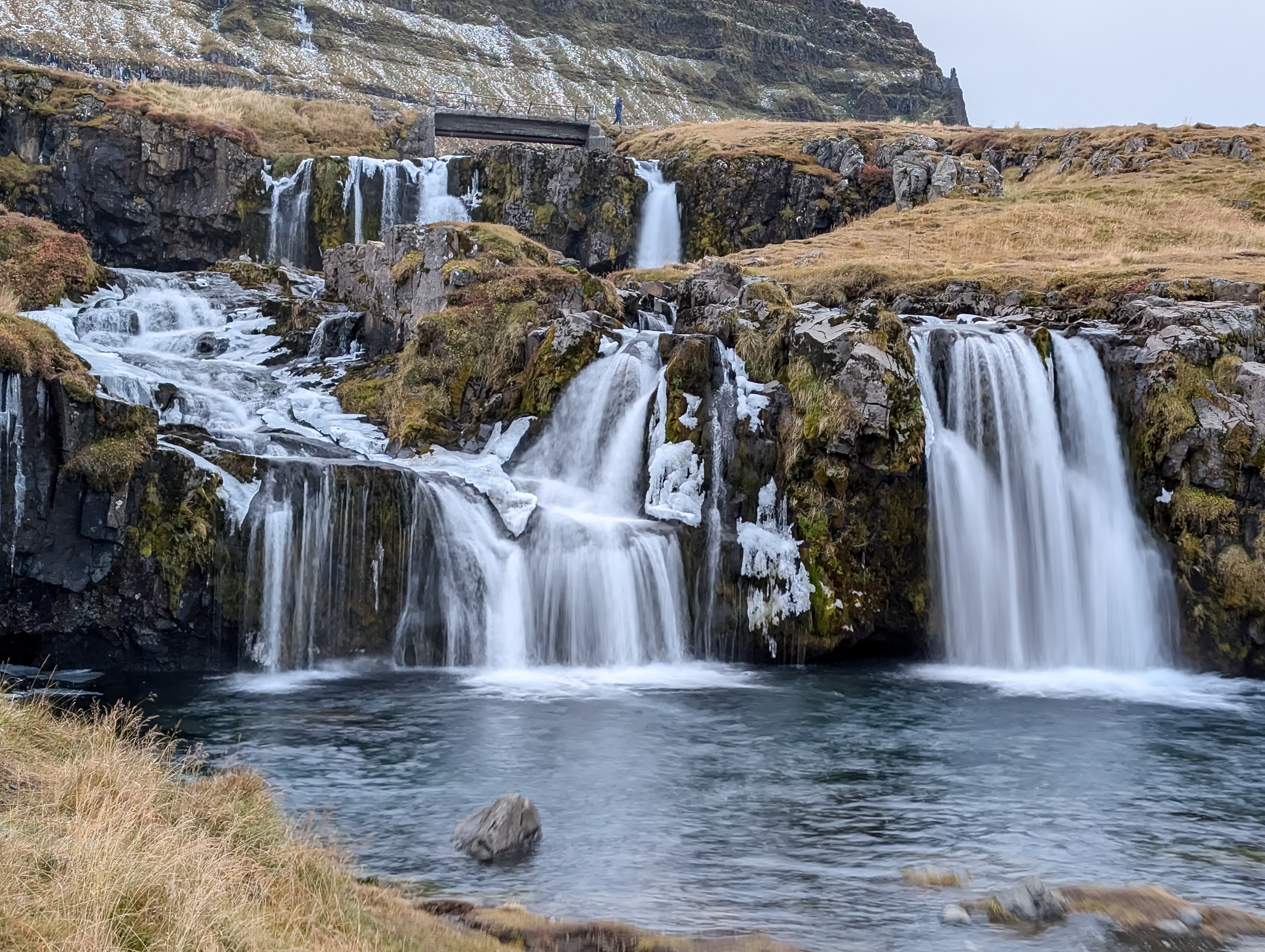


By the time we reached our last and most important stop – Kirkjufell mountain, the weather had improved considerably. After parking in the parking lot, we had a short walk to the waterfalls and viewpoints from where we could see the waterfalls with the beautiful arrow head shaped Kirkjufell mountain, one of the most instaworthy place in this peninsula. We also were able to capture shots of the mountain with its reflection in the water.
Day 8 & 9: Reach Reykjavik by noon. Explore the town for rest of the day.


Reykjavik was about 2 to 3 hours from our apartment near Kirkjufell. We reached Reykjavik by noon and explored the city for few hours before heading back to our stay in the city. One of the main attractions in the city is the Reykjavik Hallsgrimkirkja Church, a very uniquely built architectural marvel. Besides this, we did shopping and explored the city including its rainbow street. We said goodbye to Iceland the next day with an early morning flight out of Reykjavik airport after dropping off our car.
Top Apps/Websites for Iceland travel
Iceland is known for unpredictable weather and road closures. The roadtrips can be tough, especially during the shoulder season or the winter seasons. These are some of the apps/websites we used and recommend to get through safely. Some of them also make your life easier when hunting for those elusive northern lights.
Vedur.is

This is by far the most useful website for Iceland. It is primarily a weather forecasting website (‘Vedur’ in Icelandic means ‘weather’). Some of the most useful features include the (a) weather forecast over next 2 days (b) Cloud cover over different parts of Iceland (especially important for Northern lights hunting & (c) Aurora forecast which gives you the activity indicator in the form of KP index. Refer to this guide for detailed information on how to chase Northern lights in the Nordics.
ROAD.is
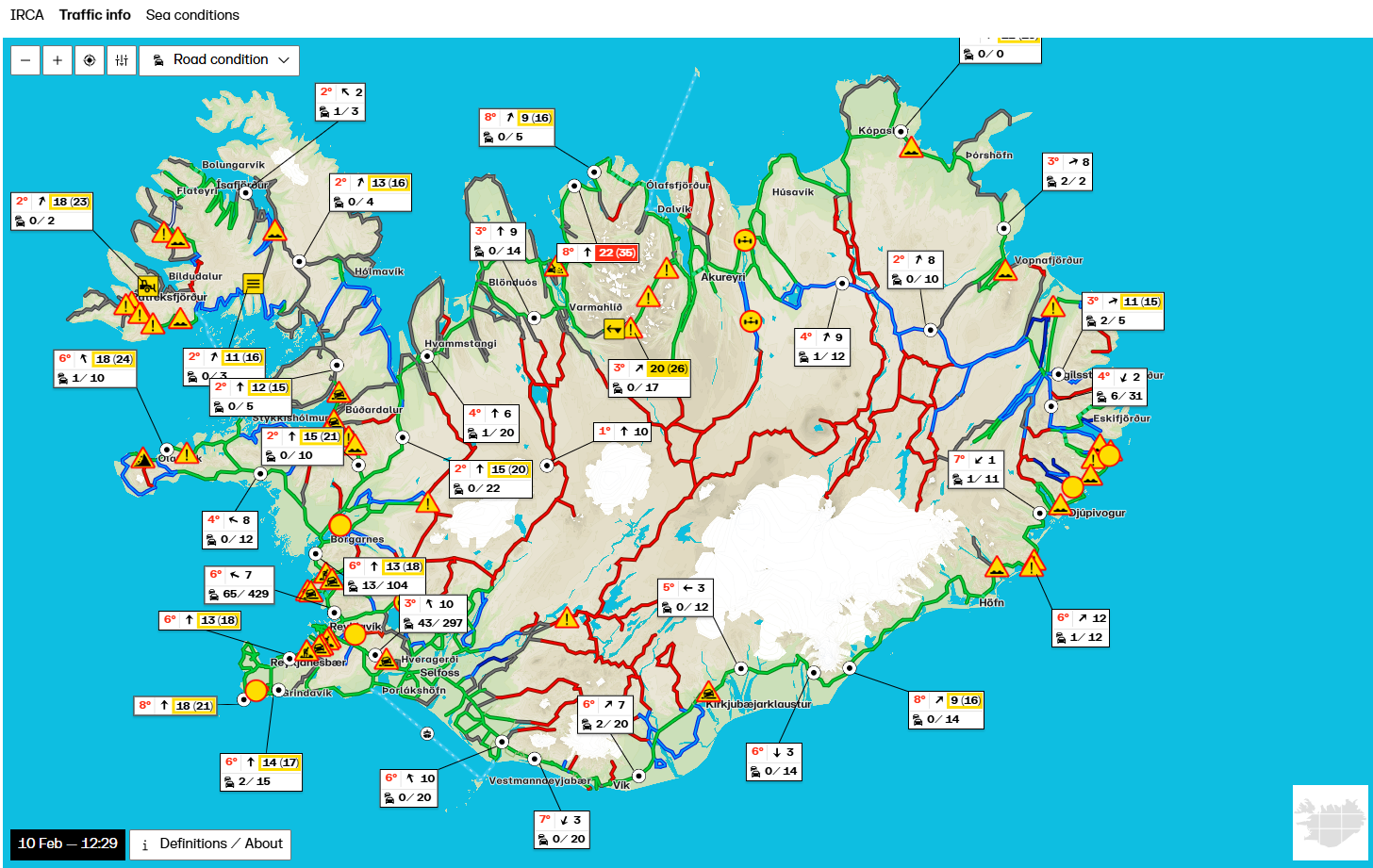
This is another official website of Iceland which gives you a overlay on the map showing which roads are drivable and which aren’t. As you know, things can quickly turn when in Iceland due to high winds, flooding of roads due to glacial melting, rain and snow. It’s important to always check the road conditions before taking a particular road towards your next destination.
Safe Travel App

This is where you are going to find notifications on road closures, weather warnings and anything that might block you from travelling from one point to another in Iceland.
Parka App
In lceland, most places have paid parking and no one manning the parking lot to collect the fee from you. Instead, the payment has to be digital, either through a parking machine within the vicinity or you have to use apps like Parka where you can search for the parking lot and pay by entering the license plate of your car.
Google Maps

The tried and tested Google Maps is extremely accurate in terms of data in Iceland and one can safely use it without worrying about the accuracy of the routes. The only caveat being it doesnt reflect the road closures and warnings as quickly as other apps would.
Google Translate

Last of our list is the Google Translate app, which makes your life simpler by helping you overcome the language barrier in Iceland. While most of the signs are in English, items in a supermarket are all in Icelandic and needs translation.
Top tips to driving safely in Iceland
- In Iceland, you drive on the right. There aren’t any specific law/road sign that you need to be midful of, that isn’t common across the world. Roads are mostly empty considering the population outside of the capital city and you will thoroughly enjoy the drives and scenery as long as you stick to the speed limits.
- Always make sure to check the road safety apps (SafeTravel/Raod.is) before starting your journey each day. Weather and road conditions can be extremely unpredictable.
- Fuel stations are also where you would want to stop for toilet breaks. But they arent many in the country. Some times, it can take around 60 to 80 km before you find the next one. Make sure to plan your stops well in advance.
- Payments for fuel are fully digital, only accepting credit cards. While very few places have stores attached to them where you can pay inside and get fueled outside, most places will expect you to swipe your card at the terminal near your pump before starting to pump fuel. Another interesting and somewhat different mechanism to fueling in Iceland is, after you validate your card at the start, they will block a fixed higher amount (around 30k ISK) on your card, and refund it couple of days later while charging the exact amount you fueled for. This may come across as surprise to many as you need to firstly keep the limit higher than the one you wish to fuel for, and also surprised of the duplicate entries until they resolve the extra charge.
- Avoid F-roads if you don’t have a vehicle with AWD or if you feel uncomfortable about driving through gravel roads in somewhat tricky conditions.
Parting Thoughts
Iceland undoubtedly lived up to its hype of one of the most beautiful countries in the world. It went straight up to one of the top 2 destinations we have covered so far, up there with something like New Zealand. You will need atleast 8 days to cover the entire country. Lot of people just cover the capital city of Reykjavik and do the golden circle route (through tours), but that is like doing grave injustice to this place. If you can drive, do drive, as this is the best way to experience Iceland. If you are adventurous, there are lot of others places to cover not listed here, like those wonderful glacier hikes, craters, more waterfalls etc. Northern lights just multiplies the beauty of this place, but it still is very beautiful despite the northern lights (if you are planning in summer).
 Unending Vacations