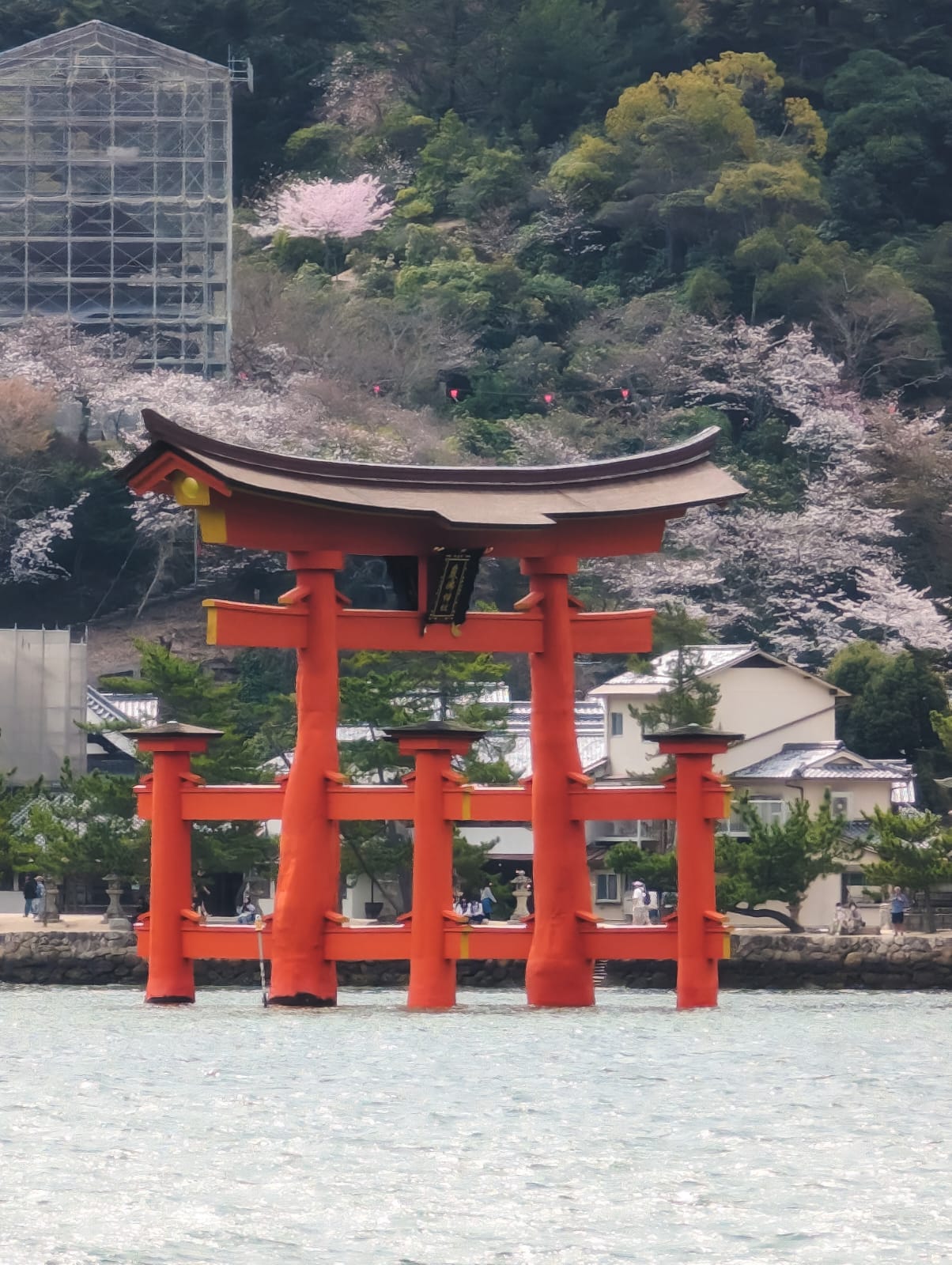
Hiroshima is a city in Japan with a famous and tragic history. A visit to Hiroshima naturally focuses on memorials of the atomic bombing of 1945 and the need for de-nuclearization of the modern world. There is also a beautiful island a short ferry ride away from Hiroshima called Miyajima which is home to some lovely shrines and temples. Since they are only 16 km apart, most people tend to combine them into a single itinerary. Hiroshima is only about an hour and a half away from Kyoto/Osaka on Shinkansen. So many people (including us) who are short on time in Japan tend to make it a day visit from Kyoto/Osaka.
Getting to Hiroshima and Miyajima
Your weekly (7 or 14 day) JR pass will cover the ride from Kyoto/Osaka to Hiroshima on Shinkansen network. The other important pass that covers this route is the “5 day JR Kansai Hiroshima Area pass”. If you don’t have either of them, you will have to buy individual tickets on this route.
To get to the ferry port for Miyajima Island from Hiroshima Station, take the JR Sanyo Line to Miyajimaguchi Station. Then, it is a short walk to the ferry pier. Take the JR ferry (covered in JR passes mentioned above) or Matsudai ferry (200 yen) to reach the island in 10 mins. You still have to pay visitor tax of 100 yen in both the ferries.
Miyajima Island
Miyajima is a beautiful island which brings peace and tranquility to an otherwise somewhat disturbing day visit to Hiroshima. The Sakura trees hadn’t bloomed fully by the time we went there and so, we had to make do with what we had. Covering both Hiroshima city and Miyajima island in a single day means we were pressed against time.
This is the itinerary we followed on our half day spent at the island –
- Leave early from Kyoto/Osaka and reach Hiroshima by 9 am.
- From Hiroshima station, we first went to Miyajima island taking the above mentioned route.
- Once in Miyajima island, start walking along the shoreline in the direction of the famous “Floating Torii gate”.
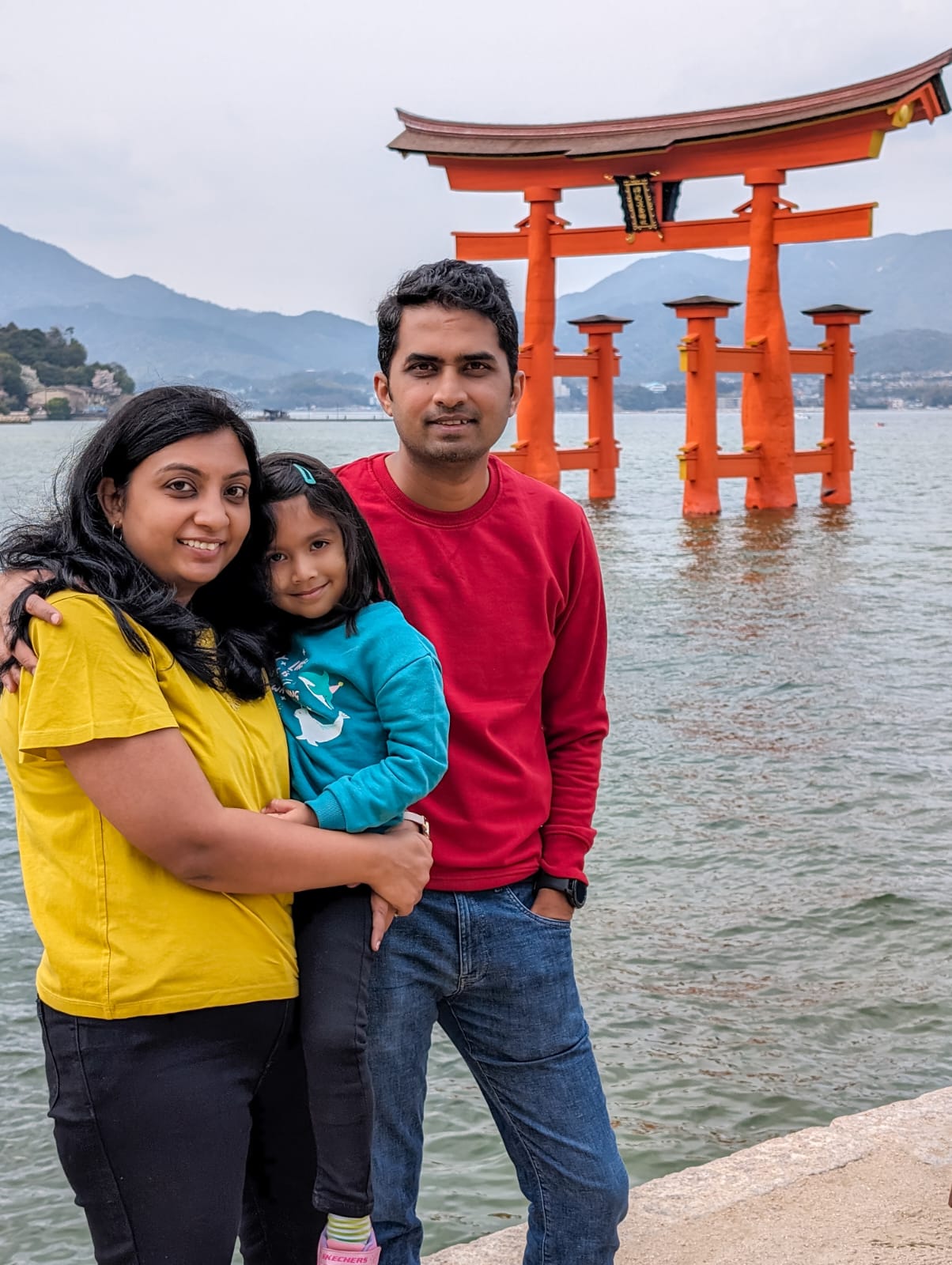
- Take some time to explore Itsukushima Shrine and pose for the obligatory photo of yourself with the floating torii gate in the background. The torii can be fully visible or submerged in water depending on the time of the day (High or low tide) . But since the time is short, you will not have time to choose both views.
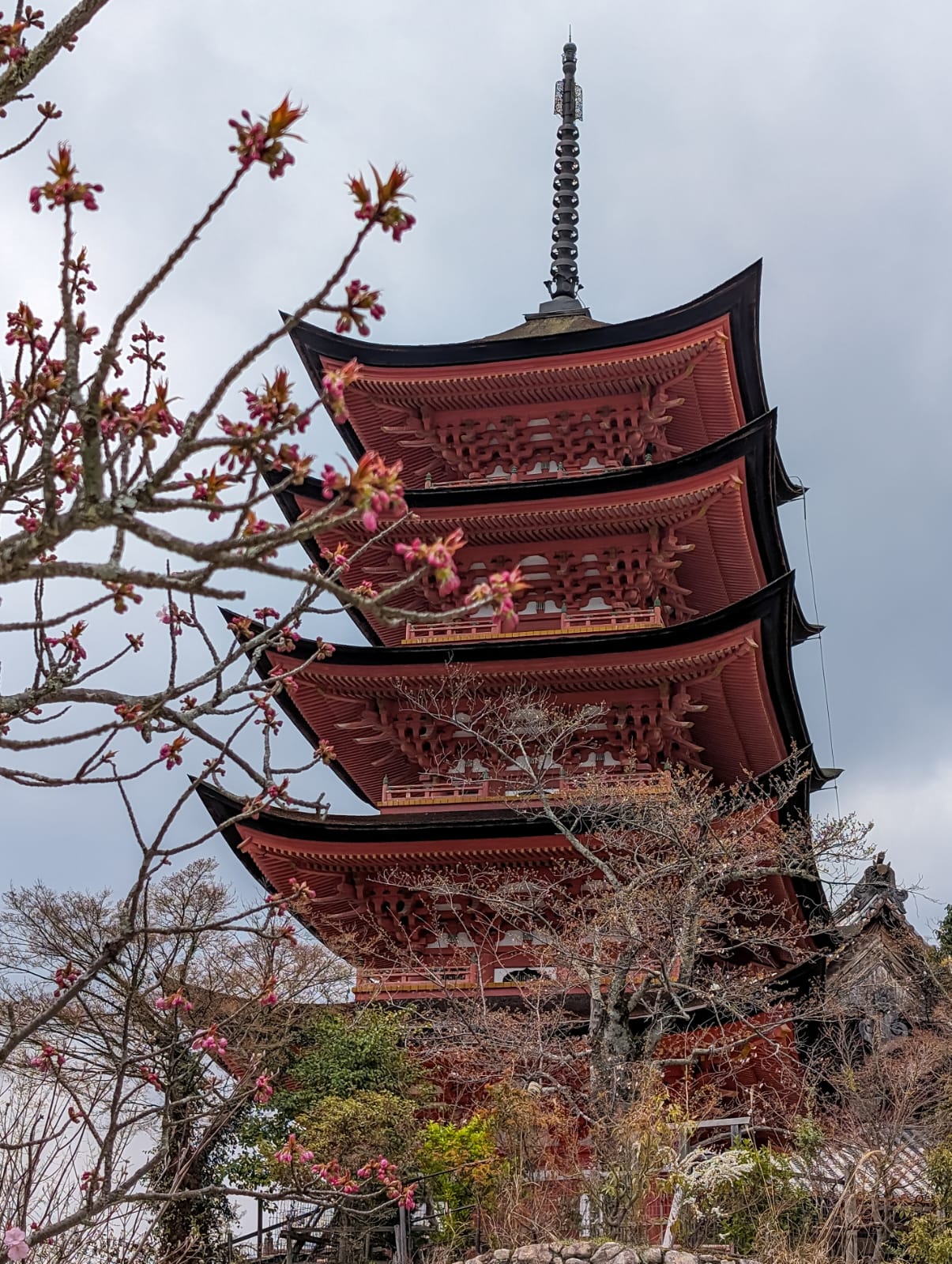
- There is a famous 5 storied Tahoto Pagoda that we visited next, and spent some time walking around it with the aim to get best shots of it with some Sakura.
- From the Pagoda, we walked back to the Pier along the Miyajima Omotesandō Shopping Street which was buzzing with lots of activity, famous for souvenirs and street food stalls.
- We took the ferry back to the mainland and broke for lunch in one of the restaurants nearby before heading to Hiroshima city

Hiroshima
Having had such a dark past, it is remarkable to see the city now in such a good shape – modern, well built and with all the good infrastructure that Japan is known for. Trams are the main mode of transport within the city along with the buses. If you have bought a JR pass, you can ride freely on one of the sightseeing loop buses in Hiroshima city covering most of the important points of interests.
Hiroshima Sightseeing Loop buses Explained – aka Maple Loop buses
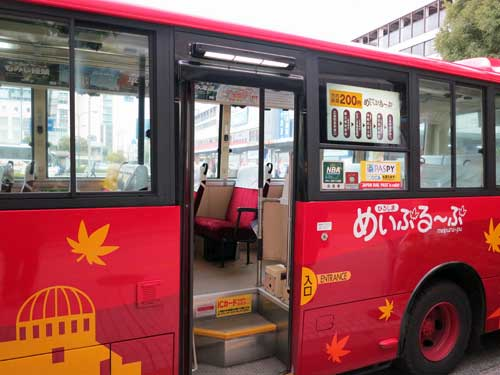
These sightseeing buses are different from the usual commuter buses that ply in the city. These are color coded in Orange, Green, Yellow and Blue based on the routes they take. They run in a loop every few mins and you can hop on and off based on the direction they are going and the next point of interest you want to get to.
Orange Route: Hiroshima station (Shinkansen Entrance) -> Hiroshima prefectural Art Museum -> Hiroshima Castle -> Hiroshima Museum of Art -> Kamiyacho -> Atomic Bomb Dome -> Hiroshima Peace Memorial park & Museum -> Hatchobori -> Hiroshima City Museum of Contemporary Art
Green Route: Hiroshima station (Shinkansen Entrance) -> Hatchobori -> Kamiyacho -> Atomic Bomb Dome -> Peace Memorial Park -> Namiki-dori -> Shintenchi -> Hiroshima prefectural Art Museum -> Promenade of history -> Hiroshima Toshogu Shrine
Yellow route: Hiroshima station (Shinkansen Entrance) -> Hiroshima prefectural Art Museum -> Hiroshima Castle -> Hiroshima Museum of Art -> Kamiyacho -> Atomic Bomb Dome -> Hiroshima Peace Memorial park & Museum -> Namiki-dori
Blue route: Hiroshima station (Shinkansen Entrance) -> Hiroshima Port -> Kamiyacho -> Atomic Bomb Dome -> Hiroshima Peace Memorial park & Museum -> Namiki-dori
The schedule for the buses can be found here: https://www.chugokujrbus.co.jp.e.aec.hp.transer.com/teikan/meipurupu/
Top things we covered in Hiroshima city
Peace Memorial Park
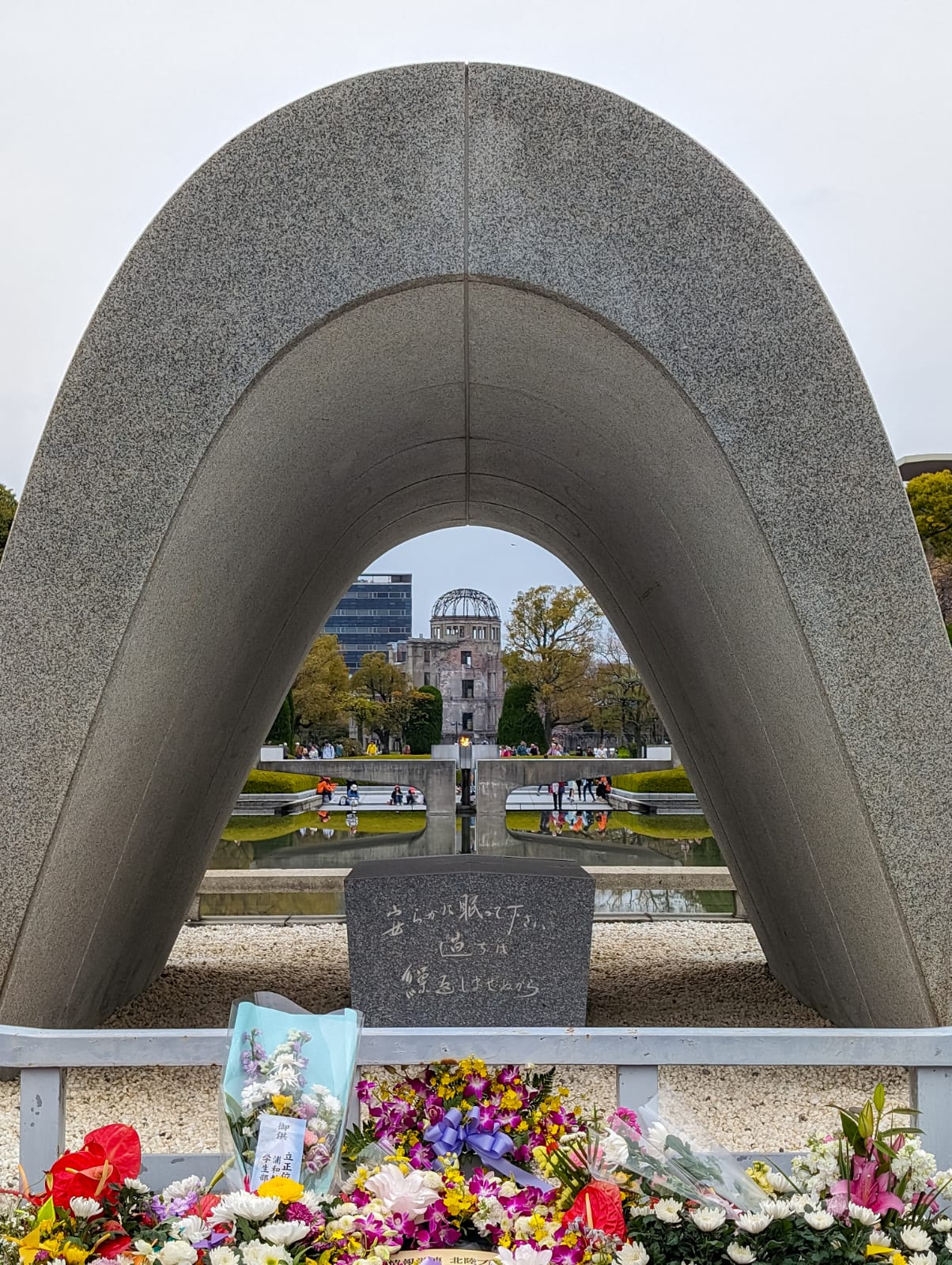
This is one of the main attractions of the city – a memorial park serving as a memory of many lives lost during the nuclear attack of 1945 and a cry for de-nuclearization of modern world. Before the nuclear attack, this was the main political and commercial hub of the city, but was consciously chosen to be not redeveloped as the same after the attack and preserved now as a “Peace” memorial. There is a Peace flame that has been burning continuously since it was lit in 1964, and will remain lit until all nuclear bombs on the planet are destroyed and the planet is free from the threat of nuclear annihilation.
Atomic Bomb Dome
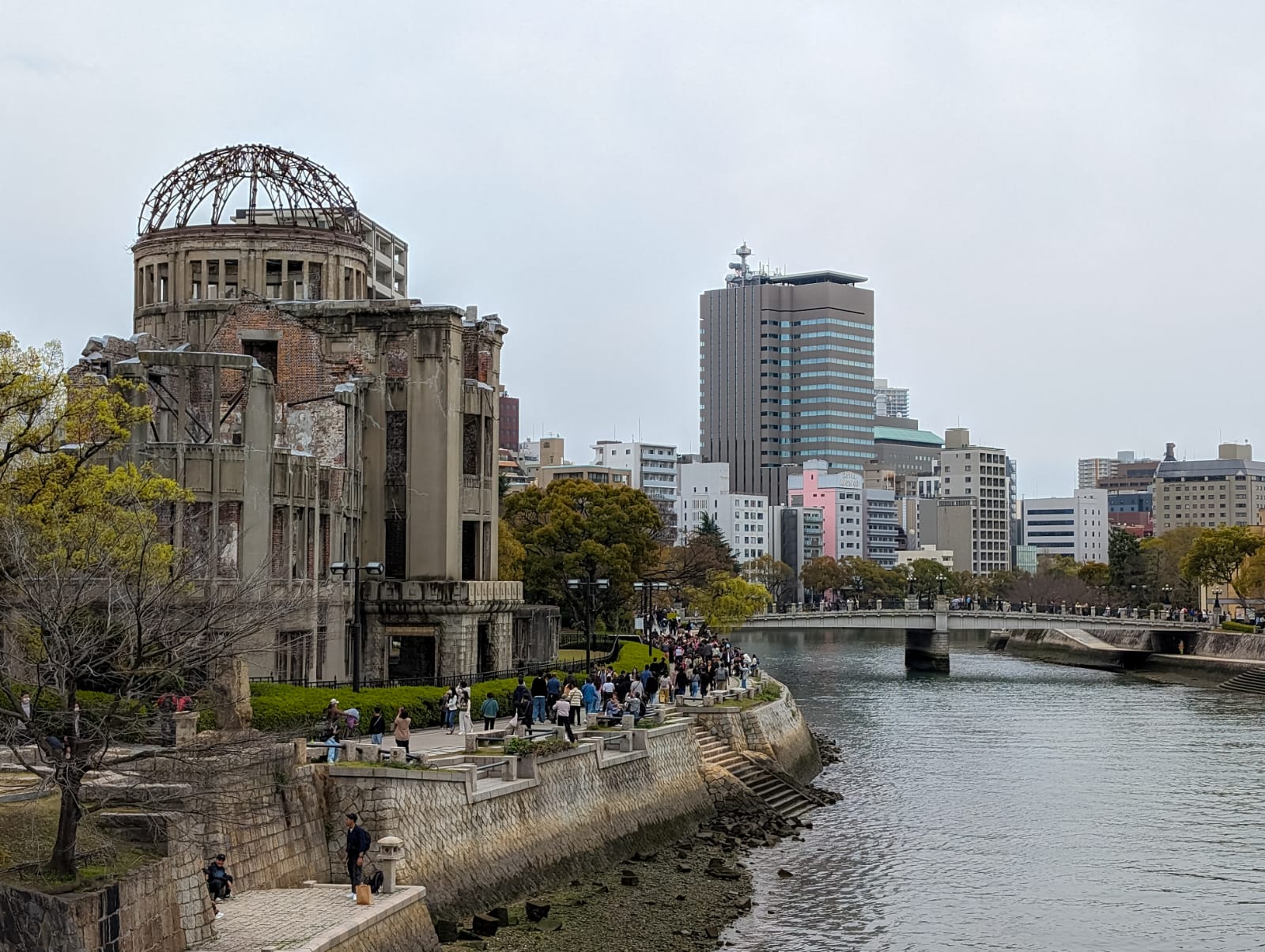
The Atomic Bomb Dome or A-Bomb Dome is what remains of the former Prefectural Industrial Promotion Hall. When the bomb exploded, it was the only structure to remain standing in the area, and has been kept in the same state till today to serve as a reminder to the deadly effects of nuclear warfare. A UNESCO World Heritage Site, the A-Bomb Dome is a tangible link to Hiroshima’s unique past.
Hiroshima Castle

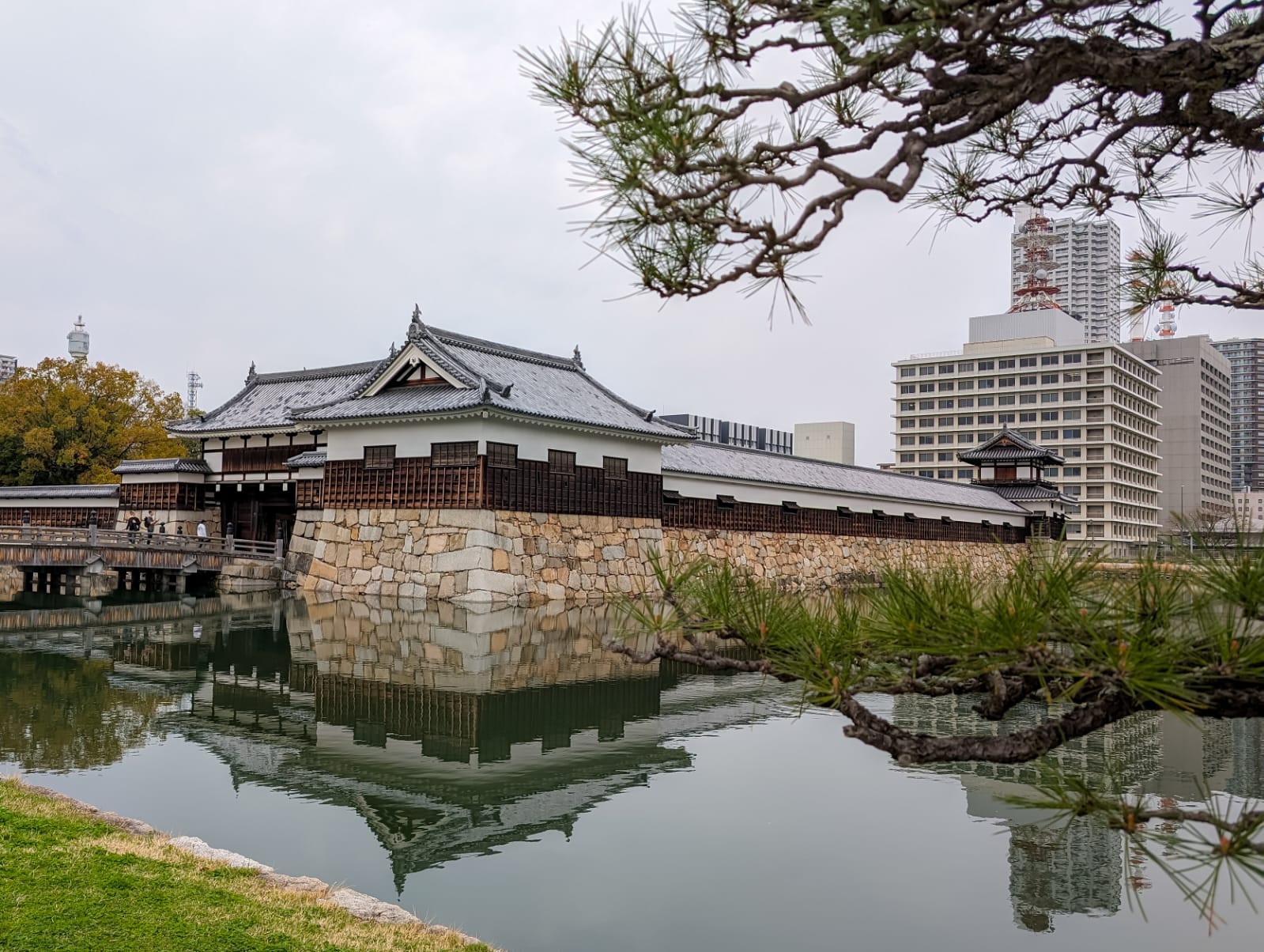
The original castle was destroyed in the atomic bomb attack of 1945. The currently standing castle you see is a good attempt to restore it to its past glory. It is one of the pretty looking castles in Japan. It is open till 5:30 pm in the evening and has an entrance fee to enter the main keep. The rest of the castle grounds itself is free.


[…] Day trip to Hiroshima from Kyoto/Osaka […]
LikeLike