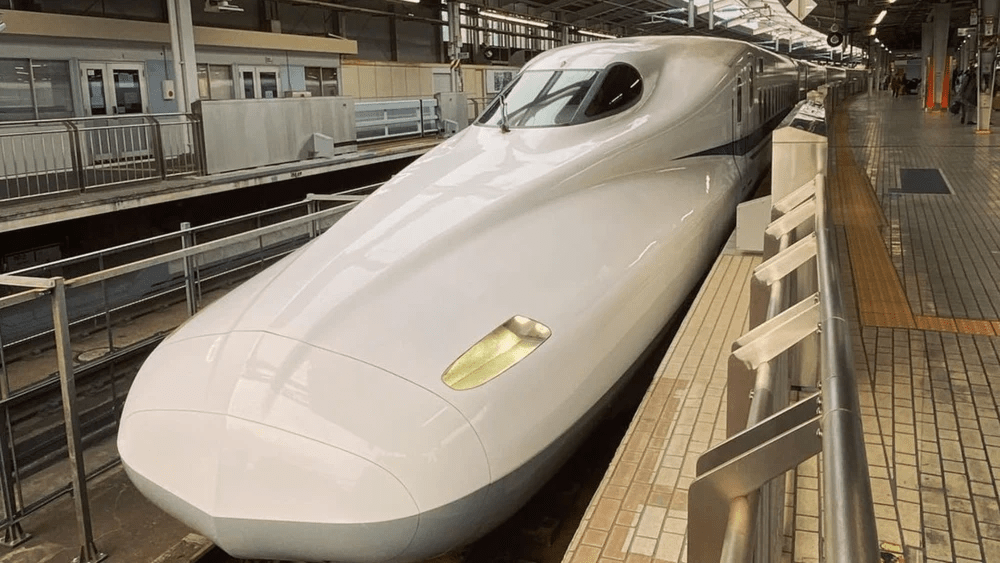
Shinkansen is the famous network of bullet trains in Japan built many years ago to provide high speed connectivity between different regions of Japan with Tokyo. Started with the Tokaido Shinkansen line (the busiest high speed rail line in the world) connecting Tokyo with Osaka, it later expanded in to multiple other routes connecting different cities in Japan. The trains run at a max speed of 320 kmph and are fairly frequent during peak hours thereby holding up to the promise of carrying lot more people than the traditional air travel would.
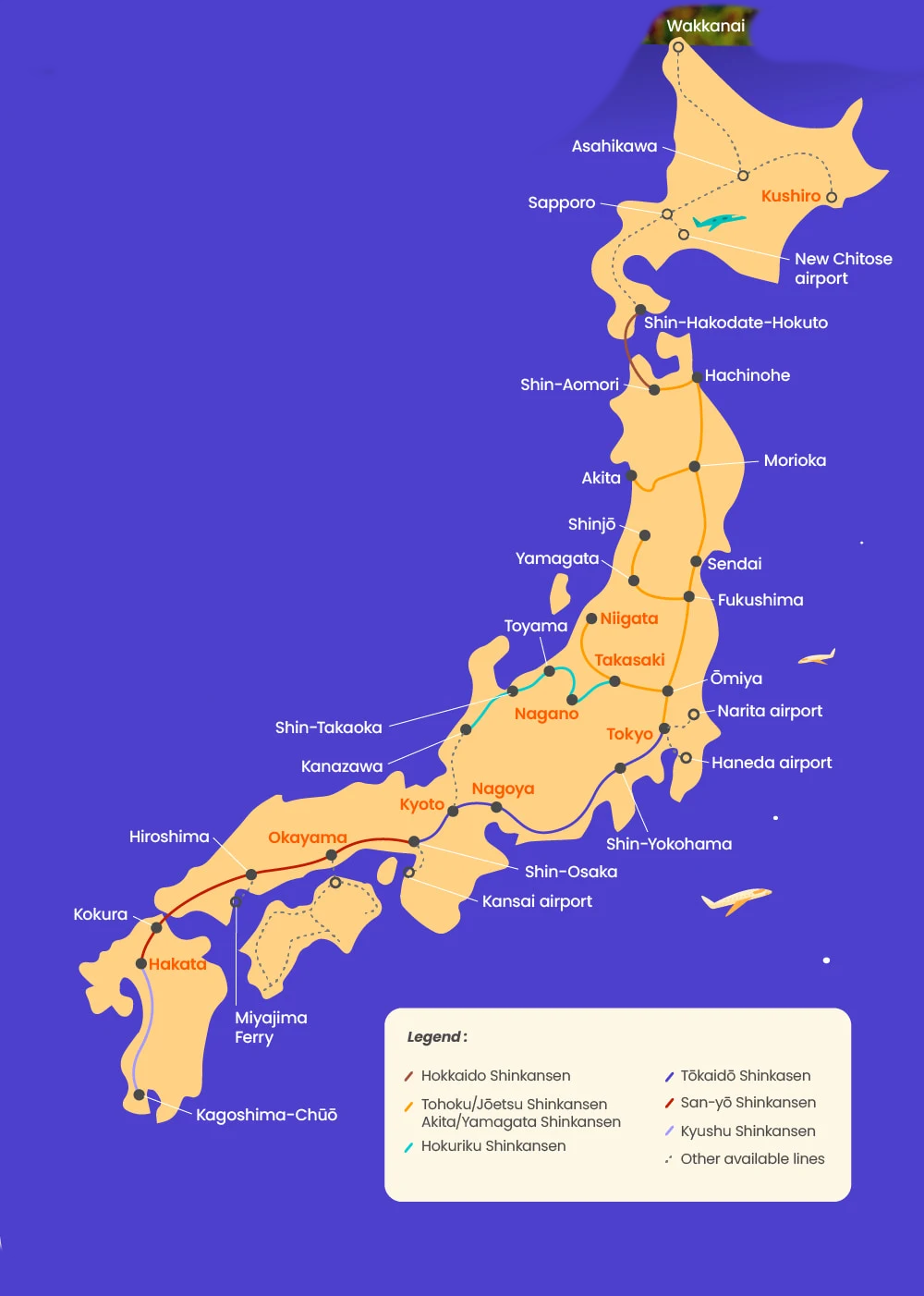
The bullet trains are operated by Japan Railways and the main line of interest to the tourists is the popular Tokaido Sanyo Shinkansen line connecting Tokyo, Kyoto, Osaka to Hiroshima. There are 3 types of bullet trains running on this line – Nozomi, Hikari and Kodama. Nozomi is the fastest with the least number of stops. Hikari is slightly slower with some additional stops while Kodama is the slowest with many stops in between. Each offers a set of reserved and unreserved coaches and they all cost the same, even though their speeds are different. Reservations are recommended on these trains for confirmed seats. There are 2 types are coaches – Ordinary and Green Car. Ordinary is the normal economy class type of seating while the Green car is the equivalent of a business class. Even an Ordinary coach has plentiful leg space with comfortable seats and should suffice for most people.
The Shinkansen platforms are usually built either as a completely different station (eg: Shin-Osaka in Osaka) or at a complete different level to normal trains (eg: Kyoto).
Notes around Shinkansen trains –
- Leg space is generous compared to normal trains
- Can eat in the train but do cleanup and leave no trash behind
- Depending on the series of the trains, it can have 2+2 or 3+2 seating configuration
- Dedicated luggage space is not provided between 2 coaches. Only luggage space available will be at the back of the last seats in each coach and those are for oversized baggage and have to be reserved specifically by paying extra.
- Free wifi is available on all Shinkansen trains
Ticketing system
As like any other train in Japan, people aged 12 or above are considered Adults and have to pay full fare. Age 6-11 constitutes child fare and below that is free (unless you want a dedicated seat for the kid)
If you are buying a pass from JR, depending on the pass, you could have free unlimited travel included in the pass (eg: Japan Rail pass for 7/14 days allows free travel on Hikari, Nozomi and Kodoma trains). You still need to reserve seats with the pass for the day and time of the travel in advance at the JR stations (manned booths or machines).
If you are trying to buy individual tickets, you can do so on the direct JR website, at a JR station or a third party website like Klook. Tickets bought online come with a QR code which can then be exchanged for physical tickets before your journey at the machines or manned booths at JR stations. JR also runs a website called SmartEX which sells tickets for the specific route of Tokaido Sanyo Shinkansen (Golden Route) and offers early bird discount for booking tickets 28 or 21 days in advance (uptp 20% lesser) – especially on the Nozomi train. Since the Shinkansen trains on the same route all cost the same (eg: Nozomi, Hikari and Kodama), its beneficial to travel on the fastest (eg: Nozomi) at the same cost as others.
Mt Fuji view from the train

It is possible to view Mt Fuji for few minutes if the weather is clear, about one hour away from Tokyo on the Shinkansen line from Tokyo to Kyoto/Osaka. When going from Tokyo to Kyoto, you need to sit on the right side of the car, and on the left from Kyoto to Tokyo. Since on the bullet trains in Japan, the seats themselves are reversed in direction after each leg, you can safely reserve the D & E seats on the trains to have a chance at viewing Mt Fuji.


[…] Understanding Japan’s bullet trains – The Shinkansen […]
LikeLike